
Trump admin revokes visa of Brazilian ambassador to US
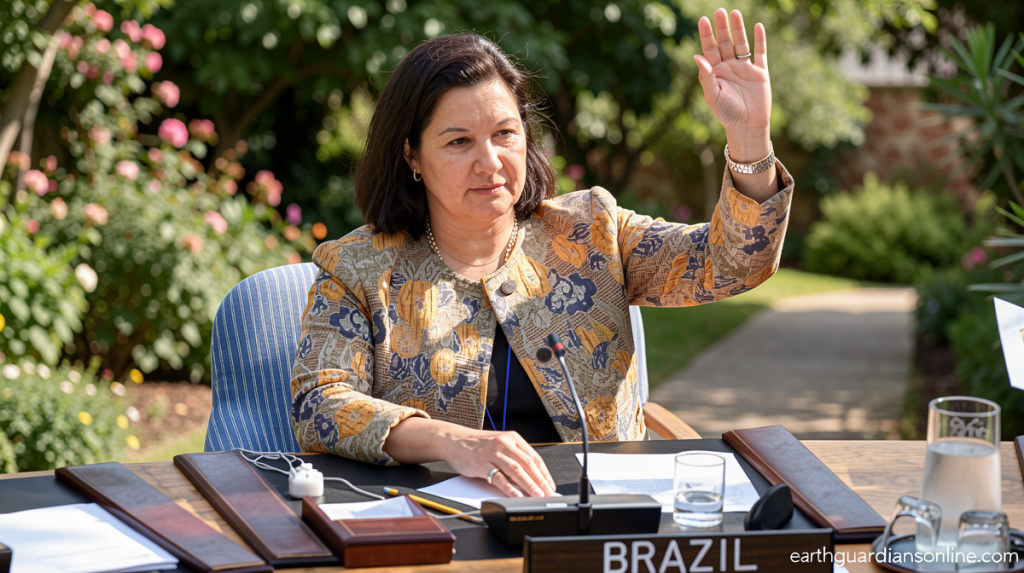
Washington and Brasilia Navigate Diplomatic Tensions as US Revokes Brazilian Ambassador’s Visa
Earthguardiansonline.com – The Trump administration has taken a significant diplomatic step by revoking the visa of Brazil’s ambassador to the United States, Maria Luiza Ribeiro Viotti, intensifying a growing rift between the two nations. This move comes amid a series of escalating tensions that have characterized US-Brazil relations over the past year, with both countries exchanging measures they view as reciprocal responses to perceived slights.
Understanding the Visa Revocation
While the cancellation of Viotti’s visa represents a notable diplomatic gesture, State Department officials clarified that the ambassador has not been declared “persona non-grata.” A senior official explained that revoking a visa differs substantially from expelling someone from the country. The cancellation essentially means that if Viotti were to leave the United States, she would need to obtain a new visa before returning.
The timing and reasoning behind this decision center on a diplomatic process known as agrément—the formal approval that host countries grant to incoming ambassadors. According to State Department sources, the visa revocation serves as a “reciprocal action” to Brazil’s delay in providing diplomatic approval for Daniel Perez, the American nominee for ambassador to Brazil. The official emphasized that Viotti’s visa would be immediately restored once agrément is granted to Perez.
Brazil’s Firm Response
The Brazilian government swiftly condemned the decision, issuing a statement that “repudiates the decision announced today by the US Department of State to alter the visa of Brazil’s Ambassador in Washington.” Brazilian officials went further, asserting that “both justifications offered for the decision are false.”
Today’s decision is not an isolated incident. It forms part of a deliberate escalation of hostile measures against Brazil, driven by ideological motives that are incompatible with a bilateral partnership that has always been guided by mutual respect.
This statement from the Brazilian presidency frames the visa revocation within a broader pattern of what Brazil perceives as ideologically motivated hostility from the Trump administration, suggesting that the dispute extends beyond procedural disagreements about diplomatic protocols.
The Perez Nomination and Agrément Dispute
At the heart of this diplomatic row is Daniel Perez, the speaker of the Florida House of Representatives and a close ally of Secretary of State Marco Rubio. Perez’s nomination was transmitted to the Senate on June 1 and received favorable committee action in late July when the Senate Foreign Relations Committee voted to advance his candidacy.
Typically, agrément is sought before a nomination is publicly announced. However, the Brazilian government has raised concerns that the United States “publicly announced the name of its nominee before formally submitting its request for agrément.” Brazilian officials noted that there is “no time limit for granting agrément” and emphasized that the US request “remains under review.”
A State Department official revealed that Brazil has “put out signals” suggesting it may withhold approval until after its upcoming October elections. Such a delay would prevent Perez from assuming his post even if the Senate confirms his nomination, creating an unusual situation where a confirmed ambassador might be unable to take up residence in the host country.
Election Timing and Broader Context
The diplomatic friction arrives at a critical juncture for Brazilian politics. The October elections will determine whether current President Luiz Inácio Lula da Silva retains power or faces Flávio Bolsonaro, the son of former President Jair Bolsonaro. The younger Bolsonaro has maintained connections with the Trump administration, meeting with President Donald Trump and other officials earlier this year.
Adding another layer to the dispute, Lula’s government recently refused to grant visas to two State Department officials, citing concerns about potential interference in Brazil’s electoral process. The Brazilian presidency statement echoed these accusations, claiming the US officials “had planned to visit the country to cast doubt on the integrity of Brazil’s electoral system.”
However, the first senior State Department official characterized the planned visit as a “routine trip,” emphasizing that “We respect the Brazilian people in whatever government that they choose freely through free and fair elections in Brazil.” This official did not exclude the possibility of additional “reciprocal actions” but maintained that the current situation centers on Brazil’s obligation to provide a “prompt and positive answer” regarding agrément for Perez.
Looking Ahead
The second State Department official expressed frustration with what they described as continued delays and obfuscation by the Brazilian government, stating that Washington has “communicated continually with the Brazilian government for weeks and have given the Brazilian government every opportunity to do the right thing.” The official reiterated that the United States “reject any effort by foreign countries to interfere in our domestic processes,” a statement that directly addresses Brazil’s concerns about election meddling.
As both nations navigate these diplomatic challenges, the outcome will depend largely on whether Brazil grants agrément to Perez before or after its elections, and whether the Trump administration pursues further reciprocal measures. The situation underscores the complex interplay between diplomatic protocol, domestic politics, and international relations in an era of heightened geopolitical tensions.
Related Reading
Frequently Asked Questions
What is Trump admin revokes visa of Brazilian?
Trump admin revokes visa of Brazilian is the main topic of this guide. The article explains the context, practical details, and next steps readers should understand.
Why does Trump admin revokes visa of Brazilian matter?
Trump admin revokes visa of Brazilian matters because readers are looking for a useful answer, not just a short summary. Good content should match search intent and help them decide what to do next.
