
The Americans losing homes to Israel’s war in Lebanon
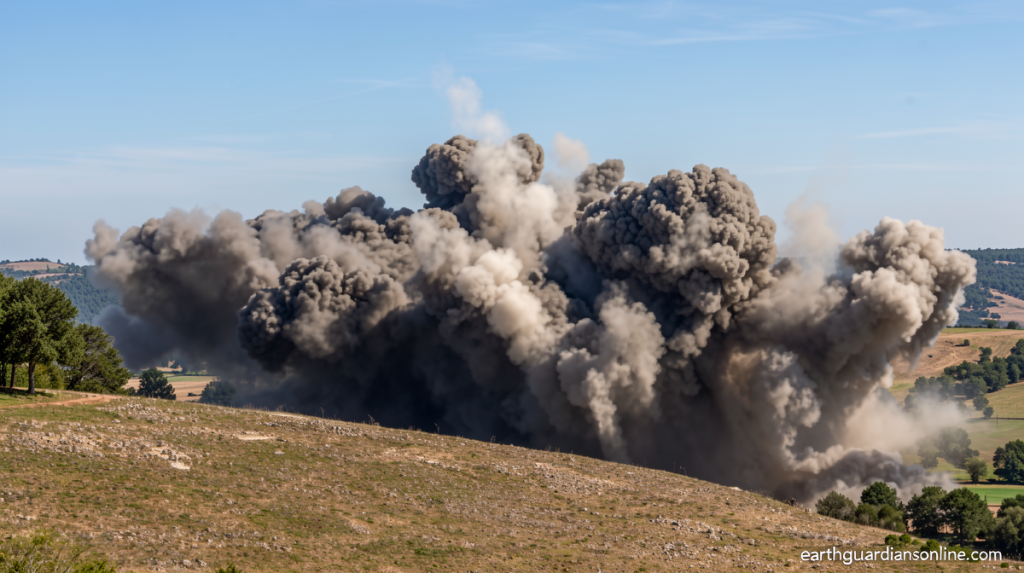
Lebanese-American Families Face Loss as Israeli Strikes Continue Despite Ceasefire
Earthguardiansonline.com – Across southern Lebanon, a community of American citizens watches helplessly as their ancestral homes crumble beneath relentless bombardment. While official channels declare a ceasefire, the reality on the ground tells a different story—one of sustained military operations and devastating consequences for families who have called this region home for generations.
A Childhood Home Reduced to Rubble
Maysa Moghnie’s family compound in Burj Rahal village represents more than just property. For decades, her father dedicated his life to constructing the magnificent three-story residence, adding room after room to create what she describes as a palatial sanctuary. The American-Lebanese dual citizen, now raising her own children in Irvine, California, recalls watching video footage of her twin sister’s engagement celebration from two years prior. The recording captures a vibrant scene of dancing and music within walls of traditional stone, ornate balconies with red-brick roofs, and a magnificent split staircase leading to a spacious terrace.
All the memories we have are of him building this house.
That grandeur vanished on May 9 when an Israeli airstrike tore through the structure. The projectile’s path is visible in photographs captured by Moghnie’s sister—ripping through multiple floors and leaving a gaping crater blanketed in white dust. Remarkably, Moghnie’s parents and sister had departed the home just three days earlier. Her mother, unable to endure the constant drone and aircraft sounds, had insisted they leave.
My mom couldn’t take the drones and the airplanes and all those really harsh sounds anymore.
Wider Destruction Across the Region
Moghnie is among numerous American citizens whose properties have suffered catastrophic damage during Israel’s military campaign against Hezbollah. The Israel Defense Forces maintains that operations target enemy positions, yet the human toll continues to mount. Since hostilities reignited in March following Hezbollah’s rocket response to US-Israeli strikes on Iran, the United Nations Development Programme documented nearly 18,000 homes destroyed by June.
Even with a nominal ceasefire established in April, Israeli forces have continued advancing into Lebanese territory. Many American residents have departed southern Lebanon, though some remain—whether to protect business interests, continue working, or maintain their connection to ancestral land. Moghnie’s mother-in-law still occupies her home despite damaged walls and broken windows from nearby explosions.
A Business Owner’s Double Tragedy
Anwar Ghaida, a 60-year-old American entrepreneur in Hasbaya, has experienced the conflict’s devastation firsthand. His property sustained two separate strikes—first in 2024, then again on March 25 of this year. The initial attack claimed the lives of three journalists sleeping in one of his rental bungalows. Ghaida believes the strike was intentional, noting that the victims worked for Al Manar, a Hezbollah-affiliated news channel, and Al Mayadeen, a pro-Iranian network. These reporters were part of a larger group of 18 journalists covering the September through November 2024 fighting between Israel and Hezbollah.
They hit the wedding venue, mainly the kitchen area but it was empty at the time.
The second strike, though occurring in an empty kitchen, proved financially devastating. Ghaida’s wedding venue, once capable of hosting 500 guests, lost all its equipment and furniture. The ongoing conflict has further crippled his business. With fewer marriages taking place and journalists hesitant to book accommodations after seeing the property bombed, revenue has plummeted.
When they go online and they see that it has been bombed, I think they think twice before making reservations.
Despite having two children living in the United States, Ghaida refuses to leave. He remains with his brother, mother, and sister, unwilling to abandon his family or attempt to rebuild his life at his age.
Historical Parallels and Present Uncertainty
Lebanese-Americans frequently note that conditions in the south have deteriorated beyond any living memory. Veterans of the 2006 war and those who endured Israel’s occupation from 1982 to 2000 recall how their families’ homes survived those conflicts. This time, however, the pattern appears different. Israeli tactics have intensified, and even nighttime brings the sound of drones overhead despite the ceasefire declaration.
Last night was really bad. You could hear shelling and big explosions in different towns.
The human cost extends beyond physical destruction. Families face financial ruin, emotional trauma, and an uncertain future. For those like Ghaida and Moghnie, the question is no longer whether to leave, but whether there is anything left to return to.
Related Reading
Frequently Asked Questions
What is The Americans losing homes to Israel?
The Americans losing homes to Israel is the main topic of this guide. The article explains the context, practical details, and next steps readers should understand.
Why does The Americans losing homes to Israel matter?
The Americans losing homes to Israel matters because readers are looking for a useful answer, not just a short summary. Good content should match search intent and help them decide what to do next.
