
MIT unveils a robot that flies and swims. Now it wants to put it into action
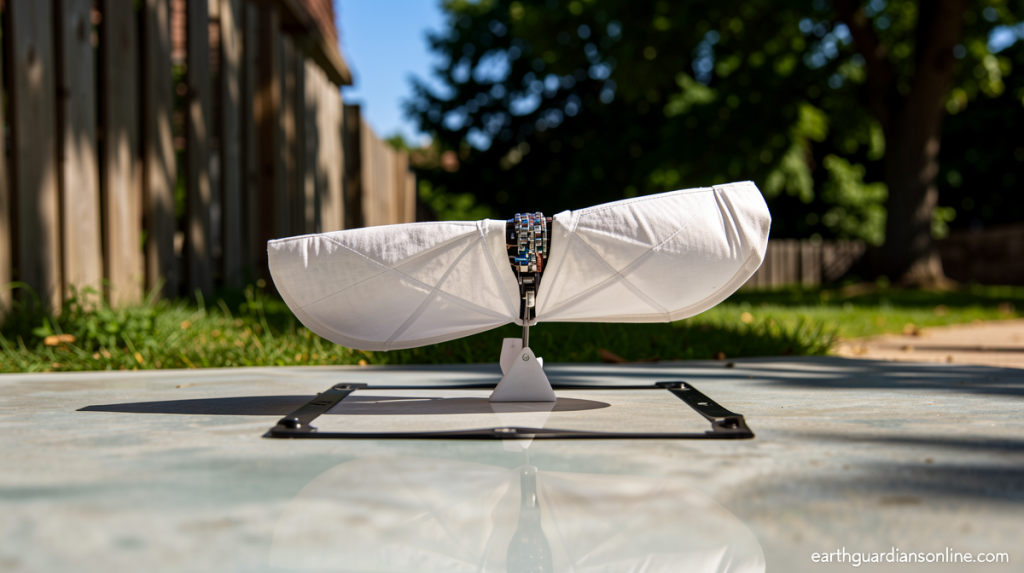
MIT Engineers a Dual-Mode Robot for Ocean Exploration
Earthguardiansonline.com – Scientists at the Massachusetts Institute of Technology have developed an innovative robotic platform capable of navigating both atmospheric and aquatic environments. This lightweight machine, constructed for approximately three hundred dollars, represents a significant advancement in environmental monitoring technology. The device, known as the flapping aerial-aquatic vehicle or FAAV, utilizes a unique wing mechanism inspired by seabirds that dive beneath waves to catch prey.
Bridging Two Worlds Through Engineering
Traditional biomimetic designs often attempt to replicate biological structures exactly. However, the MIT team recognized that water possesses substantially greater density than air, creating distinct challenges for movement. Diving birds like petrels and puffins manage this transition by partially folding their wings underwater. This adaptation reduces the amplitude of wing movement and minimizes resistance while generating sufficient thrust for propulsion.
“No one had ever figured out how to transform that into a fully moving robot,” explained Raphael Zufferey, an assistant professor of mechanical engineering at MIT and lead author of the research study.
Rather than adding complex folding mechanisms that would increase weight and engineering demands, the researchers designed a more flexible wing structure. This innovation allows the robot to maintain efficient movement without requiring additional joints. The FAAV operates on a simple principle: it attempts to achieve a specific wingbeat frequency regardless of whether it travels through air or water.
Technical Specifications and Performance
The completed vehicle weighs only two hundred fifty grams, equivalent to nine ounces. It features nylon wings and a tail treated with water-repellent nanoparticles to prevent moisture accumulation. A battery-powered motor drives the flapping mechanism, enabling the robot to achieve speeds exceeding six meters per second during flight. Underwater, it maintains a velocity of approximately one meter per second.
Theoretical calculations suggest the FAAV could cover six kilometers through the air or two kilometers beneath the surface on a single charge. These figures remain unverified through extensive field testing, but preliminary results demonstrate promising capabilities. The robot successfully navigates mild wave conditions and moderate wind, though rougher environments currently present challenges for the initial design iteration.
Testing and Validation
Researchers conducted comprehensive evaluations over a twelve-month period. Initial trials occurred within a controlled water tank facility in Massachusetts, followed by extended testing at Lake Geneva in Switzerland. A critical component of this research involved determining optimal angles for submersion and emergence. The team identified seventy degrees as the ideal trajectory for transitioning between mediums without excessive energy expenditure or structural stress.
“Developing a vehicle capable of operating effectively in both air and water is a significant technical challenge, and successfully integrating these two modes of operation is a notable engineering achievement,” noted Maaten Furlong, director of engineering science at the National Oceanography Centre, who participated in reviewing the work.
Future Applications in Oceanography
Scientific data collection at sea traditionally requires expensive vessels and specialized equipment. The FAAV offers a cost-effective alternative for researchers seeking to monitor marine environments. The platform can deploy from either terrestrial or maritime launch points, following programmed routes while periodically submerging to gather samples.
Zufferey envisions the robot operating in hazardous locations where human presence proves dangerous. Potential deployment scenarios include toxic algal bloom regions, volcanic crater lakes, and areas adjacent to massive ice formations. Additionally, the vehicle could accommodate camera systems for continuous wildlife observation without disturbing natural behaviors.
“In this paper, we show that individually all of this is possible: we can fly, we can swim, we can transition, we can dive. But we haven’t been able to piece it all together in one autonomous mission,” Zufferey stated regarding the team’s next developmental phase.
The research team currently pursues funding opportunities to enhance the robot’s capabilities. Their ultimate objective involves creating a fully autonomous system capable of executing extended missions without human intervention. Understanding avian navigation patterns remains central to this development process, as birds have perfected these transitions over millions of years of evolution.
This innovation represents more than a technological milestone; it signals a potential shift toward more accessible environmental monitoring. As climate concerns intensify, tools that enable comprehensive data collection across multiple mediums could prove invaluable for conservation efforts worldwide. The FAAV’s lightweight construction and relatively modest production costs suggest it could eventually supplement rather than replace existing oceanographic methods, providing researchers with additional perspectives on marine ecosystems.
Related Reading
Frequently Asked Questions
What is MIT unveils a robot that flies?
MIT unveils a robot that flies is the main topic of this guide. The article explains the context, practical details, and next steps readers should understand.
Why does MIT unveils a robot that flies matter?
MIT unveils a robot that flies matters because readers are looking for a useful answer, not just a short summary. Good content should match search intent and help them decide what to do next.
