Thousands without power and at least 100 homes damaged after Tropical Storm Lala starts to move away from Hawaii

Daftar Isi
Earthguardiansonline.com –
Tropical Storm Lala Leaves Hawaii in Ruin: Nearly 184,000 Still in Darkness as Cleanup Begins
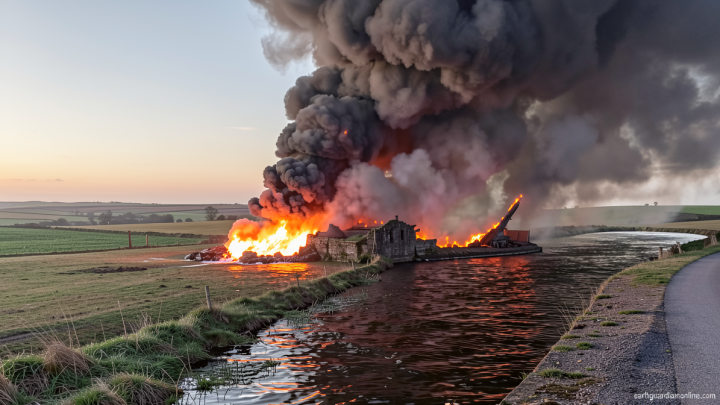
Earthguardiansonline.com – The eye of Tropical Storm Lala began sliding eastward off Kauai on Sunday, marking the end of the most direct strike the Hawaiian archipelago has faced in recent memory. Yet departure does not mean relief. Across the chain, roughly 184,000 customers remained disconnected from the electrical grid, and close to 70 percent of Hawaii’s Big Island sat in total darkness as the storm’s outer bands continued to sweep through the islands. Governor Josh Green confirmed at a Sunday press briefing that at least 100 homes had been either damaged beyond repair or destroyed outright by the combination of hurricane-force gusts and catastrophic flooding.
The storm, which had intensified to Category 1 status on Saturday before making its closest pass over the Big Island at approximately 5 p.m. local time, sent its eyewall skimming the southern coastline from roughly 30 miles offshore. The National Hurricane Center noted that the mountainous topography of the islands amplified wind speeds at higher elevations, producing hurricane-force gusts recorded across Hawaii, Honolulu, and Maui counties. Torrential downpours compounded the wind damage: the Big Island alone accumulated more than 30 inches of rain in a matter of hours, turning dry creek beds into roaring torrents and overwhelming drainage infrastructure that had never been designed for such volume.
Infrastructure Collapse and Isolated Communities
The heaviest consequences fell on the Big Island, where Green warned of what he called “a ton of landslides” triggered by the saturated ground. One particularly severe event occurred when floodwaters from the Pa’au’au Stream broke through a rock retaining wall and surged directly onto a highway, buckling the pavement and severing the only road link for up to 2,500 residents in the Pāhala area. Deborah Funai Brown, a lifelong Pāhala resident, described witnessing the collapse and called the event “catastrophic.”
“We’ve always been stuck in the middle of nowhere so you kind of feel forgotten about when you’re out here, like you’re on an island by yourself.”
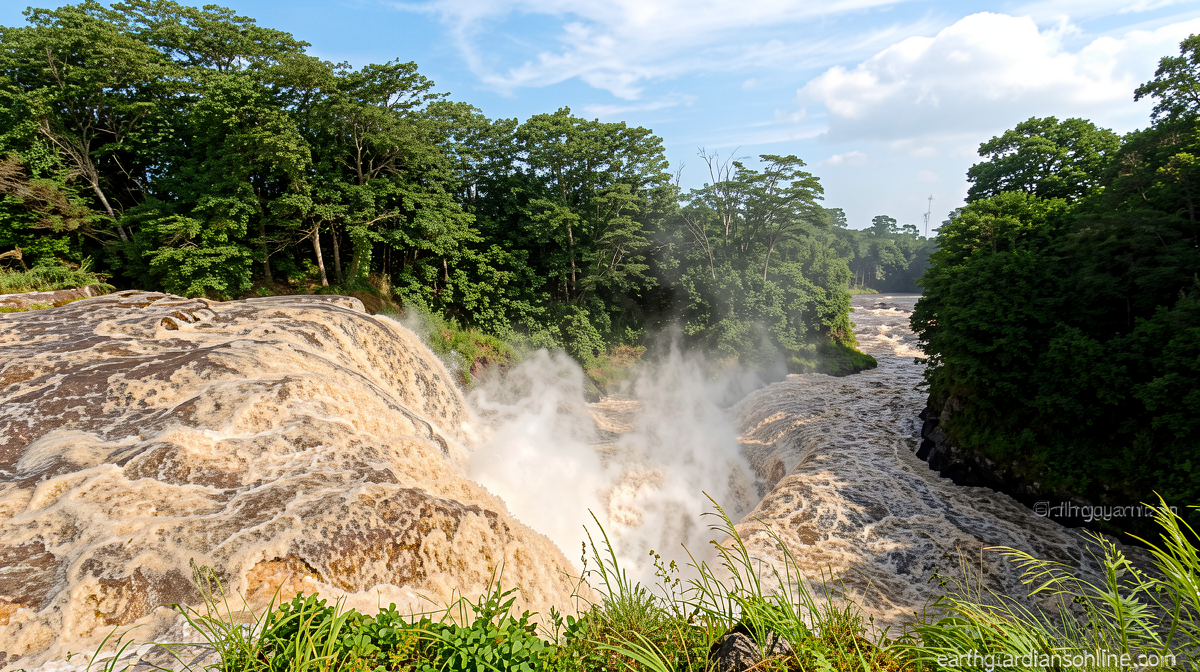
Elsewhere on the island, Green described a collapsed roadway that had effectively created a new waterfall, along with damage to several small bridges. One stretch of road now isolates a community that includes a small hospital, leaving that facility cut off from both road access and electrical service. In Naalehu, the governor said a “river of water” tore through the neighborhood, washing away “quite a lot” of property and infrastructure.
Human Toll and Rescue Operations
Green attributed a Saturday-evening car accident to storm conditions, though by Sunday he acknowledged uncertainty over whether the crash was directly tied to Lala. A second fatality was discovered amid the storm’s passage; the governor said the manner of death and any connection to the weather event remained undetermined. In a video update posted Saturday night, Darryl Oliviera, acting civil defense administrator for Hawaii County, confirmed that occupants of a vehicle trapped in rising floodwaters were being extracted, without elaborating on their condition.
Among the confirmed rescues, Green highlighted the case of an elderly woman pulled from a tree after her home was swept away by floodwater. More than 190 flights arriving at or departing from Hawaiian airports were postponed, and 52 were canceled outright, though all airports remained open for operations. Emergency responders were expected to remain engaged on urgent incidents for roughly 36 hours after the storm’s passage, with formal damage assessments slated to begin Monday.
What Remains: Rain, Surf, and a Massive Cleanup
Tropical storm warnings stayed in effect for Kauai, Oahu, Molokai, Lanai, and Maui through the weekend. While rainfall across most islands was becoming more intermittent as outer rainbands cycled overhead, Kauai continued to receive direct moisture from Lala’s core, accompanied by sustained tropical storm-level gusts. The National Hurricane Center issued warnings for life-threatening flooding and mudslides, particularly in steep terrain, and forecast up to 6 additional inches of rain for portions of Kauai. East-facing shorelines faced a high surf advisory, with waves reaching 8 to 12 feet.
Major General Stephen F. Logan, adjutant general for the state of Hawaii, told reporters that the primary obstacle to restoring electricity was clearing downed trees that had crashed onto transmission lines during the storm. He expressed confidence that state crews could manage the cleanup but noted that active-duty military units were on standby should the scale of the task exceed civilian capacity. Record numbers of road closures and extended outages had been logged, and Logan emphasized that the combined effect on daily life—commutes, medical access, commercial operations—would take days to untangle.
As Lala tracks westward into the open Pacific, its most persistent danger shifts from wind to water. Flash flooding remains a credible threat across every island in the chain, and saturated soils increase the likelihood of secondary landslides in the days following the storm. For the thousands still without power, the waiting is measured not in hours but in the slow, methodical work of crews cutting through storm-felled timber and rebuilding what the storm took in a single afternoon.
Related Reading
Frequently Asked Questions
What is Thousands without power and at least 100?
Thousands without power and at least 100 is the main topic of this guide. The article explains the context, practical details, and next steps readers should understand.
Why does Thousands without power and at least 100 matter?
Thousands without power and at least 100 matters because readers are looking for a useful answer, not just a short summary. Good content should match search intent and help them decide what to do next.