Aboard the USS Abraham Lincoln, where hardship and resilience share quarters

Daftar Isi
Nine Months at Sea: Life Inside the USS Abraham Lincoln as the Iran Conflict Grinds On
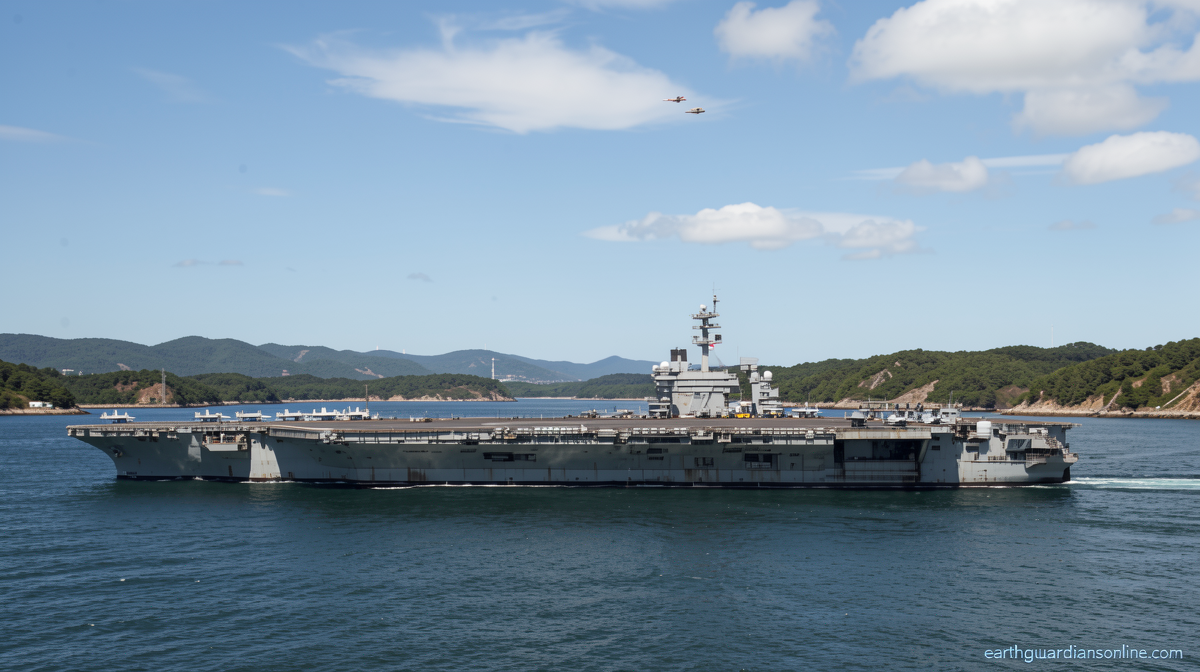
Earthguardiansonline.com – The aircraft carrier pulled alongside the dock at Duqm, Oman, on July 7, and the author stepped aboard into a theater already ablaze. Within minutes of completing the initial orientation walk-through, word came down that Iran had struck a third tanker transiting the Strait of Hormuz. US Central Command — the joint task force executing the Pentagon’s operational plan — was preparing a retaliatory response. Before the first hour of boarding had elapsed, the author was standing on the flight deck watching a live weapons shot. A Navy official sent a single text: “Your timing is impeccable.”
What followed over three days on the Lincoln, and dozens of conversations with officers and enlisted sailors, painted a picture far more tangled than any single headline could capture. Hardship and endurance coexist here, sometimes in the same individual, sometimes within the same breath.
A Ship That Has Seen This Before
The war with Iran, now in its seventh month since hostilities began in February, has claimed the lives of 18 American service members. Yet aboard the Lincoln, that toll registered with a quietness that initially startled the visitor. The day after boarding was designated a “no fly day” — a scheduled pause in flight operations giving the crew a brief window of rest following their short port call. While the crew reset, the news cycle churned elsewhere: American strikes launched from other naval platforms, escalating rhetoric from both capitals, and the visible unraveling of a tentative peace framework that had briefly held between Washington and Tehran.
At 6 a.m. the next morning, in the mess deck — the cafeteria where roughly 5,000 crew members eat in staggered shifts — senior enlisted sailors sat with an almost studied calm. Most had not been tracking the news, despite the availability of Wi-Fi on board. They had cycled through escalation and de-escalation so many times that the current flare-up felt procedural rather than alarming. That institutional memory, layered over months of sustained operations, shapes how the crew metabolizes crisis.
The Deployment Question
The Lincoln’s current mission may set a record for the longest continuous deployment of a US carrier away from its home port — a stretch approaching nine months. Family members have voiced growing anxiety, and reports of suicide ideation among crew members, along with at least one instance of a sailor being pulled from the water, have sharpened public concern. At the political level, the issue has drawn competing characterizations. Defense Secretary Pete Hegseth has insisted the conditions aboard have been “completely misrepresented.” President Donald Trump, speaking the previous week, declared the deployment “not nearly long enough.” That framing landed poorly with many of the sailors in regular contact with the reporting team, and the lived reality resists compression into a soundbite.
When the Supply Chain Broke
Food aboard the Lincoln tells its own story of disruption and partial recovery. Early in the conflict, Iranian strikes severed the logistics pipeline running through Bahrain, the traditional resupply node for carriers operating in the region. A rationing period followed, and sailors still describe it in vivid, sometimes bitter detail. For a stretch, meals collapsed into tuna stirred into noodles, or corn dogs served as the primary protein. Several crew members described losing meaningful weight during that window.
By the time of the July port call, the situation had improved. Fresh fruit and vegetables appeared on the breakfast table — a small but symbolically significant change. Daily meal output now runs between 17,000 and 18,000 servings, drawn largely from frozen stock and rotated on a 14-day cycle that sailors know by heart: “pizza day,” “burger day,” and so on. Morale-boosting events such as ice cream socials punctuate the rotation. Yet the friction of daily life persists. Young enlisted sailors still queue for up to an hour per meal, a grind that accumulates over weeks and months. Many spoke of dreaming about their first meal back home — Chinese takeout, a Chipotle burrito, a mother’s homemade bolognese.
One sailor, who messaged the reporting team after disembarkation, summarized the food situation with characteristic understatement:
“Food has slightly increased in edibility, if I was asked a few months ago I would say a lot of people were losing weight due to the food.”
That is neither a five-star review nor the crisis some coverage has implied. It is an honest accounting from people living inside a ship that has been operating in rough seas for months. The Navy, in a written statement, acknowledged the operational reality: “Lincoln is operating in a highly contested environment where traditional supply hubs in the Middle East were disrupted by combat actions.” The service added that “leadership prioritized mission-critical supplies: first food, then hygiene items, then mail.”
The Texture of Daily Life
The guest section where the reporting team stayed sat below a near-constant rhythm of jet launches — a low, omnipresent vibration that becomes background noise within hours. The communal officers’ bathroom provided hot water but demanded a thorough scrub before use. Reports from other parts of the ship included accounts of backed-up toilets, a plumbing reality that no amount of mission prestige can override. These are not dramatic failures; they are the accumulated wear of a vessel pushed beyond its normal maintenance cycle, operating in a contested littoral zone where repair windows are scarce and every system is under sustained load.
The Lincoln’s story, in other words, is not a single narrative of either heroic endurance or systemic neglect. It is both, simultaneously, and the distinction matters. The sailors who endured the rationing period, who lost weight, who queued an hour for a plate of frozen pizza, and who then watched a tanker burn in the Strait of Hormuz from the flight deck — they are the same people who, at breakfast the next morning, ate their eggs quietly and went back to work. Understanding that duality, rather than flattening it into a single adjective, is the task any honest account of life aboard a carrier at war must attempt.
Related Reading
Frequently Asked Questions
What is Aboard the USS Abraham Lincoln where?
Aboard the USS Abraham Lincoln where is the main topic of this guide. The article explains the context, practical details, and next steps readers should understand.
Why does Aboard the USS Abraham Lincoln where matter?
Aboard the USS Abraham Lincoln where matters because readers are looking for a useful answer, not just a short summary. Good content should match search intent and help them decide what to do next.