Karmelo Anthony’s attorney asks judge for new trial in Texas track meet killing

Daftar Isi
Teenager Sentenced to 35 Years Over Track-Meet Stabbing Seeks Retrial After Judge Removed
Earthguardiansonline.com – Karmelo Anthony, now 19, is asking a newly assigned judge to throw out his murder conviction and order a complete retrial, arguing that procedural irregularities during his June trial effectively sealed his fate before a jury ever deliberated. The motion landed on the desk of Judge Michael Chitty just one day after the court stripped Anthony’s original presiding judge of authority over the case — a development that Anthony’s legal team had pursued for months.
The underlying tragedy unfolded at a multi-school track meet last spring, when Anthony fatally stabbed Austin Metcalf in the chest during a confrontation in the stadium bleachers. Anthony, who is Black, was sentenced to 35 years in prison after jurors rejected his claim that he acted in self-defense. Metcalf, who was white, had been repeatedly told by witnesses to leave a tent belonging to his team’s group. The incident drew intense national scrutiny, amplified by a wave of social media posts that framed the killing in racial terms, even though attorneys on both sides told jurors the dispute had nothing to do with race.
The “Shadow Docket” and Off-the-Record Dealings
Defense attorney Russell Wilson, who was not Anthony’s trial counsel but now represents him in post-conviction proceedings, told Judge Chitty Thursday that the original judge permitted what Wilson called a “shadow docket” — a parallel stream of communications and decisions that kept critical information away from the trial record.
“Everything was done off the record, at an astonishing clip,” Wilson said.
Wilson further alleged that prosecutors failed to honor an informal agreement reached outside the courtroom, an arrangement that would have narrowed the trial’s focus to the sequence of events immediately preceding the stabbing. Anthony’s decision not to take the stand, Wilson argued, flowed directly from a breakdown in that negotiation. Without testimony from the defendant himself, the jury heard only the prosecution’s narrative and witness accounts of the escalating argument.
Why the Original Judge Was Removed
The recusal motion targeted District Judge John Roach, who presided over the June trial. Anthony’s attorneys pointed to a post-trial television interview in which Roach, speaking to a Dallas TV station, was asked whether the jury had “got it right” in returning a guilty verdict.
“Yeah, they did,” Roach replied. “Whatever they say, they got it right.”
The clip was played in court as the Wednesday recusal hearing opened. In the same interview, Roach defended his strict courtroom rules and commented on the volume of online commentary surrounding the case. The judge’s removal was granted, and Judge Chitty was assigned to hear the retrial motion.
Prosecutor Bill Wirskye pushed back Thursday, telling Chitty that Anthony received a fair trial and that his own attorneys had consented to every procedural step taken during the proceedings. Wirskye’s position underscores a common tension in post-conviction litigation: whether a defendant’s prior agreement to trial conditions forecloses later challenges to those same conditions.
What Witnesses Described
The trial record, as summarized by both sides, depicts a heated exchange on a rainy spring day. Several schools were competing at the track event when Anthony sat beneath the Memorial High School tent positioned in the bleachers. Metcalf and others repeatedly told Anthony to leave, witnesses testified, and the confrontation escalated.
Prosecutors characterized Anthony as the aggressor. Witnesses described Anthony reaching inside a bag and declaring, per a police report, “Touch me and see what happens.” Metcalf then pushed Anthony, witnesses said, after which Anthony drew a knife and stabbed him in the chest.
Anthony’s attorneys have contended that the trial was further compromised by overly restrictive courtroom rules that limited what the defense could present, combined with jury instructions they consider improper. Together with the alleged shadow-docket problem and the collapsed pretrial agreement, these factors form the backbone of the retrial petition now before Judge Chitty.
National Attention and Its Aftermath
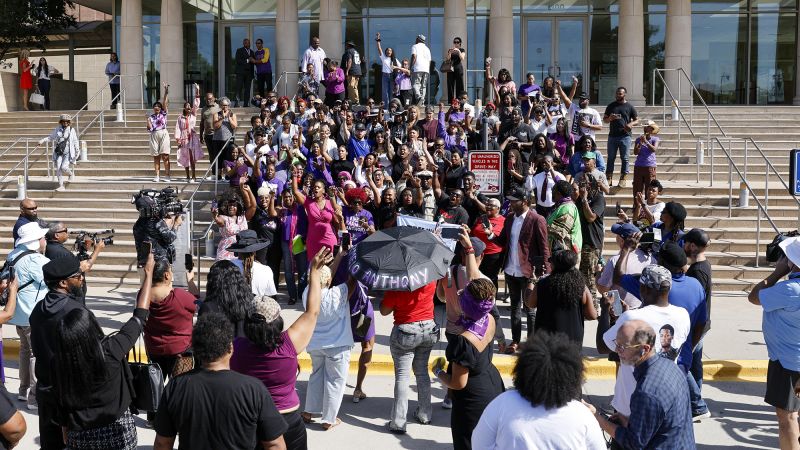
The killing became a national story within days, in large part because social media platforms turned a local schoolyard dispute into a symbol of racial injustice. Both families reported being targeted by online harassment as coverage intensified. Schools, parents, and commentators across the country weighed in, and the case became a flashpoint for debates about how quickly online narratives can outpace the slow machinery of a criminal trial.
Whatever the retrial motion ultimately produces, the episode has already reshaped how Texas courts handle high-profile cases involving teenagers — particularly the question of how much pretrial negotiation can occur outside the formal record without later being treated as a due-process violation. Judge Chitty’s ruling on Wilson’s motion will determine whether Anthony faces a second jury or remains in custody for the duration of a 35-year sentence.
Related Reading
Frequently Asked Questions
What is Karmelo Anthony s attorney asks judge?
Karmelo Anthony s attorney asks judge is the main topic of this guide. The article explains the context, practical details, and next steps readers should understand.
Why does Karmelo Anthony s attorney asks judge matter?
Karmelo Anthony s attorney asks judge matters because readers are looking for a useful answer, not just a short summary. Good content should match search intent and help them decide what to do next.