What we know about the IndyCar race taking over the heart of DC

Daftar Isi
- IndyCar Engines Roar Through the Nation’s Capital for a One-of-a-Kind Street Race
- The Route: Seven Turns Through Iconic Landmarks
- Who Is Running the Show
- Engineering a Track in the Middle of a City
- The Wider Anniversary Apparatus
- Community Friction and Commuter Disruption
- Race-Day Schedule and Spectator Experience
- Related Reading
- Frequently Asked Questions
IndyCar Engines Roar Through the Nation’s Capital for a One-of-a-Kind Street Race
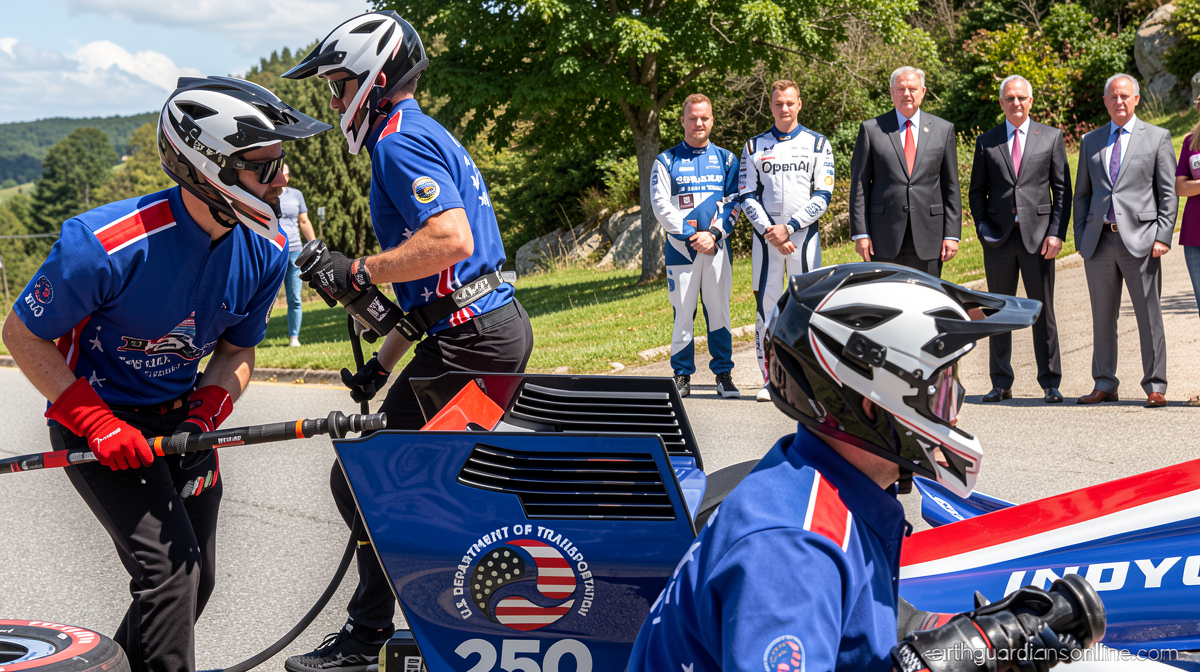
Earthguardiansonline.com – For decades, cities like Monaco, Las Vegas, Detroit, and Miami have drawn crowds to watch open-wheel machines tear down temporary street circuits carved from ordinary public roads. This weekend, Washington, DC enters that exclusive club. The Freedom 250 Grand Prix will send IndyCar machines screaming past monuments and museums at speeds approaching 180 miles per hour, turning the capital’s most recognizable avenues into a high-speed racing corridor for two days.
The event is woven into a larger narrative: the belated observance of the country’s 250th anniversary and President Donald Trump’s ongoing campaign to reshape Washington’s civic identity. More than 200,000 spectators are projected to gather on the National Mall across the race weekend, making it one of the largest single-event turnouts in recent memory for the district.
The Route: Seven Turns Through Iconic Landmarks
The circuit spans just under 1.7 miles and features seven corners, threading through some of the most symbolically charged geography in American public life. Drivers launch a few blocks south of the U.S. Capitol along 3rd Street, then swing onto Pennsylvania Avenue before cutting across 9th Street in front of the National Gallery of Art and the National Archives. From there the course veers onto Constitution Avenue, slices across 7th Street, and bisects the National Mall before hooking onto Independence Avenue and sweeping past the Smithsonian National Air and Space Museum. A final turn onto Maryland Avenue feeds back into 3rd Street, closing the loop.
Each lap covers roughly 1.7 miles; the full race demands 147 of them, totaling 250 miles — a deliberate nod to the semi-quincentennial the event is meant to honor. Pennsylvania Avenue, normally a 25-mph thoroughfare running past the White House, was retained in the layout because its width made it suitable as a pit lane. Without that stretch, the course could not accommodate the technical stops required by IndyCar regulations.
Who Is Running the Show
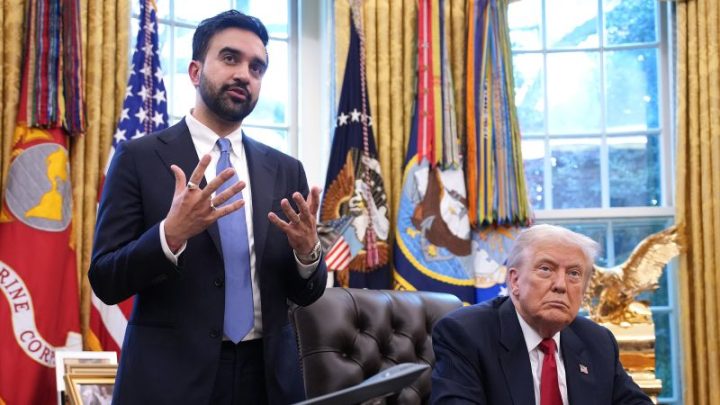
Bud Denker, president of the Penske Corporation, has served as the operational architect of the Grand Prix, navigating layers of bureaucratic resistance to map a race through downtown Washington. The project received a decisive acceleration in January when Trump signed an executive order styled “Celebrating American Greatness with American Motor Racing,” which effectively sidestepped the need for congressional sign-off. The White House has confirmed that the president is expected to attend the Sunday main event.
Penske is both organizing the race and covering its costs — a financial arrangement that mirrors the structure of the Ultimate Fighting Championship spectacle staged at the White House earlier in the year. Both Penske and UFC serve as sponsors of Freedom 250, the Trump-backed nonprofit charged with orchestrating the anniversary programming.
Engineering a Track in the Middle of a City
Getting open-wheel cars to 180 mph safely through a built-up urban core required substantial civil works. Protective barriers weighing 10,000 pounds each and standing one meter tall were erected along the track to shield both competitors and spectators. Spectator viewing platforms were assembled alongside the course. All of it must be dismantled once race day concludes.
Construction began at the close of July and ran for roughly two months, much of it executed overnight to limit daytime disruption. Lindsey Appiah, the DC deputy mayor for public safety and justice, indicated that restoring the affected streets to normal service would not be complete until approximately the second week of September.
One of the more unusual engineering challenges involved the city’s aging infrastructure. Denker disclosed that 49 manhole covers had to be reshaped and sealed with silicone so that the aerodynamic downforce generated at racing speed would not rip the lids from their seats. He also commended the district’s asphalt surfaces as well suited to high-speed racing and pledged to repair any pavement damage incurred during the event.
The Wider Anniversary Apparatus
The Grand Prix is the latest installment in a summer-long series of productions mounted by Freedom 250. Earlier this year the organization staged a 16-day “Great American State Fair” featuring pavilions representing every state and territory, alongside a youth athletic competition branded the “Patriot Games” that carried a top prize of $250,000. The Grand Prix is positioned as the capstone of that extended celebration.
Community Friction and Commuter Disruption
Not every resident has welcomed the months of road closures, detours, and construction noise that accompanied the build-out. Elyssa Feder, co-founder and executive director of Rising Organizers, a DC-based community organizing nonprofit, voiced what many area residents have felt:
“A sense of frustration that the administration continues to use the District of Columbia” as a stage for spectacle at the expense of daily life.
For commuters and neighborhood residents whose routines were already strained by a summer packed with anniversary events, the two-month construction window compounded an already tense environment. The promise of restoration by mid-September offers some relief, though the interim disruption has been considerable.
Race-Day Schedule and Spectator Experience
Gates open at 8 a.m. Eastern Time on both days. Saturday is devoted primarily to practice sessions, culminating in a final qualifying round that sets the grid for Sunday’s main event. The winner is crowned on Sunday, followed by post-race ceremonies on the track.
Spectators should expect noise levels around 135 decibels at close range — roughly equivalent to a jet engine at takeoff. For perspective, a motorcycle at full throttle registers about 88 decibels. Ear protection, while not mandated, is strongly advisable for anyone positioned near the track’s inner edges.
The Freedom 250 Grand Prix represents an unprecedented fusion of motorsport, civic symbolism, and political spectacle in the capital. Whether it will be remembered as a thrilling addition to the street-racing calendar or as another chapter in a contentious summer of disruption remains to be seen by the residents who must live with the aftermath.
Related Reading
Frequently Asked Questions
What is What we know about the IndyCar?
What we know about the IndyCar is the main topic of this guide. The article explains the context, practical details, and next steps readers should understand.
Why does What we know about the IndyCar matter?
What we know about the IndyCar matters because readers are looking for a useful answer, not just a short summary. Good content should match search intent and help them decide what to do next.