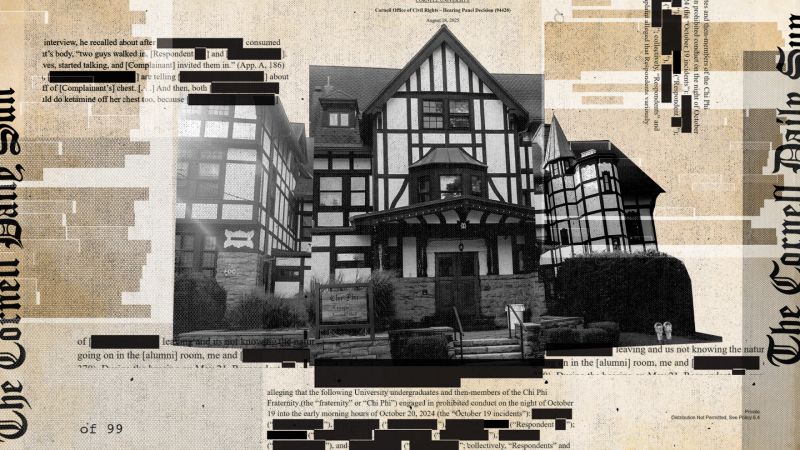
A timeline of the Cornell gang rape allegations

Daftar Isi
Cornell allegations prompt new scrutiny of campus sexual-assault response
Earthguardiansonline.com – A former Cornell University student’s civil lawsuit over alleged sexual violence at a fraternity house in 2024 has led to a renewed investigation and intensified attention on how colleges, campus police and prosecutors handle reports of sexual assault.
The 101-page complaint, filed September 16 by a woman identified as Jane Doe, describes an alleged gang rape at a Chi Phi fraternity house near Cornell’s Ithaca campus. The lawsuit has placed Cornell University, its police department and the local district attorney under public scrutiny, while raising questions about evidence available during the original investigation.
New York Attorney General Letitia James is now serving as special prosecutor in the matter. Gov. Kathy Hochul appointed James after saying she had “lost faith” in the district attorney’s ability to continue overseeing the inquiry.
The district attorney has said he received Snapchat messages from the night in question and a six-page investigative report before deciding not to pursue criminal charges. The later emergence of additional evidence has fueled questions about whether the initial review had all relevant material.
A freshman far from home
Doe arrived at Cornell as an 18-year-old first-year student, more than 1,000 miles from her home. Her lawsuit describes her as having the mixture of excitement, expectations and anxiety common among students beginning college.
During the fall semester, she joined the Alpha Beta chapter of Delta Delta Delta. The complaint says she was drawn to the chapter’s promises of friendship and sisterhood, as well as the community it offered while she was far from family. She lived in the sorority house, and the filing notes that Cornell presented Greek life as a significant part of student life.
The night described in the lawsuit
The events detailed in the complaint began before 8:30 p.m., when Doe drank vodka at the Tri-Delta house before attending a sorority event at an Ithaca bar. The lawsuit says she was already intoxicated before leaving the house.
At roughly 8:30 p.m., Doe took an Uber to the bar with the sorority’s house mother. About half an hour later, a bouncer marked both of her hands with an “X,” indicating that she was under the legal drinking age. Despite that designation, the lawsuit says she was served at least one drink inside.
At approximately 10 p.m., Doe and other sorority members walked to another nearby bar, where she received an under-21 wristband. She left that bar alone at around 11 p.m. and went to the Chi Phi house to visit a friend, who was later named as a defendant in the civil suit.
The complaint says Doe was visibly intoxicated when she arrived and had consumed about 10 standard drinks in the preceding three hours. Inside the house, it alleges, the friend gave her a beer, and the pair danced. The lawsuit says he then suggested a threesome and led Doe to another room.
Two fraternity members allegedly pressured Doe to snort a substance described as ketamine and gave her additional alcohol, the complaint states. It alleges that both men sexually assaulted her while she was unable to consent. One man allegedly struck her buttocks, leaving bruising.
I felt like I was unable to make any decisions because of how intoxicated I was.
Doe made that statement in a six-page account signed for Cornell police. She said she had been “pretty ok” with parts of the first encounter, but did not agree to other sexual conduct that followed at the fraternity house. She characterized her intoxication at one point as an “8 out of 10,” the highest level of intoxication she said she had experienced.
Alleged escalation at the fraternity house
After the first encounter, the lawsuit says a third fraternity member entered the room and began sexually assaulting Doe without her consent.
At 1:42 a.m., one of the men allegedly sent a message to a Snapchat group titled “Chi Phi Actives” stating that there was “free p*ssy” upstairs. The complaint characterizes the message as an invitation for other fraternity members to enter the room. A partial image of the group chat is included in the court filing.
Additional Snapchat material shows Doe in a room at the fraternity house. The lawsuit alleges that multiple other fraternity members subsequently entered, pressured her to take more ketamine and subjected her to further abuse. The civil claims remain allegations, and the renewed investigation will determine whether criminal charges are warranted.
Why the case has broader implications
The case has renewed an enduring national discussion about campus safety, alcohol use, fraternity culture and the challenges involved in investigating sexual-assault allegations. In cases involving intoxication, investigators may need to evaluate witness accounts, physical evidence, medical records, digital communications and the sequence in which evidence was obtained or shared.
The distinction between a university’s internal response and a criminal investigation is also important. A campus can have its own reporting procedures and conduct processes, while police and prosecutors separately decide whether the available evidence supports criminal charges. Those systems can overlap, but they do not serve the same purpose or apply the same standards.
For students, the developments at Cornell underscore the importance of preserving potential evidence after an assault report, including messages, photographs, ride records and names of people who may have seen key events. It also highlights why the handling of reports by campus authorities and law enforcement can shape whether survivors feel able to come forward.
As James takes control of the inquiry, the central issues include what evidence investigators had during the first review, what later material became available and whether the prior decision not to bring charges should be reconsidered. The outcome may have consequences not only for those named in the lawsuit, but also for Cornell’s approach to safety, accountability and student trust.
Related Reading
Frequently Asked Questions
What is A timeline of the Cornell gang?
A timeline of the Cornell gang is the main topic of this guide. The article explains the context, practical details, and next steps readers should understand.
Why does A timeline of the Cornell gang matter?
A timeline of the Cornell gang matters because readers are looking for a useful answer, not just a short summary. Good content should match search intent and help them decide what to do next.