I saw ‘Whalefall’ … with a man who really got trapped in a whale

Daftar Isi
A Lobster Diver’s Unthinkable Experience Meets ‘Whalefall’
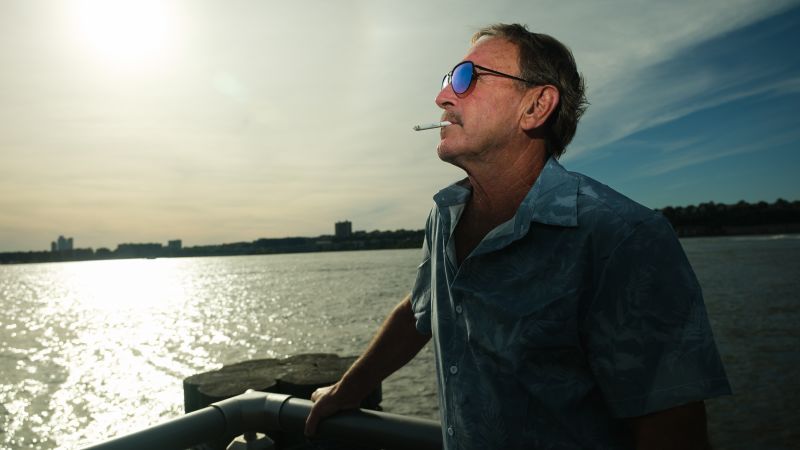
Earthguardiansonline.com – Michael Packard has become an unusually qualified guest for a screening of “Whalefall.” The 62-year-old lobster diver knows what it is like to be caught inside a whale’s mouth, an event so improbable that listeners often struggle to decide whether they have understood him correctly.
During an appearance at a Times Square theater attended by actors Josh Brolin and Austin Abrams, Packard stressed a distinction that matters greatly to him: he was not swallowed.
“I was trapped in its mouth.”
Brolin, visibly astonished, responded with a simple question: “Seriously?!”
The exchange captures the strange overlap between Packard’s real-life ordeal and the new survival film, which opens nationwide Friday. In “Whalefall,” Abrams portrays a scuba diver fighting to escape after becoming trapped inside a whale. The movie is not a retelling of Packard’s experience, but his 2021 encounter offers an extraordinary real-world parallel to its central fear.
A Story That Sounds Impossible
“Whalefall” has prompted strong reactions because its premise can seem far-fetched. Yet Packard’s survival gives the idea an unsettling reality. His case is the only documented account of a person diving underwater, becoming engulfed by a whale and remaining caught inside it for a meaningful period of time.
Other people have described brief encounters with whales. In 2020, a kayaker’s seconds-long experience helped inspire Daniel Kraus’ 2023 novel “Whalefall.” Kraus co-wrote the film’s screenplay with director Brian Duffield. Still, Packard’s experience stands apart because he was underwater when the animal’s mouth closed around him.
That difference is central to the way Packard tells the story. He remembers the pressure of the animal’s jaw, the darkness that followed and the movement of its tongue. He tried striking the interior of the mouth, but the effort felt insignificant against an animal of such size.
“I don’t know what the word is, dude. I don’t make people happy, but I make them … amazed,” Packard says. “Amazed. It brings out a lot of emotion.”
The film and the diver’s account share more than the startling image of a human being consumed by something enormous. Both explore survival, the pull of the ocean, family relationships and an ancient fear of being powerless before nature. They also ask audiences to consider how close ordinary lives can come to extraordinary danger.
The Dive Off Provincetown
On June 11, 2021, Packard was working near Provincetown, his hometown, on Cape Cod. It was his second dive of the morning, after he had already filled a bag with live lobsters. Above the water, his crewmate Josiah Mayo was aboard Packard’s boat, the Ja’n J, named for Packard’s teenage sons, Jacob and Josiah.
Lobster diving had become a natural life for Packard, who had been captivated by the ocean since childhood. When he was 12, his single mother saved enough money to buy him his first small boat. Beneath the surface, he found a form of concentration that shut out everything else.
Winter depression could weigh heavily on him, but diving gave him another mental space. His task was direct: search, hunt and bring up lobsters. That simplicity was part of the appeal.
“It just brings me to that place — that primal place,” he says.
But the ocean requires a diver to live with the knowledge that hunting and vulnerability can exist at the same time. Great white sharks inhabit the waters around Cape Cod. Packard sometimes saw them, though he knew he could not dwell on the risk if he wanted to continue working.
After handing off his first bag of lobsters, he descended again toward the seafloor. Then he was struck with a force he compared to a freight train. Water surged around him, and his surroundings went black.
His first thought was that a shark had attacked him. But he did not feel teeth or a bite. Instead, he felt intense pressure. As he moved his arms, he encountered a hard, vast interior that seemed to be part of an animal’s mouth. Its jaw tightened around his torso while his legs remained outside.
Why a Humpback Was the Only Explanation
Packard quickly concluded that only a humpback whale could account for what was happening. Humpbacks can reach 60 feet in length and weigh as much as 40 tons. They are baleen whales, using enormous mouths to collect small prey such as krill and plankton.
Unlike toothed whales, humpbacks do not use teeth to tear prey apart. Their baleen consists of keratin plates that help them filter food from seawater. Humans are not part of their normal diet, which makes Packard’s experience all the more unusual: a diver could be accidentally caught during a feeding motion, even though the animal could not consume a person as prey.
The distinction between being in a whale’s mouth and being swallowed may sound technical to an audience hearing the story for the first time. For Packard, it is the difference between describing the physical limits of what happened and turning an astonishing survival story into something else.
That insistence also grounds the connection to “Whalefall.” Fiction can take viewers inside an extreme scenario, while Packard’s presence reminds them that the ocean has already produced an event that defies easy expectations. His account is not merely about spectacle. It is about a working diver who left home for a familiar morning on the water and encountered a force beyond anything he could have anticipated.
For audiences, the lasting power of both stories may be the same: they make the natural world feel immense, unpredictable and deeply personal. Packard survived to describe a darkness few people could imagine, and his words give “Whalefall” a rare kind of perspective—one shaped not by special effects, but by experience.
Related Reading
Frequently Asked Questions
What is I saw Whalefall with a man who?
I saw Whalefall with a man who is the main topic of this guide. The article explains the context, practical details, and next steps readers should understand.
Why does I saw Whalefall with a man who matter?
I saw Whalefall with a man who matters because readers are looking for a useful answer, not just a short summary. Good content should match search intent and help them decide what to do next.