
How to Create a Nature Garden Step by Step Guide
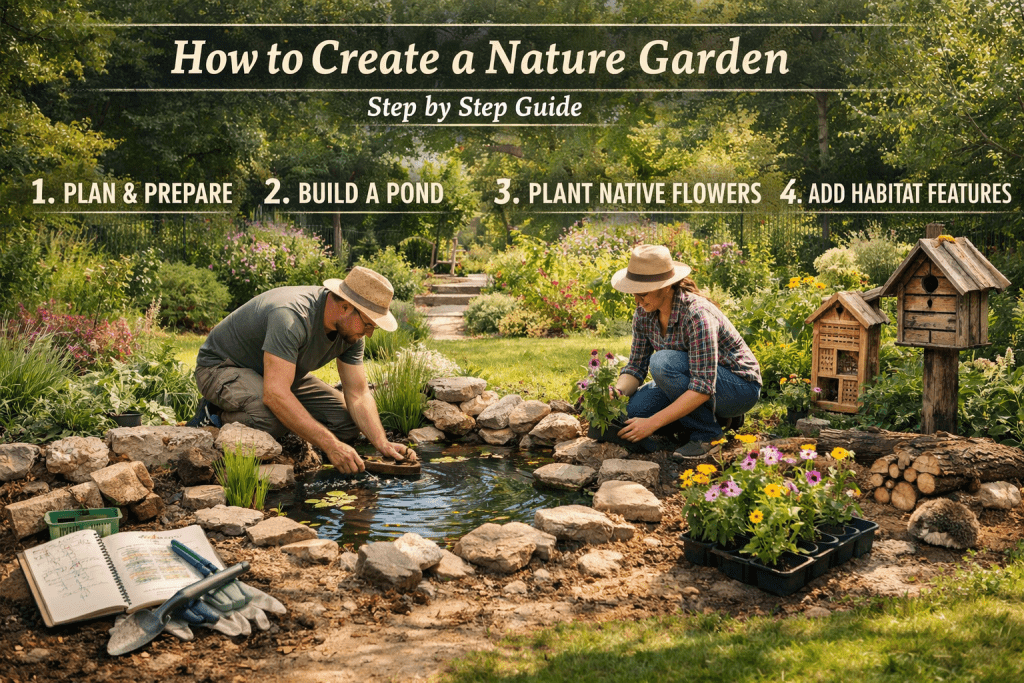
Creating a thriving outdoor space that supports wildlife and reflects natural ecosystems requires more than planting random greenery. If you want to understand how to create a nature garden, you need a structured approach that prioritizes biodiversity, soil health, and ecological balance. A nature garden is designed to mimic local habitats, attract pollinators, and reduce maintenance through sustainable practices. The process is systematic and intentional from planning to long-term care.
Understand the Purpose and Assess Your Site
Before planting anything, define the goal of your garden. A true nature garden supports birds, insects, and beneficial organisms while minimizing artificial inputs. It is not about ornamental perfection but ecological function.
Start with a full site assessment. Observe sunlight patterns, wind exposure, drainage conditions, and existing vegetation. Identify whether your soil is sandy, clay-based, or loamy, as this affects plant selection.
Test the soil pH and nutrient levels if possible. Healthy soil is the foundation of success when learning how to create a nature garden. Avoid synthetic fertilizers; instead, plan to improve soil structure using compost and organic matter.
Map the space and divide it into zones. Include areas for trees, shrubs, ground cover, and possibly a small water feature. Thoughtful zoning creates habitat diversity and increases wildlife attraction.
Choose Native Plants for Ecological Balance
The core principle of how to create a nature garden is planting native species. Native plants are adapted to local climate conditions and require less water and maintenance. They also provide food and shelter for native wildlife.
Research plants that naturally grow in your region. Select a mix of trees, shrubs, perennials, grasses, and wildflowers to create layered vegetation. This layered structure mimics natural ecosystems.
Include flowering plants that bloom at different times of the year. Continuous blooming ensures pollinators such as bees and butterflies always have nectar sources. Diversity strengthens ecological resilience.
Avoid invasive species that outcompete native plants. Even attractive ornamentals can disrupt the natural balance. A stable plant community reduces long-term maintenance and supports sustainability.
Prepare the Soil and Design the Layout
Once plant choices are finalized, prepare the soil properly. Remove existing turf grass if necessary, but avoid excessive tilling, which disturbs soil microorganisms. Preserve soil structure whenever possible.
Add compost, leaf mold, or organic mulch to improve fertility and moisture retention. Healthy soil encourages deep root growth and long-term plant stability. Soil life is critical to ecosystem health.
Design planting groups instead of isolated specimens. In nature, plants grow in clusters that support each other. Grouping improves pollination and creates stronger visual cohesion.
Consider pathways made of natural materials like gravel, wood chips, or stepping stones. These allow access without compacting planting areas. Thoughtful layout planning is essential when implementing how to create a nature garden effectively.
Create Wildlife Habitats and Water Sources
A nature garden goes beyond plants. Wildlife needs shelter, nesting areas, and water. Integrating habitat features transforms a simple garden into a functioning ecosystem.
Install birdhouses, insect hotels, or brush piles made from fallen branches. These provide safe nesting areas and shelter during colder months. Deadwood is particularly valuable for beneficial insects.
Add a small pond or shallow water dish. Water attracts birds, frogs, and pollinators. Even a modest water feature significantly increases biodiversity.
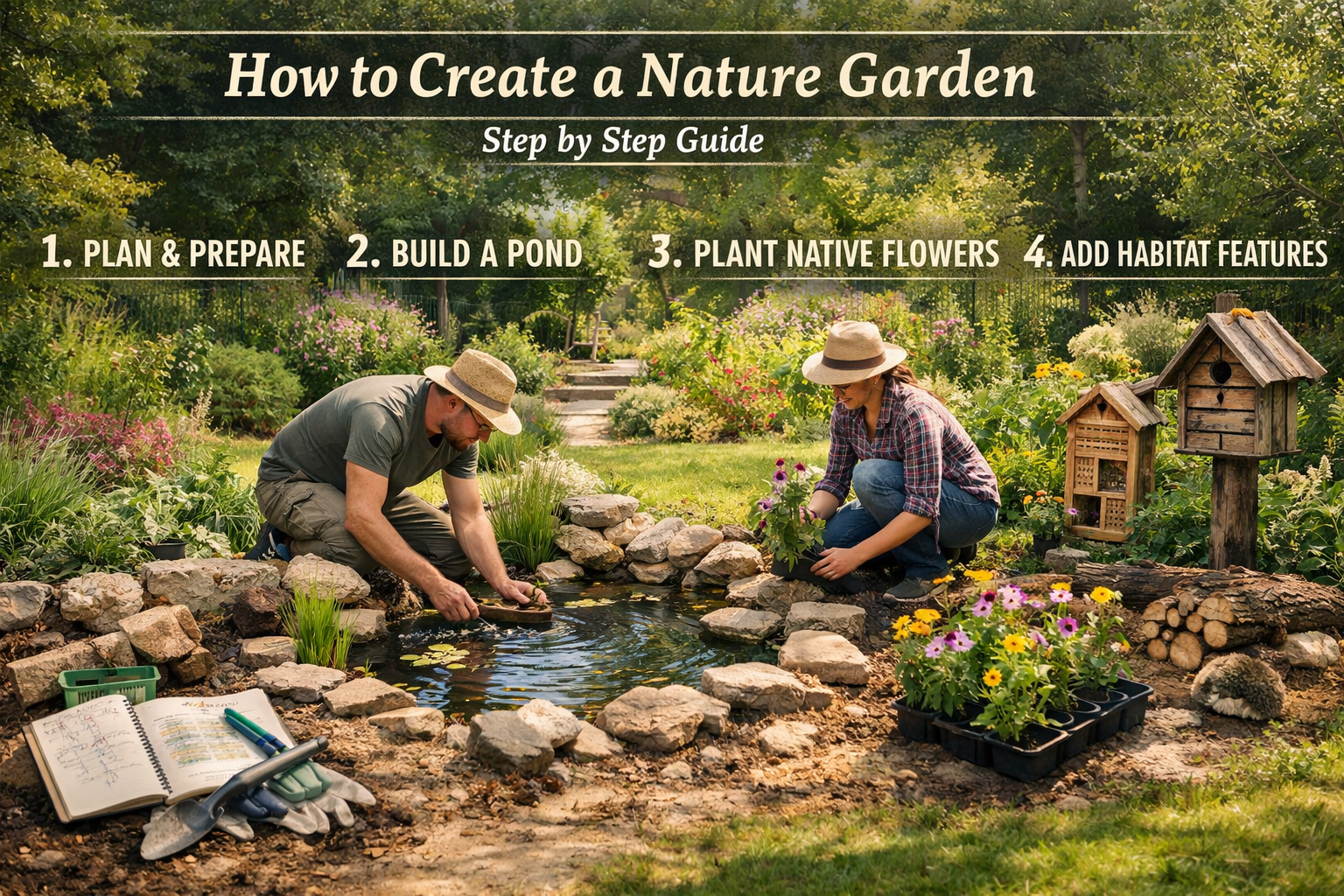
Leave some areas slightly untidy. Fallen leaves and natural debris create microhabitats. Understanding how to create a nature garden includes accepting controlled wildness as part of ecological health.
Maintain Sustainably and Encourage Natural Processes
Maintenance in a nature garden differs from traditional landscaping. Avoid chemical pesticides and herbicides. These disrupt beneficial insects and soil organisms.
Use mulching to suppress weeds and retain moisture. Water deeply but infrequently to encourage strong root systems. Overwatering weakens plants and reduces resilience.
Allow natural reseeding. Many native plants spread on their own and fill gaps organically. This reduces planting costs and increases biodiversity over time.
Prune selectively and seasonally. Do not remove seed heads immediately; birds feed on them during colder months. Sustainable care is central to mastering how to create a nature garden long term.
Improve Biodiversity Over Time
A nature garden evolves. Observe which plants thrive and which struggle. Replace underperforming species with better-adapted native varieties.
Introduce additional nectar plants if pollinator activity is low. Add dense shrubs if bird presence is limited. Small adjustments enhance ecosystem balance.
Keep a seasonal record of wildlife sightings. Tracking birds, butterflies, and insects helps measure ecological progress. Increased biodiversity is the primary success metric.
Expand planting gradually rather than redesigning everything at once. A phased approach ensures stability and allows soil systems to mature. Patience is part of the process when learning how to create a nature garden successfully.
Conclusion
Learning how to create a nature garden requires careful planning, native plant selection, habitat integration, and sustainable maintenance. By focusing on biodiversity, soil health, and ecological balance, you create a self-supporting outdoor environment that benefits wildlife and reduces long-term maintenance. A well-designed nature garden becomes more resilient and vibrant with each passing season.
FAQ
Q: How long does it take to establish a nature garden? A: Most nature gardens begin to show ecological balance within one to three years, depending on plant growth and soil conditions.
Q: Do nature gardens require less maintenance than traditional gardens? A: Yes, once established, they generally require less watering, fertilizing, and pest control because native plants are adapted to local conditions.
Q: Can a small yard support a nature garden? A: Yes, even small spaces can attract pollinators and birds if native plants and simple habitat features are included.
Q: Is a water feature necessary in a nature garden? A: It is not mandatory, but adding a small water source significantly increases wildlife diversity.
Q: Can I mix ornamental plants with native plants? A: It is possible, but priority should be given to native species to maintain ecological balance and support local wildlife.
