
A fight over circumcision is giving Europe a taste of the new US diplomacy
A Fight Over Circumcision Gives Europe a Taste of the New US Diplomacy
The recent tensions between US ambassadors and their European hosts have highlighted a shift in American diplomatic strategy. While postings in Europe often come with spacious residences and a generally calm environment—particularly west of Kyiv—these disputes signal a more assertive tone. Daniel Fried, a former US ambassador to Poland, noted that diplomats typically operate in supportive settings, where conflicts can be resolved quietly. However, the current clashes suggest a more public, confrontational style reminiscent of the Trump era.
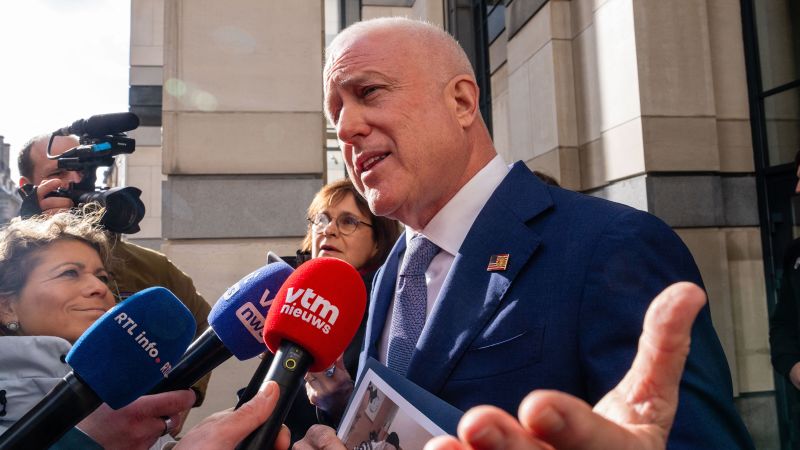
Bill White, the US ambassador to Belgium, sparked controversy by criticizing the country’s handling of Jewish ritual circumcision. In a heated post on X, he accused Belgium of antisemitism, citing an ongoing case in Antwerp where three mohels—Jewish ritual circumcisors—face judicial scrutiny after performing procedures without medical supervision. White demanded that Health Minister Frank Vandenbroucke intervene, calling the prosecution “ridiculous” and “anti-Semitic.” He also mocked Vandenbroucke for refusing to shake his hand or be photographed with him, suggesting the minister harbored personal disdain for the US.
“TO BELGIUM, SPECIFICALLY YOU MUST DROP THE RIDICULOUS AND ANTI SEMITIC ‘PROSECUTION’ NOW OF THE 3 JEWISH RELIGIOUS FIGURES (MOHELS) IN ANTWERP! THEY ARE DOING WHAT THEY HAVE BEEN TRAINED TO DO FOR THOUSANDS OF YEARS,” White wrote. “It was clear that you dislike America, the country that fought and where tens of thousands of our nation’s sons died for Belgium’s freedom twice.”
Belgium’s Foreign Minister, Maxime Prévot, responded swiftly, labeling White’s remarks “false, offensive, and unacceptable.” He emphasized that ritual circumcision is allowed in the country as long as it is conducted by a qualified physician under strict safety guidelines. Prévot also noted that White had been invited for a meeting to address his outburst, stressing the importance of respecting Belgium’s institutions and judicial independence.
“An ambassador accredited to Belgium has a responsibility to respect our institutions, our elected representatives, and the independence of our judicial system,” Prévot said. “Personal attacks against a Belgian minister and interference in judicial matters violate basic diplomatic norms.”
The spat in Belgium followed a similar incident in Poland. Tom Rose, the US ambassador to Poland, recently severed ties with Włodzimierz Czarzasty, the speaker of the lower parliament, the Sejm. Czarzasty had previously criticized President Donald Trump for not deserving the Nobel Peace Prize he aspired to receive. Rose called the speaker’s remarks “outrageous and unprovoked,” arguing they damaged US-Polish relations. Prime Minister Donald Tusk, who leads the center-left majority in the Sejm, countered that allies should “respect, not lecture, each other.”
Fried, who served as Poland’s ambassador from 1997 to 2000, observed that these events mark a departure from traditional diplomacy. He told CNN that an ambassador’s role is to promote the president’s goals, even if it means tolerating criticism. “You figure out how to work within the politics of the country you’re in,” he explained. “Sometimes, you ignore attacks and focus on the agenda.” While praising Rose’s efforts in Warsaw, Fried warned that public confrontations on foreign soil could backfire.
These exchanges mirror earlier clashes, such as Charles Kushner’s accusation against French President Emmanuel Macron. In a letter to the Wall Street Journal, Kushner—father of Jared Kushner, Trump’s son-in-law—alleged Macron had failed to address rising antisemitism. Macron dismissed the letter as a “mistake” and an “unacceptable statement for somebody who is supposed to be a diplomat.”
The Trump administration’s approach appears to thrive on engaging in disputes across Europe, often prioritizing bold statements over diplomatic nuance. As these incidents unfold, the question remains: is this assertiveness a strength or a strain on transatlantic relations?
