
The Evolution of Democracy and Republics Through History

Democracy and republics have shaped the course of human civilization for millennia, evolving from small-scale city-states to global political systems. The history of democracy and republics is a complex narrative that spans ancient times, medieval eras, and modern transformations. Understanding this journey helps us grasp the foundational principles of governance that continue to influence societies today. From the earliest experiments with direct democracy in Greece to the establishment of constitutional republics in the 18th and 19th centuries, the concept has adapted to meet the needs of different cultures and challenges. This article explores the history of democracy and republics, tracing their development, key milestones, and the factors that have shaped their evolution over time.
Origins of Democracy and Republics
The roots of democracy and republics can be traced back to ancient Greece, where the term “demokratia” (people power) emerged in the 5th century BCE. Athens, often considered the birthplace of direct democracy, allowed citizens to vote on laws and policies in assemblies, though this system was limited to a small portion of the population. Meanwhile, the Roman Republic, established in 509 BCE, introduced representative government by dividing power between elected officials and the Senate. These early experiments laid the groundwork for modern political systems, blending elements of citizen participation with institutional checks and balances.
Ancient Republics: Foundations of Political Structures
The Roman Republic was a pioneering model of representative government, combining elected magistrates with a Senate that represented the aristocracy. Its system of separation of powers and popular assemblies influenced later Western political thought. In contrast, the Roman Republic was not a pure democracy, as political authority was concentrated among a few elite families. This structure persisted for centuries, eventually giving way to the Roman Empire but leaving a legacy of constitutional principles that would resurface in later centuries. The Roman Republic’s emphasis on rule of law and citizen involvement set a precedent for republics in Europe and beyond.
Medieval and Early Modern Periods: Decline and Revival
During the Middle Ages, the history of democracy and republics saw a decline in practice, as feudal systems and monarchies dominated political structures. The Roman Republic’s influence waned, and Europe became a patchwork of absolute monarchies and feudal hierarchies. However, the Renaissance sparked a revival of interest in classical ideals, with thinkers like Machiavelli and Bodin exploring republican governance as a counter to autocratic rule. The English Bill of Rights (1689) and the Dutch Republic’s constitutional framework marked early steps toward modern democratic systems. These developments signaled a shift toward individual rights and limited government, laying the foundation for republics in the 18th century.
Modern Developments: Expansion and Institutionalization
The 18th century witnessed a major transformation in the history of democracy and republics, with the American and French revolutions ushering in constitutional republics. The United States Constitution (1787) established a system of separation of powers and popular sovereignty, ensuring that power resided with the people through elected representatives. Similarly, the French Revolution (1789) introduced universal suffrage and republican principles, though its implementation faced challenges. The 19th century saw the spread of democratic ideals across Europe and the Americas, driven by industrialization and the rise of nationalist movements. These developments solidified the history of democracy and republics as a cornerstone of modern governance.
Challenges and Adaptations: Navigating the 20th Century
The 20th century brought significant challenges to the history of democracy and republics, including the rise of authoritarian regimes and totalitarian governments. World War I and II tested the resilience of democratic systems, as nations adopted emergency powers and centralized control to manage crises. Yet, the post-war era saw a renewed commitment to democratic values, with the establishment of the United Nations and the spread of democratic ideals through decolonization. The Civil Rights Movement in the United States and the fall of the Berlin Wall in 1989 symbolized the history of democracy and republics in action, demonstrating the enduring power of popular participation and institutional reform.
Future of Democracy and Republics: Emerging Trends and Global Impact
In the digital age, the history of democracy and republics continues to evolve, driven by technological advancements and global interconnectedness. The rise of digital democracy through online voting and social media platforms has expanded citizen engagement, though it also raises concerns about information overload and misinformation. Meanwhile, representative republics are adapting to address issues like political polarization and economic inequality, with reforms such as proportional representation and participatory budgeting gaining traction. The history of democracy and republics remains a dynamic field, as societies grapple with the balance between individual freedoms and collective governance. As new challenges emerge, the adaptability of democratic systems will determine their continued relevance in the 21st century.
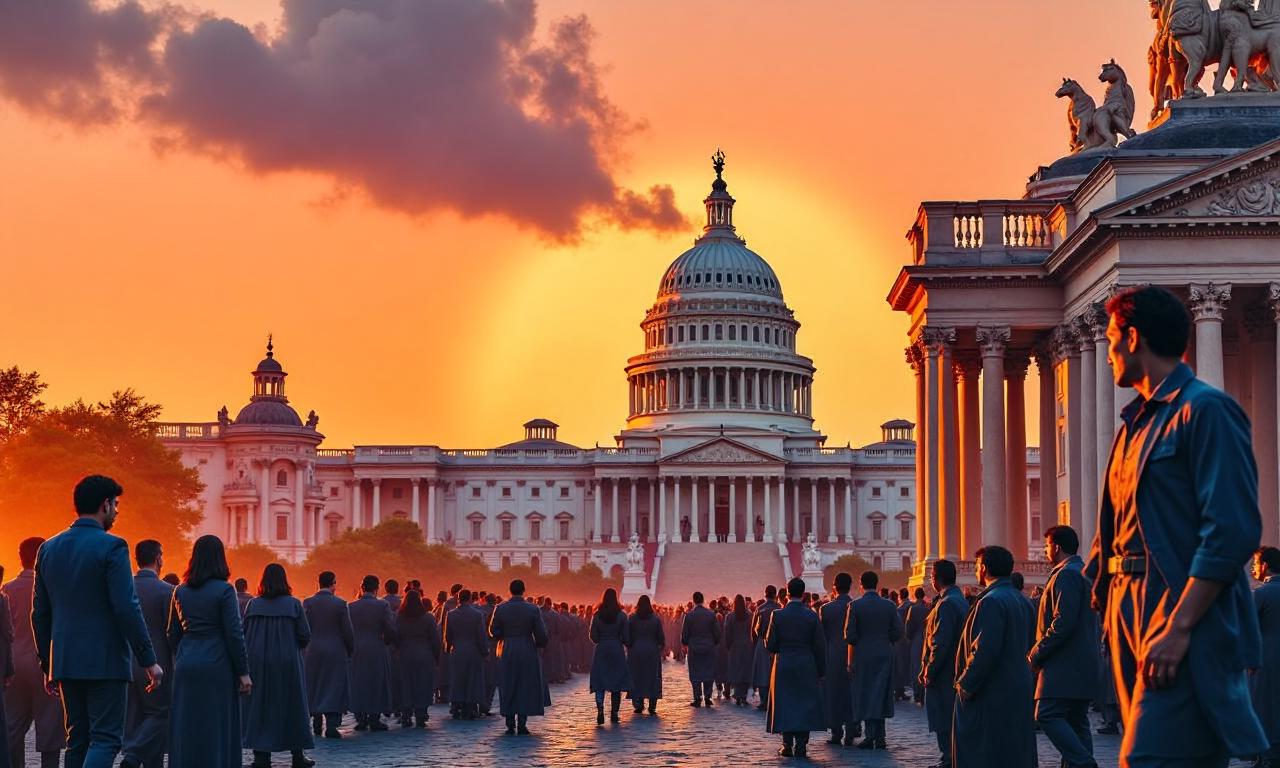
The history of democracy and republics is not a static narrative but a living process of innovation and resilience. While ancient systems provided the initial framework, modern developments have expanded their scope and complexity. The democratic ideals of equality, accountability, and freedom remain central, even as their implementation varies across cultures and contexts. Understanding this journey offers insights into how political systems can evolve to meet the needs of changing societies.
FAQ
Q: What are the key examples of early democracy and republics? A: Ancient Athens is the most famous example of an early democracy, while the Roman Republic represents a foundational republican system.
Q: How did the history of democracy and republics change during the medieval period? A: The history of democracy and republics saw a decline in practice during the medieval era due to the dominance of feudalism and monarchy. However, republican ideas were preserved in regions like the Dutch Republic and England.
Q: What major events shaped the modern history of democracy and republics? A: The American and French revolutions, along with the Industrial Revolution, were pivotal in shaping the modern history of democracy and republics through constitutional frameworks and expanded citizen rights.
Q: How do democracies and republics differ in practice? A: A republic is a form of government where power is held by the people through elected representatives, while a democracy emphasizes popular participation and majority rule. Many modern states are constitutional republics that blend these elements.
Q: What challenges face the history of democracy and republics today? A: Today, democratic systems face challenges like political polarization, misinformation, and economic inequality. However, digital tools and institutional reforms are helping to adapt and strengthen republican principles.
