
Syria walks back Damascus alcohol ban after outcry from residents
Syria walks back Damascus alcohol ban after outcry from residents
Following widespread criticism, Damascus authorities reversed an alcohol ban that had been announced earlier in the week. The decision, initially set to restrict the sale of alcoholic beverages in restaurants and nightclubs, was modified to allow exceptions in specific areas, including Christian neighborhoods. This change came after residents expressed concerns over the policy’s perceived sectarian nature.
The initial decree, issued on Monday, targeted the sale of alcohol in entertainment venues across the city, with Christian districts like Bab Touma, Qassaa, and Bab Sharqi excluded. Officials cited “numerous” complaints from locals, stating the measure aimed to “eliminate practices contrary to public morals.” However, the policy was quickly challenged, prompting a clarification from the governorate on Sunday.
In the updated statement, exceptions were expanded to include tourism-related establishments such as hotels and designated premises. The governorate also issued an apology to Christian residents, acknowledging that the original decision had been “circulated inappropriately” and may have been interpreted as discriminatory. “These areas are part of the capital’s cultural and historical core,” the statement said, “and the Governorate will reconsider their inclusion in a way that respects all communities.”
A Shift in Policy Amid Sectarian Concerns
Since the fall of Bashar al-Assad in December 2024, the transitional government led by President Ahmed al-Sharaa has generally avoided imposing strict social rules on the population. However, recent measures—such as a January ban on female public sector employees wearing makeup and mandatory full-body swimsuits on public beaches—have sparked fears of increasing control over daily life.
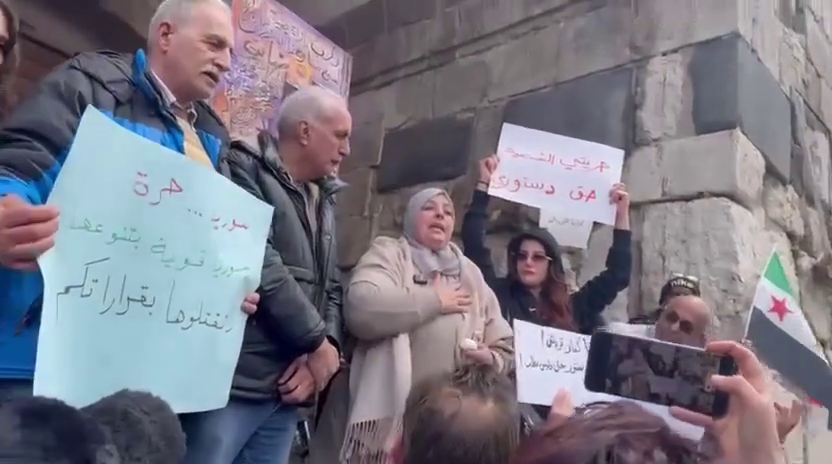
While most of Syria is predominantly conservative Sunni Muslim, with many abstaining from alcohol due to religious beliefs, secular Sunnis and other minority groups view the ban as a threat to personal freedoms. Residents of Bab Touma took to the streets on Sunday, protesting against a range of policies, including the alcohol restrictions. Demonstrators, a mix of Muslim and Christian citizens, called the legislation “sectarian,” warning it could undermine social harmony.
“Restricting alcohol sales to Christian areas risks making them prime targets for attacks,” one statement said, referencing historical tensions against the community. “Such policies, even unintentionally, could expose certain groups to greater risks, requiring a more inclusive approach to public safety.”
Christian advocacy groups also issued a joint letter criticizing the restrictions, emphasizing their impact on community identity. The revised ban, they argued, might alienate minorities and reinforce divisions in the divided country.
Political Context and Electoral Challenges
Amid ongoing domestic unrest, Israeli attacks, and complex diplomatic relations, the new interim authorities face mounting pressure to balance governance with public sentiment. In October, parliamentary elections were held, with Sharaa personally selecting a third of the seats while the remaining were allocated by local committees composed of government appointees.
The Druze-majority Sweida province and the Kurdish-held northeast were notably excluded from the process, leaving their 32 seats vacant. This raised concerns among pro-democracy activists, who had hoped the transition would bring greater inclusivity. The temporary constitution, announced in March, outlines a five-year transitional period during which the parliament will hold legislative power until a permanent constitution is adopted.
