
‘Endless fears’: Even if fighting stops, the damage to Iran’s children will endure
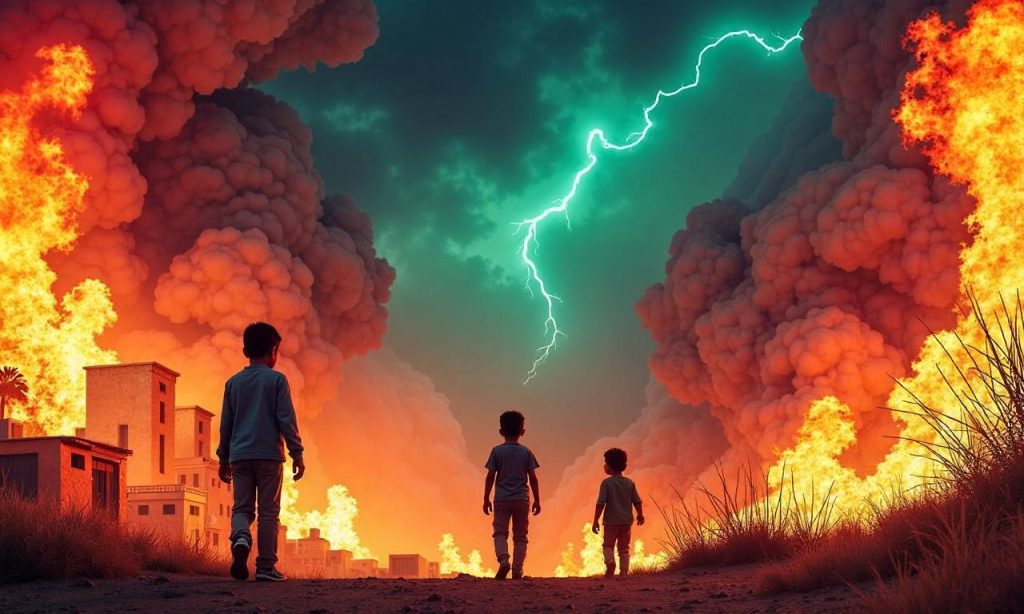
‘Endless fears’: Even if fighting stops, the damage to Iran’s children will endure
The conflict has taken a psychological toll on Ali, a 15-year-old whose real name is withheld. Now, fear lingers in his mind, triggered by everyday sounds like a door slamming or cutlery clattering. The recent ceasefire hasn’t eased his anxiety. “I used to feel no stress at all before the war,” he recalls. “But now, even the smallest noise causes my brain to react strongly.” His experience reflects a broader phenomenon among Iran’s youth, where psychologists identify “hyper arousal” as an early sign of post-traumatic stress disorder (PTSD).
A Shrinking World for Iranian Children
With schools closed and streets patrolled by regime militias, the lives of Iranian children have become confined to their homes. The constant threat of US and Israeli airstrikes, which persisted until the ceasefire, has left families in a state of perpetual vigilance. Ali observes his parents’ growing unease, especially his mother, who often shows clear signs of anxiety when fighter jets overhead. “She becomes frightened and stressed,” he says. “I can’t find the safety I once knew.” His father, meanwhile, has lost his job due to the war, compounding the family’s worries.
Iran’s youth population, over 20% of the country’s total, includes approximately 20.4 million children. For many, the war has disrupted their normal routines, replacing childhood with worry. “I should be studying, working, and preparing for an independent future,” Ali says. “But instead, I’m constantly thinking about bombs falling and fearing the unknown.” His words highlight a generation trapped in a cycle of trauma, with no clear path to recovery.
Testimonies from the Frontlines
At a human rights center in Tehran, Aysha, whose name is also changed for safety, provides support to a mother struggling with her child’s distress. “Try the methods I shared to calm him,” she advises over the phone. “Engage him in play, and if that doesn’t help, bring him here.” The center reports frequent calls and in-person visits from anxious parents, detailing issues like sleep disturbances, nightmares, and reduced focus. “When a child is killed in protests or war, no parent would willingly give birth,” Aysha explains.
According to the US-based Human Rights Activists News Agency (HRANA), 3,636 individuals have died in the conflict, including at least 254 children. Tens of thousands more have been injured. The Iranian government has actively enlisted children under 15 into the Basij volunteer militia, a key force in enforcing state control. In a televised speech, a regime official urged parents to “take your children by the hand and walk them into the streets,” framing the war as a test of masculinity for boys. “Let your son feel like a hero,” he said. “Mothers and fathers, send your children to the checkpoints at night. They’ll become men.”
Tragic Losses and Legal Violations
For 11-year-old Alireza Jafari, this call to arms meant death. He was killed by a drone strike while accompanying his father on checkpoint duty in Tehran on 29 March. A local newspaper quoted his mother, Sadaf Monfared, as saying the boy expressed a desire to “become a martyr.” Amnesty International has condemned the recruitment of children, calling it a “grave violation of international humanitarian law” and a war crime. Iran’s security laws allow the enlistment of minors, directly contradicting global standards.
Parents like Noor, a Tehran resident, now fight to shield their children from such risks. “I’ll keep my son away from the military,” he vows. “A 12-year-old shouldn’t be asked to fight.” His determination underscores the growing awareness of the war’s impact on young lives, even as the conflict continues to shape their fears and futures.
