
Ceasefire or no ceasefire, the Middle East’s reshuffling is not yet done
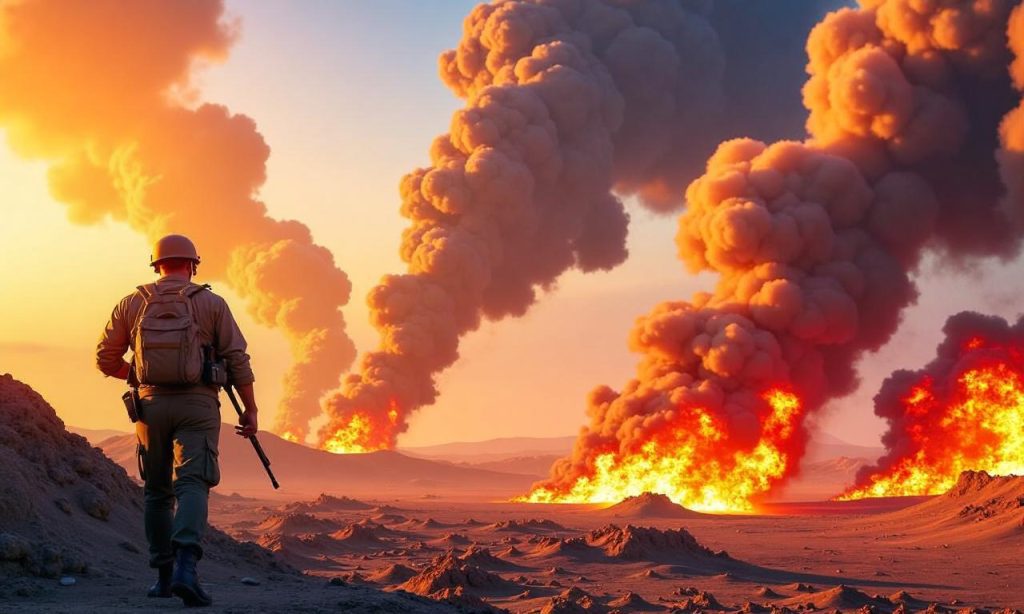
Peace Talks in Pakistan: A Fragile Path to Ceasefire
The recent ceasefire negotiations in Pakistan offer a glimmer of optimism, fueled by the United States and Iran’s mutual interest in ending hostilities. Yet, their success remains uncertain, hindered by a deep-rooted mistrust and a lack of clear consensus. Meanwhile, Israel’s aggressive actions in Lebanon have intensified the conflict, complicating efforts to achieve stability.
With the war’s momentum shifting, US President Donald Trump has already begun framing it in past tense. His declaration of victory signals a desire to exit the conflict, driven by upcoming events: a state visit from King Charles in late April, followed by a summit with Chinese President Xi Jinping in May. The looming midterm elections in November further pressure Trump to reduce tensions, especially as rising petrol prices threaten his political agenda.
“A capital V military victory,” as US Defence Secretary Pete Hegseth noted, underscores Trump’s confidence in his strategy. However, the reality of the situation suggests otherwise.
Iran, too, has its own motivations for pursuing peace. Despite its defiance and continued ability to deploy missiles and drones, the nation faces significant domestic and international challenges. Economic collapse has gripped cities, and the regime seeks respite to rebuild. Social media has become a battleground, with AI-generated videos mocking Trump and his policies.
The Pakistani mediators, tasked with bridging the gap between the two nations, face an arduous challenge. The positions of the US and Iran are starkly opposed, with Trump’s 15-point plan appearing more like a surrender document than a negotiation foundation. Iran’s 10-point demands, meanwhile, echo past refusals from the US. For a lasting truce, both sides must agree to compromise on their irreconcilable differences.
Reopening the Strait of Hormuz has emerged as a critical focal point. This narrow waterway, vital for global trade, was blocked by Iran following attacks by the US and Israel. The closure has disrupted shipping and created economic uncertainty, making its restoration a top priority in current talks.
Despite initial hopes, the assassination of Iran’s supreme leader, Ayatollah Ali Khamanei, and his family in early February has not led to regime collapse. His son Mojtaba, appointed as successor, remains missing, with reports suggesting he was injured in the attack. The US and Israel, assuming a swift victory, underestimated Iran’s resilience. The regime continues to function, proving that tactical gains have not translated into strategic dominance.
As the war’s long-term effects unfold, Middle Eastern geopolitics is undergoing a profound transformation. The conflict, ignited by joint US-Israeli strikes, has already altered power dynamics. While Iran’s military infrastructure has taken heavy damage, its political structure remains intact. The path to peace, therefore, remains fraught, with the potential for renewed hostilities looming if no lasting agreement is reached.
