
From blast off to splashdown: My days following Nasa’s historic mission to the Moon
From Blast Off to Splashdown: My Days Following NASA’s Historic Moon Mission
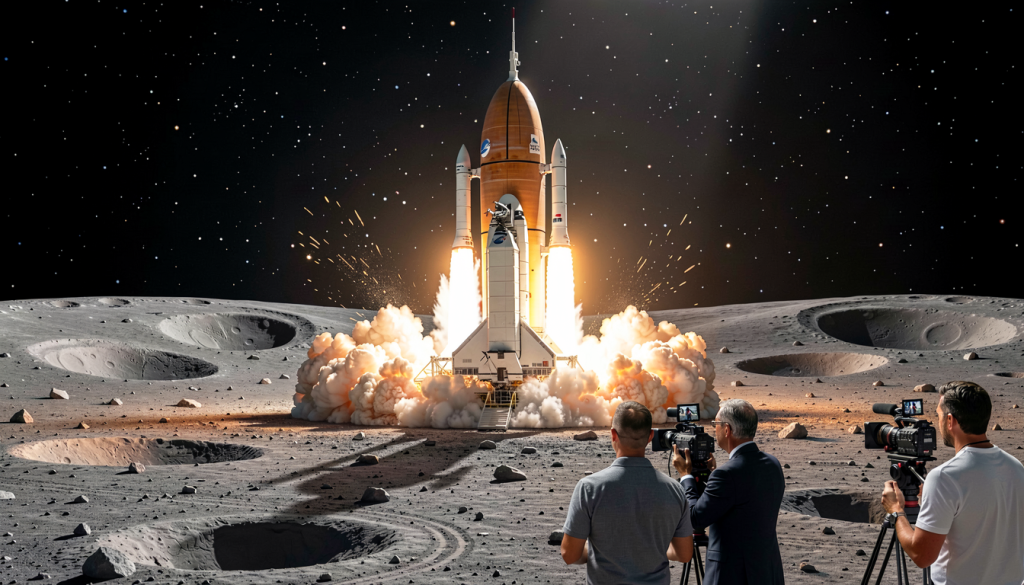
Over the past ten days, four astronauts have undertaken a groundbreaking journey, reaching a distance in space greater than ever before. As part of NASA’s Artemis II mission, they ventured to the Moon and returned, marking a pivotal chapter in human exploration. I’ve been immersed in every detail of this endeavor, from the explosive liftoff to the critical moments of re-entry.
The Launch That Shook the World
On the day of departure, the astronauts were described as remarkably composed, but my own nerves were at full stretch. The sheer anticipation of the moment made it impossible to hold back. As the rocket ignited its engines and soared into the sky, my reaction captured global attention.
Standing at the Kennedy Space Center in Florida, alongside my BBC News colleagues Alison Francis and Kevin Church, the experience was overwhelming. The blinding light, the thunderous sound, and the force of acceleration left an indelible mark. It was hard to fathom that four human beings were aboard a 98-meter-tall vehicle hurtling toward the Moon.
“Planet Earth, you look beautiful,”
said Victor Glover, gazing at the planet from above. After this moment of awe, the crew initiated their journey, setting off on a 252,756-mile voyage through space.
A Cramped Lunar Habitat
As the crew adjusted to microgravity, live footage from the capsule revealed their tight living quarters. The space was roughly equivalent to a minibus, forcing them to share every moment. Privacy was a luxury they couldn’t afford, both from each other and the millions watching their progress.
One of the most discussed systems was the Universal Waste Management System, or “the loo.” Despite a $23 million investment, it faced challenges with its plumbing. During a media briefing, the astronauts shared the strain, explaining that while “number twos” were manageable, “number ones” required the use of collapsible urine devices—simple bags with funnels.
Emotional Bonds and Risk
Back in Houston, mission control became a hub of intense focus and emotion. The team monitored systems ranging from navigation to life support, ensuring every detail was under control. Yet, the mission carried significant risks, especially since it was a test flight.
Speaking to Canadian astronaut Jeremy Hansen during his quarantine period for the Artemis II podcast, he revealed how close the mission came to being a tragedy. He had conversations with his family about the possibility of not returning. Similarly, Reid Wiseman shared heartfelt discussions with his daughters about the dangers of the mission, a testament to the personal stakes involved.
One of the most poignant moments occurred as the crew neared the Moon, spotting a crater that gleamed brightly from Earth. They named it after Reid’s late wife, Carroll, a tribute that moved everyone involved. Tears welled up as they gathered to embrace their commander, a symbol of unity and resilience.
A Legacy Forged in Space
Though this was a test mission, its significance echoes the achievements of Apollo. The Artemis crew surpassed Apollo 13’s record, pushing the boundaries of space travel. Their images and audio logs captured the Moon’s stark beauty, adding a new layer to humanity’s understanding of our celestial neighbor.
Messages from Apollo astronauts Charlie Duke and Jim Lovell, recorded before the latter’s passing, underscored the enduring connection between past and present. Every individual at NASA, from leadership to engineers, has invested deeply in this mission, cheering for its success.
As the astronauts return, the world watches, reminded of the courage and ingenuity that define space exploration. The journey from launch to landing is more than a technical feat—it’s a story of human determination.
