
‘We need real peace’: Easter truce fails to lift grim mood in war-torn Ukraine
‘We need real peace’: Easter truce fails to lift grim mood in war-torn Ukraine
A brief pause in hostilities, brokered for Orthodox Easter, began on Saturday but was short-lived. Just 38 minutes after the agreement took effect, air raid alarms echoed across Kharkiv region in northeastern Ukraine. Despite the truce’s intended 32-hour respite, frontline observers reported several breaches, though no long-range missiles or drones were launched. This comes nearly four years after Russia’s full-scale invasion, which has left the nation battered and weary.
Church Services Amid Uncertainty
At St John the Theologian Church, families gathered in mid-afternoon to celebrate the holiday. They brought baskets filled with iced Easter cakes, painted eggs, and sausages for a blessing, forming a line around the building. The priest, Fr Viktor, greeted them with a question: “Do you believe them?” as he prepared to douse them with holy water. The service, usually held just before midnight, was moved earlier due to ongoing curfews. Damage from the war remains visible, with one side of the church still boarded up.
“Maybe there will be a pause,” suggested Larisa, a parishioner. “But then Russia will only launch even more intense attacks. We’ve seen that before.”
Military Preparedness and Strategic Shifts
Close to the Russian border, soldiers from the Yasni Ochi strike UAV unit, part of the Khartia corps, tested new equipment. They loaded kamikaze drones with explosives and practiced targeted dives. Their commander, Heorhiy, instructed his troops to remain vigilant unless under direct attack. “Russia says one thing, then does the other,” he said. “So you have to be ready.”
While the truce offers a fleeting reprieve, troops have already begun dropping Easter cakes and alcohol-free wine to comrades at the front using drones. The training village, once occupied by Russian forces in 2022, now lies in ruins. Heorhiy emphasized that Ukraine cannot halt its efforts until it secures better terms in peace negotiations. “We need real peace talks,” he added, noting the country’s growing reliance on international support for drone technology and expertise.
Civilian Life Under Threat
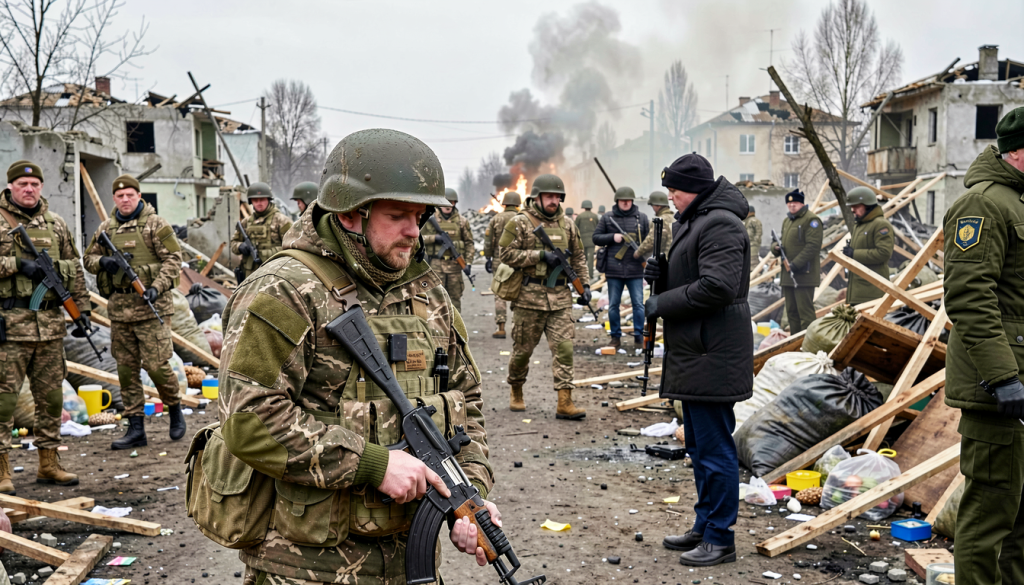
Returning to Kharkiv, the city’s ring road was draped in netting to intercept Russian drones. However, this measure offers little protection against missiles. In a nearby suburb, five-storey flats were reduced to rubble in a recent attack that killed 11 people. Others remain boarded up, their interiors uninhabitable. Amid the wreckage, a red rug still hangs on a wall, and photos of the victims lie nearby. Olha, a survivor, recounted how she and her elderly mother took shelter in a corridor during the strike. “This truce is only 1.5 days,” she said, “but at least we can rest a bit. Here, you expect to die every second.”
“We really want peace,” Olha added. “No more of this.”
The truce, though symbolic, underscores the fragile hope of a nation enduring relentless conflict. For Ukraine, the fight continues, with demands for security guarantees from allies remaining unresolved. As the war drags on, the cost of survival grows heavier, even during moments of supposed calm.
