
What to know about incoming Fed Chair Kevin Warsh, in one resume
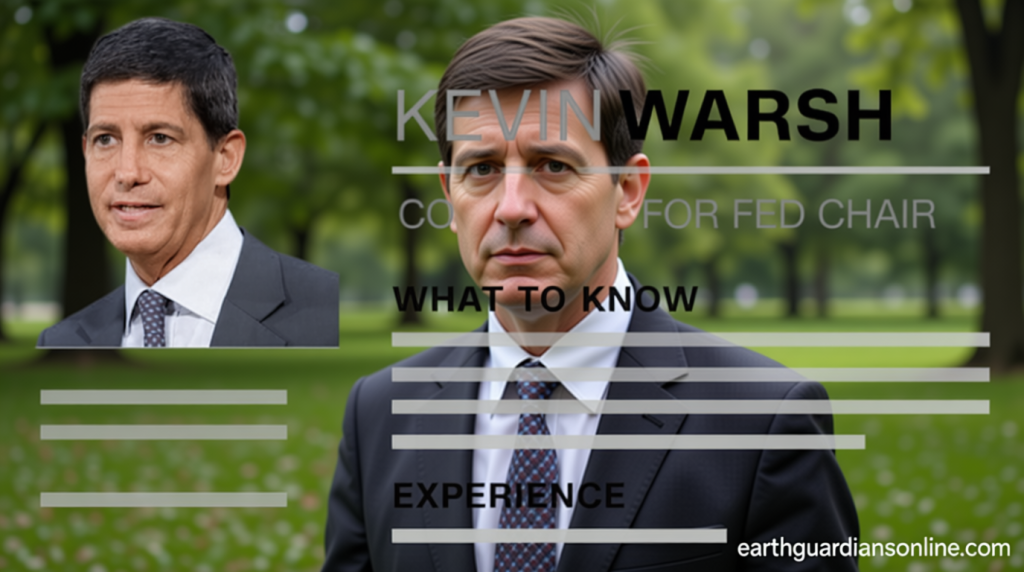
What to Know About Incoming Fed Chair Kevin Warsh, in One Resume
A New Era for the Federal Reserve
What to know about incoming Fed Chair – On Wednesday, Kevin Warsh received Senate confirmation to assume the role of Federal Reserve Chair, marking the culmination of a transition that began with his nomination by President Donald Trump in late January. This appointment replaces Jerome Powell, whose term concludes on May 15, ending a chapter of Fed leadership characterized by a focus on inflation control and accommodative monetary policy. Warsh’s elevation to the position underscores the central bank’s shift toward a more inflation-focused approach, as he prepares to navigate the complexities of a rapidly evolving economic landscape.
A Career Shaped by Economics and Policy
Kevin Warsh, a seasoned economist and policymaker, brings decades of experience to the helm of the U.S. central bank. His academic foundation was laid at the University of California, Los Angeles, where he earned a doctorate in economics. Prior to his confirmation, Warsh served as a member of the Federal Reserve’s Board of Governors from 2018 to 2022, playing a pivotal role in shaping the Fed’s response to economic fluctuations during a period of significant growth and challenges. His tenure on the Board included participation in key decisions regarding interest rates, quantitative easing, and regulatory reforms.
Before joining the Fed, Warsh was a prominent figure in the financial sector. He spent nearly a decade at the Congressional Budget Office (CBO), where he contributed to fiscal policy analysis and economic forecasting. His expertise also extends to the private sector, having served as a vice president at the Federal Reserve Bank of San Francisco and as a managing director at investment firm Morgan Stanley. These diverse roles have equipped him with a nuanced understanding of both public and private economic dynamics, which he will now apply to lead the Fed in its new direction.
Economic Philosophy and Policy Priorities
Warsh’s economic philosophy centers on price stability and sustainable growth, with a strong emphasis on inflation as the primary mandate of the Federal Reserve. In recent years, he has advocated for a more aggressive stance against inflation, arguing that central banks must prioritize maintaining purchasing power over other considerations. This perspective aligns with the broader narrative of the Fed under Powell, but Warsh’s approach is expected to place even greater emphasis on inflationary pressures, particularly in light of the current economic environment.
A
quote from Warsh during a 2023 speech highlights his priorities: “Inflation erodes the foundation of economic confidence, and our mandate requires us to act decisively to restore stability.” His focus on inflation is not without controversy, as it may lead to higher interest rates and slower growth. However, his record as a Fed governor suggests a commitment to data-driven decisions, even if they mean challenging the status quo. This balance between fiscal and monetary considerations will be critical as he takes on the role of chair.
The Transition and Immediate Challenges
As Warsh steps into the chairmanship, he inherits a central bank tasked with addressing a range of pressing issues. The U.S. economy faces inflationary pressures, with core inflation hovering near 4% in recent months, while the labor market remains tight, contributing to wage growth. Additionally, the Fed must contend with global economic uncertainties, including potential slowdowns in China and Europe, which could impact U.S. trade and investment flows.
Warsh’s transition is also shaped by the political climate. As a Trump appointee, his leadership is expected to reflect the administration’s emphasis on deregulation and a pro-business agenda. This alignment may influence his interactions with Congress and his approach to central bank independence, though the Fed’s dual mandate of price stability and maximum employment will remain central to his decision-making. His first major challenge will be maintaining credibility while balancing the competing demands of inflation control and growth support.
A Legacy of Leadership and Innovation
Throughout his career, Warsh has demonstrated a unique ability to bridge academic theory with practical policy implementation. His work at the CBO and the Fed has positioned him as a key architect of fiscal and monetary strategies during the Trump era. Notably, he played a role in shaping the Fed’s response to the 2020 economic downturn, advocating for liquidity measures that helped stabilize markets amid the pandemic.
His leadership style is often described as pragmatic and results-oriented. In a 2022 interview with *The Wall Street Journal*, Warsh emphasized the importance of “flexible communication” in central banking, stating, “Central banks must adapt their messaging to reflect real-time economic data, even if it means pivoting from initial assumptions.” This adaptability will be essential as he manages the Fed’s dual mandate and responds to shifting economic conditions.
The Road Ahead: Navigating Uncertainty
Warsh’s tenure as Fed Chair will be defined by the need to address inflation while avoiding a recession. The Fed’s recent decisions to raise interest rates have already signaled a shift toward tighter monetary policy, and Warsh is expected to continue this trend. However, the pace of rate hikes will be a key debate, with some economists cautioning against overreacting to short-term volatility.
Another critical area of focus will be the Fed’s communication strategy. Central banks rely heavily on forward guidance to influence market expectations, and Warsh’s ability to articulate the Fed’s goals will shape investor behavior and economic outcomes. His experience in the private sector may also inform his approach to central bank transparency, which has become increasingly important in an era of heightened public scrutiny.
Internationally, Warsh will need to coordinate with other central banks to address global economic imbalances. The U.S. dollar’s strength, driven by the Fed’s rate hikes, has raised concerns about trade competitiveness and debt sustainability for emerging markets. Warsh’s international experience, including his role in the G20 and other global financial forums, positions him to navigate these cross-border challenges effectively.
Conclusion: A New Chapter for the Fed
As the Federal Reserve enters a new era under Kevin Warsh, the focus will remain on balancing inflation control with growth support. His confirmation marks the end of an era for Jerome Powell and the beginning of a leadership style that prioritizes price stability and proactive policy measures. With a background in both public and private sectors, Warsh is uniquely positioned to address the multifaceted challenges facing the U.S. economy. The coming months will test his ability to unite diverse viewpoints within the Fed while maintaining its independence and credibility in a volatile financial climate.
Warsh’s tenure will also be influenced by the broader political and economic context. The Federal Reserve’s decisions have far-reaching implications, affecting everything from mortgage rates to corporate borrowing costs. As he takes the helm, the central bank’s credibility will hinge on its ability to deliver consistent results and communicate its strategy with clarity. For now, the focus is on ensuring a smooth transition and setting the stage for a new era of monetary policy leadership.
