
Trump’s Beijing visit was more vibes than details. And Xi set the tone
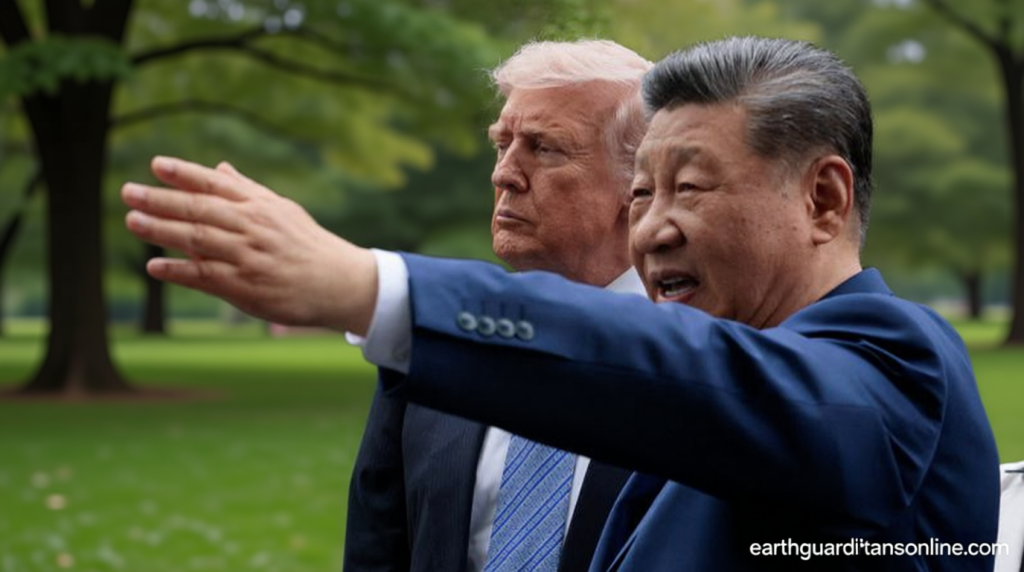
Trump’s Beijing visit was more vibes than details. And Xi set the tone
The Power of Partnership and the Shadow of Taiwan
Trump s Beijing visit was more – Despite the limited number of immediate agreements reached during U.S. President Donald Trump’s recent trip to China, the visit was undeniably a milestone for Beijing. Chinese leader Xi Jinping, who hosted the American president during his three-day stay, is likely viewing the encounter as a major diplomatic victory. While tangible outcomes in tech and trade were sparse, the primary goal of the summit—solidifying China’s position as a global equal to the United States—was accomplished with remarkable flair. This strategic maneuvering highlighted a broader narrative: the relationship between the world’s two largest economies is being redefined not through hard negotiations, but through carefully orchestrated diplomacy.
“Even before we sat down to discuss, I was confident we’d have a fantastic future,” Trump remarked, underscoring the optimism that permeated the visit.
Throughout the trip, Xi Jinping emphasized a new era of “constructive strategic stability” between the two nations. This concept, centered on cooperation and managed competition, contrasts sharply with the volatile tensions of the previous year. The American president’s effusive praise for Xi’s leadership and the bilateral relationship reinforced this narrative. At a state banquet, Trump declared that good relations between the U.S. and China could create a “future of greater prosperity” for the world, a sentiment that resonated with Xi’s own toast to unity and progress.
Behind the Scenes: A Deliberate Display of Influence
China’s diplomats meticulously planned the visit to maximize its symbolic impact. The event was designed as a spectacle of grandeur, from the military gun salute to the rare opportunity for Trump to tour Zhongnanhai, the heart of the Communist Party’s inner circle. These gestures were not merely ceremonial; they served to project China’s authority and assert its dominance in global affairs. Trump’s deference to Xi’s leadership, evident in his statements and interactions, provided Beijing with the optics it sought to bolster its image as an alternative superpower.
While the economic discussions were less than groundbreaking, the visit underscored China’s ability to shape the narrative of its relationship with the U.S. Xi Jinping made it clear that Taiwan remained a critical red line. “If Washington doesn’t handle that issue well, the entire US-China relationship will be put in great jeopardy,” Xi warned Trump on the first day of the visit. This emphasis highlights the island’s strategic importance, as Beijing insists on its claim to Taiwan despite its current de facto status as a self-governing democracy. The U.S. and China’s unofficial ties with Taiwan have long been a source of friction, and Xi’s message was a reminder of the stakes involved.
“We discussed the subject in great detail,” Trump told reporters after returning to the U.S., hinting at the depth of their conversation on Taiwan and arms sales.
The American president’s commitment to addressing Taiwan’s status was evident in his remarks. He acknowledged the importance of Xi’s concerns, particularly regarding the U.S.’s regular arms sales to the island. Trump’s willingness to “make a determination” on this issue signaled a recognition of China’s strategic priorities. This back-and-forth between leaders reflected the delicate balance of power, where both sides seek to maintain stability while advancing their own interests.
Setting the Stage for Future Dynamics
As Trump’s visit concluded, the implications for U.S.-China relations began to unfold. The visit not only reinforced existing alliances but also laid the groundwork for future interactions. With Russian President Vladimir Putin set to visit China in the coming days, Beijing’s ability to project its influence as a key player in global politics becomes even more pronounced. This predictable relationship with the U.S. allows China to focus on its long-term goals without immediate pressure from Washington.
Meanwhile, the U.S. faces its own challenges. The trade war last year, marked by tariffs and retaliatory measures, disrupted global supply chains and created uncertainty for companies reliant on Chinese manufacturing. However, the recent developments suggest that both nations are prioritizing cooperation over confrontation. Top American diplomat Marco Rubio, speaking from Beijing, confirmed that the U.S. aligned with China’s vision of “constructive strategic stability,” aiming to prevent misunderstandings that could lead to broader conflict.
Strategic stability, while beneficial for the global economy, also grants China flexibility in its approach to U.S. actions. This could mean the potential for disputes over trade and technology issues, which remain contentious. For example, the U.S. has long relied on China’s supply of processed rare earths, critical for high-tech industries. Last year, Beijing’s tightening of this supply demonstrated its leverage over the global market, a fact that the U.S. learned to its cost. Now, with both sides seeking to avoid a repeat of that turmoil, the new framework may allow for more measured responses to economic and geopolitical challenges.
Domestic and Global Implications
Xi Jinping’s successful hosting of Trump has significant domestic resonance. In China, the leader’s ability to project strength and confidence in international affairs is a key component of his political strategy. The visit reinforced the narrative of China as a rising global power, capable of standing shoulder to shoulder with the United States. This image is crucial for maintaining support among Chinese citizens and solidifying the party’s authority.
Internationally, the visit underscored China’s ambition to challenge U.S. leadership. By welcoming Trump with a display of power and respect, Beijing signaled its readiness to engage with the world’s most influential nations on its own terms. The presence of top American CEOs, whom Trump described as coming to “pay their respect” to Xi, further highlighted this point. Their participation was a strategic move to reinforce the idea that China is a critical partner in global economic development.
As the visit’s effects ripple into the future, the focus on Taiwan remains central to the U.S.-China dynamic. While Beijing has never controlled the island, it views Taiwan as an inseparable part of its territory. The prospect of absorbing Taiwan through military or political means is a cornerstone of Beijing’s long-term vision. For the U.S., navigating this issue requires careful diplomacy, as any misstep could threaten the broader relationship.
Ultimately, Trump’s Beijing visit was less about concrete deals and more about cultivating the right atmosphere. It was a moment that showcased China’s strategic acumen and its ability to steer the narrative of its relationship with the U.S. The message was clear: while cooperation is possible, the stability of that partnership hinges on mutual respect and shared priorities, particularly in the face of Taiwan’s delicate status. As both leaders move forward, the balance of power continues to shift, with China asserting its place as a dominant global force.
