
What we know about the latest Ebola outbreak after WHO declares global health emergency
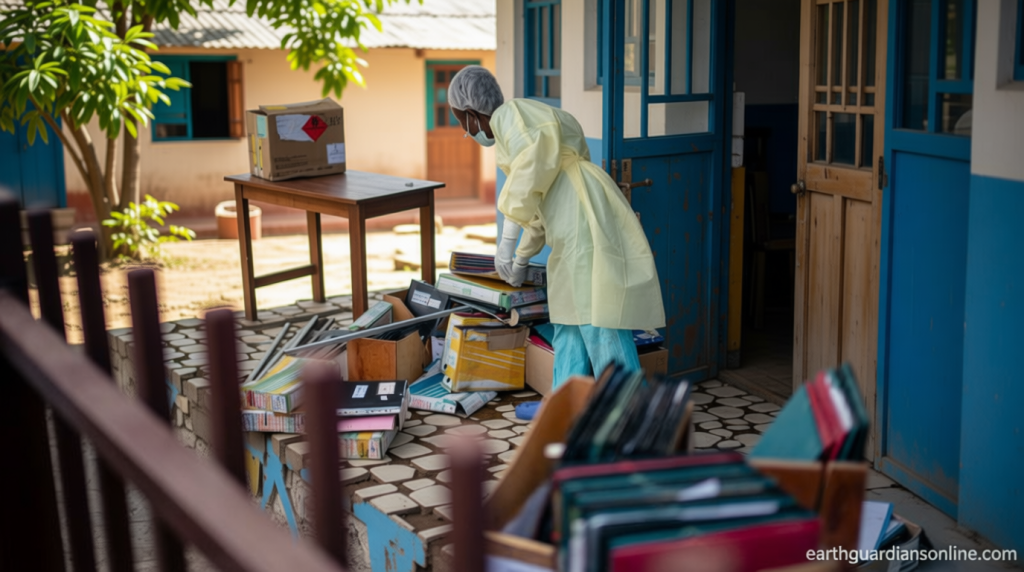
WHO Designates Ebola Outbreak in DRC and Uganda as Global Health Emergency
What we know about the latest – The World Health Organization (WHO) announced on Sunday that the ongoing Ebola outbreak in the Democratic Republic of Congo (DRC) and Uganda has reached the status of a “public health emergency of international concern.” This classification signals a heightened level of alert, as the virus continues to spread across borders and threatens to escalate beyond regional control. The outbreak is attributed to the Bundibugyo virus, a strain within the Orthoebolaviruses family, which has previously caused significant health crises in central Africa. While the situation does not yet qualify as a “pandemic emergency,” the organization has warned of the risks posed by its current trajectory.
The Nature of the Bundibugyo Virus
Experts emphasize that the Bundibugyo strain, though less deadly than some other Ebola variants, remains a formidable public health challenge. According to the Africa Centres for Disease Control and Prevention (Africa CDC), the virus spreads through direct contact with bodily fluids, contaminated surfaces, or deceased individuals. Initial symptoms typically include fever, muscle pain, and fatigue, but the disease can progress to severe complications such as internal bleeding and organ failure. The WHO notes that six distinct Ebola virus species exist, with the Bundibugyo, Sudan, and Zaire strains being the most prevalent in large outbreaks. This particular strain has reemerged in the DRC’s Ituri province, a remote region on the border with Uganda, where it has now sparked widespread concern.
Case Counts and Spread Across Borders
As of Saturday, the UN health body reported 246 suspected cases and eight confirmed infections in the DRC’s northeastern Ituri province, with at least 80 deaths attributed to the virus. The situation has worsened as the outbreak has crossed into Uganda, where two confirmed cases have been identified in Kampala, the capital. One of these cases resulted in a fatality, while the other is being treated in a hospital. The patients had no direct connection to each other, but both had traveled from the DRC, underscoring the risk of cross-border transmission. Notably, the WHO initially confirmed a case in Kinshasa, the DRC’s largest city, but later corrected the report, stating the individual tested negative for the Bundibugyo virus upon further analysis.
Expert Concerns and Response Efforts
Health professionals are cautioning about the potential for the outbreak to grow. Trish Newport, emergency program manager at Doctors Without Borders (MSF), expressed alarm over the rapid increase in cases and deaths, stating,
“The number of cases and deaths we are seeing in such a short timeframe, combined with the spread across several health zones and now across the border, is extremely concerning.”
She highlighted the precarious conditions in Ituri, where limited healthcare access and ongoing conflict have hindered containment efforts. MSF is preparing to expand its operations in the region, aiming to provide critical support to local health systems. Meanwhile, the DRC has experienced its 17th Ebola outbreak since 1976, when the first case was identified. This latest episode marks the third time the Bundibugyo strain has been detected, following outbreaks in Uganda between 2007 and 2008 and in the DRC in 2012.
Global Implications and Risk Factors
Officials stress that the outbreak’s cross-border spread has increased the risk of international transmission. Nations adjacent to the DRC, such as Rwanda, are particularly vulnerable, given their proximity and shared infrastructure. The WHO’s emergency classification reflects the organization’s assessment that the epidemic could expand rapidly if not addressed. “All signs point toward a potentially much larger outbreak than what is currently being detected and reported,” a WHO spokesperson noted in a statement. This assessment is based on the virus’s ability to move quickly through populations, especially in areas with weak healthcare systems and limited public awareness. The recent discovery of an Ebola case in Goma, a city in eastern DRC, further complicates efforts to contain the disease, as the case was identified by a Rwanda-backed rebel coalition that seized the area last year.
Historical Context and Past Outbreaks
While the Bundibugyo virus has caused smaller outbreaks in the past, its resurgence in Ituri province has drawn attention to the DRC’s history of Ebola crises. In 2023, an outbreak in Kasai province claimed 45 lives, according to the US Centers for Disease Control and Prevention (CDC). This latest outbreak, however, is more alarming due to its spread into Uganda and the lack of a specific vaccine for the Bundibugyo strain. Health experts confirm that no treatments or vaccines have been approved for this variant, leaving affected communities dependent on supportive care and quarantine measures. The absence of a targeted vaccine has raised fears that the disease could spread further, especially in densely populated urban areas where containment is more challenging.
Comparing Fatality Rates and Strain Differences
Although the Bundibugyo virus is less lethal than the Zaire strain, its fatality rate remains a concern. Doctors Without Borders estimates that the strain’s death rate ranges between 25% and 40%, with the overall Ebola fatality rate in past outbreaks varying from 25% to 90%. This range highlights the virus’s unpredictable nature, as its severity depends on factors like healthcare infrastructure, access to treatment, and the specific strain involved. In Ituri, where the outbreak is concentrated, the combination of poor medical resources and the virus’s transmission dynamics has created a challenging environment for control. The WHO’s decision to declare an emergency underscores the urgency of addressing these factors before the situation spirals out of hand.
Regional Cooperation and Challenges
Containing the outbreak requires coordinated efforts between the DRC and Uganda, as well as neighboring countries. While Uganda has reported two confirmed cases, the Congolese man who died in Kampala had his body repatriated to the DRC, reflecting the importance of cross-border collaboration. Health authorities in both nations are working to trace contacts, isolate patients, and distribute protective equipment. However, challenges persist, including the movement of people and goods between the countries, which could accelerate the spread. The rebel coalition in Goma has also played a role in identifying cases, demonstrating the complex interplay between local governance and public health response in the region.
Preparedness and Future Outlook
As the outbreak continues, the focus shifts to preparedness and prevention. MSF has warned that the DRC’s population, already strained by conflict and poverty, faces a significant risk of uncontrolled transmission. The organization is advocating for immediate action to strengthen healthcare capacity and improve community education about the virus. Meanwhile, the WHO is monitoring the situation closely, with officials emphasizing the need for rapid intervention to prevent the epidemic from reaching a critical stage. Despite the challenges, there is hope that the combined efforts of local and international health agencies can curb the spread. However, the possibility of the disease reaching other parts of Africa or even spreading globally remains a pressing concern for public health officials.
