
Sen. Bill Cassidy loses reelection bid, CNN projects, as Julia Letlow and John Fleming advance to Louisiana Senate runoff
Sen. Bill Cassidy Loses Reelection Bid, Julia Letlow and John Fleming Advance to Louisiana Senate Runoff
Sen Bill Cassidy loses reelection bid CNN – CNN projects that Louisiana Republican Senator Bill Cassidy has suffered a significant setback in his campaign for a third term, marking a notable shift in the state’s political landscape. The outcome of Saturday’s primary election saw two contenders—both supported by former President Donald Trump—edge ahead of Cassidy, forcing him into a runoff against Rep. Julia Letlow and Louisiana State Treasurer John Fleming. This development underscores the growing influence of Trump’s base within the Republican Party and highlights the internal divisions that have emerged since his 2020 presidential campaign. With the runoff set for June 27, the race has become a focal point for assessing the strength of Trump’s political brand and its impact on traditional Republican factions.
The Runoff Candidates
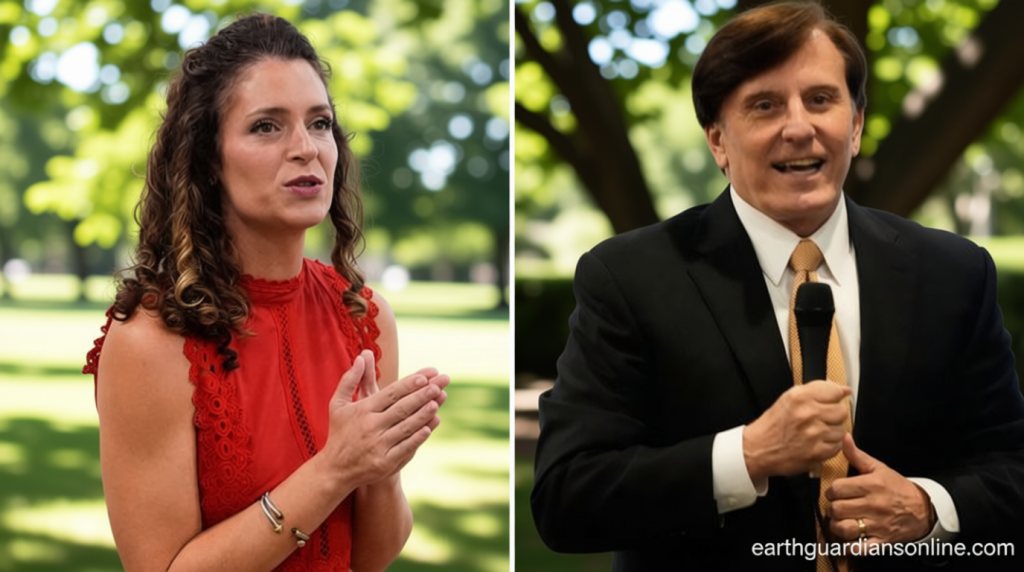
The primary results revealed a race between Julia Letlow, a first-term Republican congresswoman who secured Trump’s endorsement, and John Fleming, a state treasurer running as an independent candidate. While neither candidate achieved a majority of the vote, Letlow emerged as the clear frontrunner, significantly outpacing both Fleming and Cassidy in Saturday night’s tally. Fleming, however, remains optimistic about the runoff, emphasizing the grassroots support his campaign has generated across Louisiana. “The runoff starts today, and I could not be more energized,” he stated on Sunday. “Our campaign has built a movement across every corner of this state, and now we are going to unite conservatives and win this race on June 27th.”
Cassidy, who was first elected to the Senate in 2014, had previously served in the House of Representatives and the Louisiana State Senate. His tenure as a senator has been marked by both political achievements and controversies, particularly his vote to convict Trump during the latter’s second impeachment trial in 2024. This decision, made amid intense partisan tensions, has since become a defining moment in his career. Despite his personal ties to Trump, Cassidy has consistently framed his campaign as a fight for the future of Louisiana and the broader Republican Party.
Trump’s Endorsement and Political Strategy
Trump’s role in the election has been central to the narrative, as his backing of Letlow and his criticism of Cassidy have shaped the campaign dynamics. On Saturday, the former president took to Truth Social to express his frustration with Cassidy’s decision to vote against him. “Bill Cassidy, after falsely using his ‘relationship’ with me during his political career, and winning elections because of it, voted to impeach me on preposterous charges that were fake then, and now, are criminally insane!” Trump wrote. “His disloyalty to the man who got him elected is now a part of legend, and it’s nice to see that his political career is OVER!”
This remark reflects Trump’s broader strategy of leveraging his influence to challenge Republicans who have diverged from his policies or positions. The Louisiana primary has been a critical test of this approach, as it follows his attempts to unseat other Senate Republicans in recent years. For instance, earlier this year, he targeted Kentucky’s Thomas Massie in a primary race that has drawn significant attention. Unseating a sitting senator would represent a new milestone for Trump, demonstrating his capacity to reshape the Republican Party from within. However, this success has come at a cost, with some of his fellow senators opting to step down rather than face his potential wrath in a primary contest.
Cassidy’s Defeat and Its Implications
Cassidy’s loss is not only a personal disappointment but also a symbolic blow to Republicans who have aligned with Trump’s agenda. The senator, who represents a reliably red state, had been a vocal supporter of Trump’s healthcare policies and his 2024 presidential campaign. Yet, his decision to convict Trump during the impeachment trial has alienated portions of his base, particularly those who remain loyal to the former president. While Cassidy did not explicitly mention Trump in his post-election remarks, he hinted at a critique of the president’s focus on personal loyalty over policy.
“Let me just set the record straight: Our country is not about one individual. It is about the welfare of all Americans and it is about our Constitution,” Cassidy said during a campaign event. “It is the welfare of my people and my state and my country and my Constitution to which I am loyal. And if someone doesn’t understand that and attempts to control others through using the levers of power, they’re about serving themselves. They’re not about serving us. And that person is not qualified to be a leader.” These words suggest that Cassidy is positioning himself as a pragmatic statesman, contrasting his approach with Trump’s more polarizing style. However, his defeat has left him questioning the effectiveness of his strategy in a party increasingly dominated by Trump’s influence.
The Political Landscape of Louisiana
Louisiana’s Senate race has become a microcosm of the larger political realignments at play within the Republican Party. The state, which backed Trump by 22 percentage points in 2024, has seen a surge in support for candidates who align closely with his vision. Letlow, a physician and representative for the 1st Congressional District, has capitalized on this trend, with her campaign framing Trump’s endorsement as a key factor in her strong showing. “Our work is not done,” she said after securing the primary win. “We have one more race coming up, and I will promise you this: I will crisscross all across this state yet again.”
Fleming, on the other hand, has positioned himself as a unifying figure, seeking to bridge the gap between Trump loyalists and more moderate Republicans. His campaign highlighted his experience as a state treasurer and his commitment to fiscal conservatism, positioning him as an alternative to both Letlow and Cassidy. While Fleming’s path to the Senate is uncertain, his ability to attract support from a broad coalition suggests he could challenge the status quo in the runoff. The race has also drawn national attention, with analysts noting that it could serve as a barometer for the party’s future direction.
Legacy of the 2017 Primary Runoff
Cassidy’s defeat echoes the fate of Alabama Senator Luther Strange, who became the first Republican senator to lose reelection in a primary since 2017. Strange’s loss, like Cassidy’s, was attributed to a split in the party’s base and the influence of Trump’s supporters. For Cassidy, this outcome marks the end of a political career that began with a strong alignment with Trump’s brand. His remarks during the campaign suggest he is grappling with the consequences of his impeachment vote, even as he attempts to frame it as a principled stand rather than a betrayal.
“I’m not claiming the president loves me—no—but you can work with people even if you don’t love each other if you’ve got a common goal,” Cassidy said during an interview on CNN’s “Situational Awareness.” This statement reflects his effort to reconcile his past actions with his current political standing. While he has maintained a working relationship with Trump, his vote to convict the former president has placed him in a precarious position, forcing him to defend his decision in the aftermath of the election.
A Doctor’s Journey Through Politics
Cassidy’s background as a physician adds a unique dimension to his political career. As a medical professional, he has often emphasized his understanding of public health and economic policy, aligning with Trump’s “Make America Healthy Again” agenda. However, his recent tensions with the administration have revealed fractures within this alignment. While he supported the confirmation of Trump’s health secretary, Robert F. Kennedy Jr., he has diverged from the president on other healthcare initiatives, particularly those tied to his broader conservative vision.
These differences came to a head when Trump criticized Cassidy for his role in the selection of Casey Means, the president’s nominee for surgeon general, after Means had to withdraw from consideration. This incident has been used by Trump’s allies to question Cassidy’s loyalty, further complicating his path to reelection. Despite this, Cassidy remains a prominent figure in Louisiana politics, with his defeat signaling a shift in the state’s Senate race toward candidates who more directly reflect Trump’s influence.
The Louisiana primary results are a testament to the evolving political landscape, where Trump’s brand continues to shape the trajectory of Republican candidates. For Cassidy, the loss is a reminder of the risks associated with crossing the former president, even in a state that has historically supported him. As the runoff approaches, the race will likely hinge on the ability of Letlow and Fleming to consolidate support and counter the narrative of disloyalty that has surrounded Cassidy’s campaign. The outcome of this contest could have far-reaching implications for the Senate and the future of the Republican Party.
