
This year could produce the largest loss of Black political representation ever. Here’s why
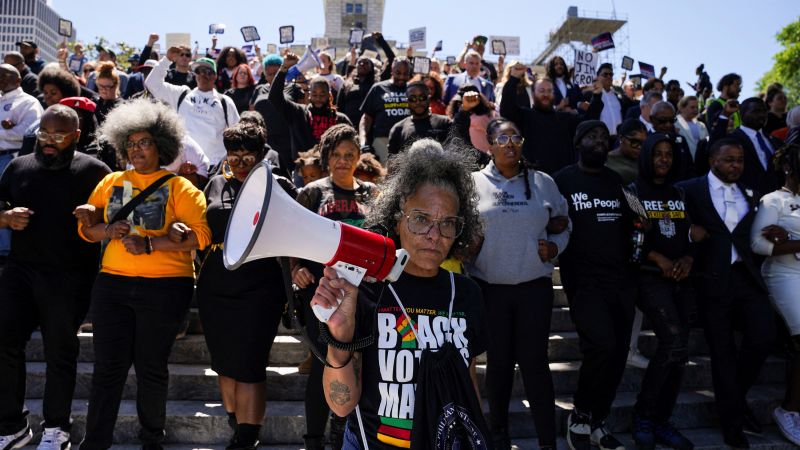
This Year Could Produce the Largest Loss of Black Political Representation Ever. Here’s Why
This year could produce the largest – A surge in redistricting across Southern states under Republican leadership may revive some of the most severe racial inequalities in American political history. As states in the region scramble to redraw electoral boundaries, they are increasingly targeting districts that have long supported Black Democrats, aiming to replace them with seats where White Republicans are more likely to prevail. This shift is notable because minority voters are responsible for the majority, or nearly all, of the population growth in these states. The resulting disparity evokes parallels to past eras when the South leveraged its demographics to expand congressional influence while systematically excluding Black citizens from voting rights.
Historical Context of Racial Suppression
For over 175 years, the South benefited from mechanisms that curtailed Black political influence. Before the Civil War, enslaved individuals were denied the right to vote, and even after emancipation, legal barriers persisted. The presence of Union troops in the post-war years temporarily secured voting rights for freed slaves, though this progress was often met with violent resistance from White Southerners. As federal support for Reconstruction waned in the 1870s, Southern states implemented a series of laws and practices that suppressed Black voter participation for generations. It was not until the Voting Rights Act of 1965 that this systemic exclusion began to reverse, granting Black Americans the ability to cast their ballots and shape political outcomes.
One of the most enduring compromises in American history was the three-fifths rule, which counted enslaved people as three-fifths of a free citizen for the purpose of allocating congressional seats and electoral votes. This allowed Southern states to gain disproportionate political power despite their exclusion of Black residents from the voting process. Even after the Civil War, when freed Black citizens were counted as full persons in population tallies, they remained locked out of the political system. This structural inequity laid the foundation for decades of underrepresentation, a legacy that continues to influence modern-day redistricting efforts.
Partisan Motives and Contradictory Claims
Despite recent assertions by some Republicans that the party is making historic strides in attracting minority voters, current redistricting tactics suggest a different narrative. Critics argue that the effort to eliminate Black-majority districts reflects a deeper fear of growing minority political strength. “From the very beginning, the largest threat to their movement is in fact Black and brown political and economic power,” stated Cornell Belcher, a Democratic pollster. This sentiment aligns with the perspective of many GOP strategists, who prioritize maximizing political control over addressing racial disparities.
Shermichael Singleton, a CNN commentator, emphasized that the party’s approach to gerrymandering is driven by partisanship rather than racial intent. “The average Republican in office isn’t looking at this through the lens of race,” he explained. “They’re focused on, ‘How can we maximize our political power?’” However, the consequences of these actions are clear: they threaten to undo the progress made in expanding voting access and representation for communities of color. The shift from inclusive rhetoric to exclusionary practices highlights a contradiction in the GOP’s messaging.
Broader Implications of the Trump Agenda
Redistricting is just one aspect of a larger strategy to limit the political power of the nation’s increasingly diverse electorate. This approach includes proposals to end birthright citizenship and policies that could penalize states with high immigrant populations during the 2030 congressional reapportionment. Stephen Miller, a key immigration adviser to former President Donald Trump, explicitly connected these changes to the erosion of majority-minority districts in a recent social media post. He argued that adjustments to Census data could result in the loss of up to 40 House seats currently held by Democrats.
“There are dividing lines being created that I think will have impacts for generations,” said Nicole Austin-Hillery, president and CEO of the Congressional Black Caucus Foundation. “This outcome is antithetical to what this moment should mean for all of us.” The 250th anniversary of the United States’ founding adds a layer of irony to these developments, as the nation’s growth and diversity are now seen as potential threats to the political status quo. Critics view this as a deliberate attempt to roll back progress and reassert dominance over marginalized communities.
Legacy of Structural Inequities
The ongoing redistricting battle in the South represents a continuation of a long-standing conflict over political power. Historically, Southern states used their demographics to bolster congressional representation, even as they denied Black citizens the right to vote. This pattern of exclusion has roots in slavery, where enslaved populations were counted as part of the electorate but had no say in governance. The post-Civil War era saw a similar dynamic, as freed Black individuals were counted fully in population calculations but remained subject to discriminatory voting laws.
Progressive political strategist Michael Podhorzer, former political director of the AFL-CIO, has quantified how this system favored White Southerners. His analysis reveals that prior to the Civil War, Southern states received roughly 1.5 times as many congressional seats per vote compared to non-Southern states. This structural advantage allowed the region to maintain disproportionate influence despite its exclusion of Black voters. The Voting Rights Act of 1965 was a pivotal moment in dismantling these barriers, but the recent push to redraw districts suggests that the fight for equitable representation is far from over.
Future Consequences and Political Tensions
As the redistricting process unfolds, its long-term impact on minority communities could be profound. The creation of districts that dilute Black voting strength may have lasting effects on policy priorities and electoral outcomes. “This is a tragedy, especially given the 250th anniversary of the nation’s founding,” Austin-Hillery added. “It’s a stark reminder of how far we’ve come and how much we still have to fight for.”
The current efforts to reshape districts echo historical tactics that have been used to marginalize Black voters. By leveraging population growth and demographic shifts, Southern states are seeking to reclaim the political power they once lost. This strategy not only threatens immediate representation but also risks entrenching systemic inequalities for future generations. The tension between the party’s promises and actions underscores a broader struggle over the direction of American democracy, with significant stakes for communities of color.
