
US-Iran talks are heating up again. But the danger isn’t over for gas prices
Ceasefire Progress Offers Hope, But Gas Price Concerns Linger
US Iran talks are heating up again – After a tense weekend, the fragile U.S.-Iran ceasefire has held, providing a glimmer of optimism in the ongoing energy crisis. Markets have responded positively, with U.S. stocks nearing record levels and oil futures easing from their peak near $100 per barrel. Yet, analysts caution that the threat to global energy prices remains significant, particularly as summer approaches and demand for fuel climbs. Despite the ceasefire’s survival, the road to stability is far from certain, and the potential for a full resolution is still uncertain.
A Fragile Peace and the Road to Reopening the Strait
While the talks between the U.S. and Iran continue to gain momentum, investors are still waiting for concrete evidence that a lasting agreement will be reached. The recent discussions have sparked cautious optimism, but many remain skeptical. “Mere talk on social media isn’t enough to reassure the market,” noted Rory Johnston, a veteran oil market analyst and founder of Commodity Context. He emphasized that both parties must commit to tangible steps, such as reopening the Strait of Hormuz, which has been a central point of contention in the conflict.
“Nothing has fundamentally changed. The strait remains closed,” Johnston said, highlighting Iran’s strategic position. “As soon as they open that spigot, they rapidly lose bargaining power.”
The Strait of Hormuz, a vital artery for global oil trade, has been under threat since the war began. Analysts warn that Iran’s reluctance to fully reopen the waterway could prolong the crisis. Even if a deal is finalized, the process of restoring normal flow will require time, and the market is watching closely for signs that the strait will return to its pre-war status without additional costs.
Skepticism from Gulf Officials and Market Hesitation
Uncertainty persists among Gulf energy leaders, who question the speed of recovery. Sultan Al Jaber, CEO of ADNOC, the state oil company of Abu Dhabi, recently stated that immediate resolution of the conflict would not immediately restore oil flows through the strait. “It will take at least four months to get back to 80% of pre-war levels,” he said, adding that full recovery is unlikely until early 2027.
Meanwhile, traders and economists remain cautious. Bob McNally, president of Rapidan Energy Group, told CNN that the market needs more than just hope—it requires confirmation. “I’m skeptical. I’ll believe it when I see it,” he said, underscoring the need for measurable progress before prices stabilize.
Brent crude futures saw a 4% rebound on Tuesday, reversing some of Monday’s losses, but the volatility reflects lingering fears. Tensions in the Gulf have not eased, with U.S. forces conducting “self-defense strikes” against Iranian targets near the Strait of Hormuz. These actions, while aimed at disrupting mine-laying efforts, signal that the ceasefire remains fragile. “The strikes are a reminder of how precarious the situation is,” McNally added.
Gas Prices: A Persistent Challenge
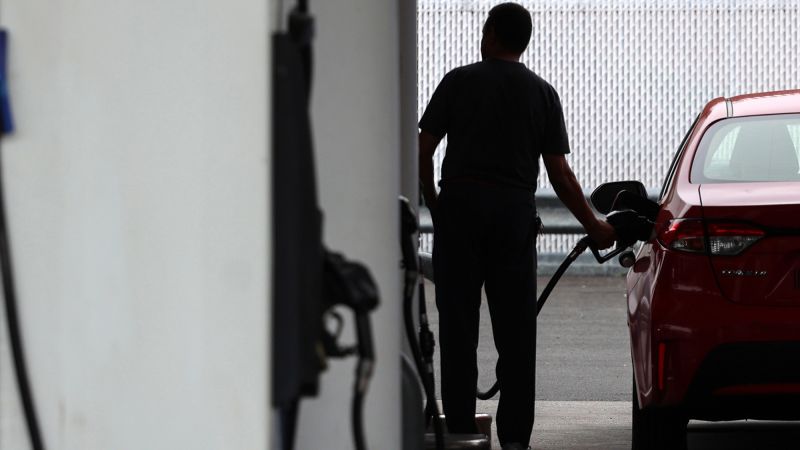
Even if the ceasefire holds, the impact on gas prices is already evident. According to S&P Global Energy, over 1.2 billion barrels of oil have been lost due to the war and disruptions in the region. This shortage, combined with rising summer demand, has kept prices elevated. In recent weeks, U.S. gas prices have stabilized around $4.50 per gallon, up from $2.98 at the start of the conflict. But analysts warn that this is only a temporary reprieve.
“Even in the best case, a fundamental tightening of the market is baked in the cake,” McNally said. “There is this brutal, inexorable math that can’t be changed by a deal.”
Johnston echoed this sentiment, stating that if the Strait of Hormuz stays closed for another month, gas prices could surpass the record highs set during the Biden administration. “If it ends today, it’s a trickier question,” he explained. “We will get an immediate relief selloff, but it will still take months to normalize flows out of the strait. We could sell off and then grind higher to all-time highs as everyone gets back to the math.”
Industry insiders agree that the road to pre-war pricing is long. JPMorgan predicts that even after the strait reopens, Brent crude will average $104 per barrel in the third quarter and $98 per barrel in the fourth quarter of 2026. Kevin Book, managing director of ClearView Energy Partners, noted that while the immediate effects of the conflict could be mitigated within weeks or months, the long-term repair of infrastructure and restocking of reserves will take much longer. “I don’t think anybody is expecting to return to averaging $60-a-barrel oil anytime soon,” he said.
The Road Ahead: Supply, Demand, and Market Psychology
As the summer driving season kicks into gear, demand for gasoline is rising, adding pressure to prices. The combination of reduced supply and increased consumption creates a perfect storm for the energy market. Even if the strait is fully reopened, analysts argue that the damage has already been done. “The math of the market is not something we can easily reverse,” McNally said.
While the ceasefire’s survival has eased immediate fears, the broader economic implications remain. The U.S. and Iran’s agreement could prevent further escalation, but it may not be enough to reverse the upward trend in oil prices. Market participants are closely monitoring developments, with many anticipating that $5 gas prices could return by late summer. “We don’t believe we’re done,” McNally warned. “This isn’t just about the immediate crisis—it’s about the long-term trajectory of energy costs.”
The potential for renewed conflict also looms large. With the Strait of Hormuz still closed, the risk of another disruption remains. “The world economy is hostage to Iran’s decisions,” Johnston said. “Until they agree to reopen the strait, the price of oil and gas will continue to reflect that leverage.”
A Pivotal Moment for Global Energy Markets
The U.S.-Iran talks represent a critical juncture for global energy markets. While the ceasefire has provided some relief, the underlying issues—such as Iran’s strategic control over the strait and the slow pace of recovery—mean that the crisis is far from over. Investors are aware that even a temporary resolution could have lasting effects on fuel prices and economic stability.
As the world watches the negotiations unfold, the outcome will determine the future of energy markets. For now, the market is cautiously optimistic, but the specter of $5 gas prices and continued oil price volatility remains a key concern. The path to normalization is complex, and the stakes are high for both energy consumers and producers alike.
