
Protesters clash with agents outside New Jersey ICE facility. Inside, detainees continue their hunger strike, attorneys say
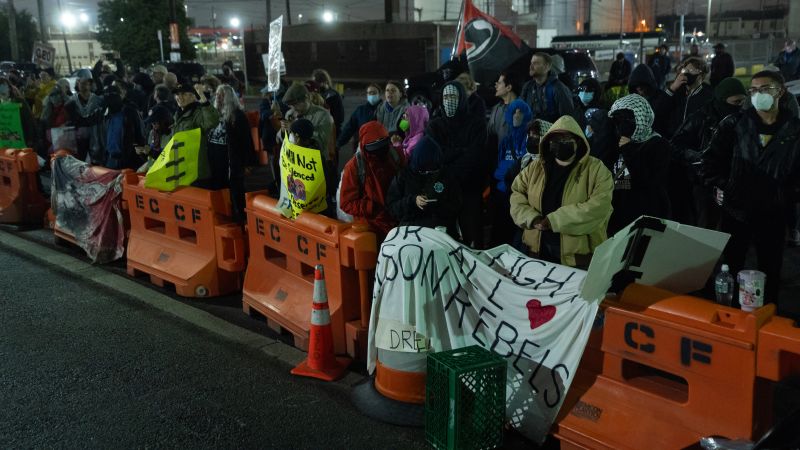
Protesters Clash with ICE Agents Outside New Jersey Facility Amid Hunger Strike
Protesters clash with agents outside New Jersey – Protesters clashed with ICE agents outside a detention center in Newark, New Jersey, as tensions flared over conditions inside the facility. The incident occurred Tuesday, marking the latest escalation in a growing movement against the treatment of detainees. Activists and community members gathered outside the 1,000-bed facility, demanding accountability for alleged mistreatment. Footage from Freedom News TV shows protesters blocking vehicles and engaging in physical confrontations with officers, who responded with batons and gas canisters. The clash follows a week of unrest, with reports of detainees being dragged across the ground during an attempt to stop their transfer.
Detainees’ Hunger Strike Highlights Worsening Conditions
Inside Delaney Hall, hundreds of detainees sustained their hunger strike, a protest that has drawn widespread attention. Legal advocates claim the strike is a direct response to deteriorating living conditions, including overcrowded cells and insufficient heating. Selenia Destefani, an attorney with Nova Law Group, described the environment as “brutal,” citing cold showers, lack of blankets, and unmarked government vehicles. “People sleep on the floor with no food and extreme cold,” she said, emphasizing the harsh reality faced by those held in the facility.
“There’s no proper warmth, no blankets, and the food is barely edible. These aren’t just complaints—they’re survival issues,” Destefani added.
Detainees with medical conditions, such as diabetes or cancer, also reported difficulty accessing timely care. Alex Minogue, another representative from Nova Law Group, highlighted the strain on resources, noting that some individuals were served meals containing worms. While the Department of Homeland Security (DHS) insists detainees receive three meals daily, clean water, and hygiene essentials, critics argue the conditions remain dire. “We’re seeing a pattern of neglect,” Minogue said, urging the agency to address the systemic issues.
Protest Intensifies Over Detainee Transfer
The protest outside Delaney Hall escalated Sunday night when demonstrators tried to prevent the relocation of Martin Alonso Soto Hernandez, a detainee whose wife is in her final months of pregnancy. His attorney claimed the transfer worsened tensions, prompting a confrontation where agents in masks and vests dragged individuals from the crowd. The exact cause of the clash remains unclear, though officers deployed gas canisters to disperse the group. Video evidence shows detainees being forcibly removed, fueling accusations of excessive force.
DHS spokesperson Lauren Bis defended the agency’s actions, stating that Delaney Hall maintains higher standards than many U.S. prisons. “There is no hunger strike at Delaney Hall. Conditions are not subprime,” she insisted. However, the agency’s stance has not quelled criticism, as detainees continue to describe the facility as a place of suffering. “Phones are available, but that doesn’t mean the system is fair,” said one detainee during a recent interview.
Local and National Advocacy Gains Momentum
Sen. Andy Kim, a New Jersey Democrat, visited Delaney Hall on Saturday to witness the situation firsthand. He described the conditions as “alarming,” noting a carton of milk that had frozen inside the facility. Kim also reported detainees shared stories of being arrested during routine immigration interviews for green cards, a detail he shared on social media. While DHS called the senator’s visit a “political stunt,” the episode has reignited calls for transparency.
Broader concerns about ICE facilities have been amplified by data showing nearly 50 detainees have died since the Trump administration’s deportation policies intensified. New Jersey’s Delaney Hall remains a focal point for activists, who argue its unique challenges—such as overcrowding and limited resources—warrant urgent reform. “This isn’t just about one facility; it’s a reflection of systemic issues across the board,” said a local advocate in an interview with CNN.
