
Conditions of 4 climbers who fell on Mount McKinley unknown as rescuers try to reach them
Conditions of 4 climbers who fell on Mount McKinley unknown as rescuers try to reach them
Conditions of 4 climbers who fell – Helicopter rescuers are working to locate four climbers who slipped on Alaska’s Mount McKinley, North America’s highest peak, according to the National Park Service. The incident, which occurred overnight, left the climbers’ health status unclear, and rangers are waiting for a favorable weather condition to safely deploy a rescue operation. A statement from the agency emphasized the urgency of the situation, noting that the team is actively monitoring developments.
The accident took place near Denali Pass, approximately 18,200 feet (5,547 meters) above sea level. This section of the mountain is particularly treacherous, with steep terrain and unpredictable weather patterns. The four climbers involved were part of a seven-person team, and three of their fellow climbers responded immediately, providing aid before returning to the base camp at around 17,000 feet (5,181 meters). This high camp area, often a critical point for climbers, serves as a staging ground for ascents toward the summit.
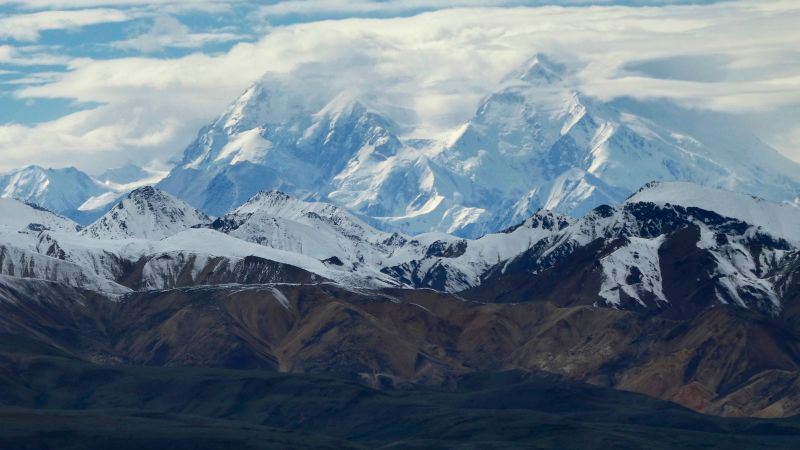
Mount McKinley, known locally as Denali, towers at roughly 20,310 feet (6,190 meters), making it a formidable challenge for even the most experienced mountaineers. The park service has issued statements highlighting the risks associated with traversing the route between high camp and Denali Pass. Over the years, this stretch has been responsible for numerous injuries and fatalities, primarily due to falls that lack proper protection. Snow pickets—temporary anchors used to secure climbers on steep slopes—are a key safety measure in this region, though they require constant maintenance by park rangers and mountain guides.
Weather Challenges Delay Rescue Efforts
Despite the urgency, helicopter operations have been stalled by unfavorable weather. Scott Carr, a spokesperson for the park service, explained that conditions have been inconsistent throughout the day, with low cloud ceilings and limited visibility complicating the rescue mission. “Helicopter operations will start when a weather window opens up,” Carr said, underscoring the dependency of rescue teams on atmospheric stability. The rangers are hoping for a brief period of calm to initiate the search and retrieval process.
“Weather windows are essential for operations at this altitude,” Carr added. “Without clear skies and steady winds, the risk of losing sight of the climbers or encountering sudden turbulence is too high.”
The climbing season on Mount McKinley typically runs from late April to mid-July, a period when the snowpack begins to melt and the trails become more accessible. As of Thursday, the mountain was home to 516 climbers, a number that reflects the popularity of the route during this time. However, the recent incident has raised concerns about the safety of the trail, especially in areas where natural hazards combine with human error.
According to the park service, the majority of accidents in the Denali Pass to high camp corridor stem from unprotected falls. While snow pickets are installed regularly by rangers and guides, they are not a guarantee against danger. Climbers are encouraged to carry their own safety equipment as a backup, given the unpredictable nature of the environment. The incident this week serves as a reminder of the risks involved in high-altitude trekking, even for seasoned adventurers.
Historical Context and Safety Measures
Denali National Park and Preserve has long been a site of both triumph and tragedy. The park service has reported that the traverse between high camp and Denali Pass is one of the most hazardous routes in the region. This is due to the combination of steep inclines, thin air, and the potential for sudden weather changes. The installation and maintenance of snow pickets in this area are part of a broader effort to mitigate these risks.
“Snow pickets are a lifeline for climbers in this terrain,” Carr stated. “They provide an extra layer of security, but they are only as effective as the time they are in place.”
The four climbers who fell are currently being tracked by rangers, who have deployed ground teams to assist in the search. While the exact conditions of the climbers remain unknown, the park service is preparing for the worst-case scenario. Carr noted that the team has been in communication with the three climbers who survived the fall, and they have provided updates on the situation. “Additional information will be shared if and when it becomes appropriate,” Carr said, indicating the need to wait for more data before making official statements.
The incident also highlights the importance of preparedness in alpine environments. Climbers are advised to monitor weather forecasts closely, as conditions can shift rapidly. The high camp area, while a common resting point, is still vulnerable to sudden storms or avalanches. Park officials have stressed that even with safety measures in place, the margin for error is slim, and each step on the mountain carries inherent risks.
On Wednesday, another climbing incident occurred, resulting in the evacuation of two climbers by helicopter around 11 p.m. While the details of that event were not immediately released, it contributed to the ongoing awareness of the dangers associated with Denali’s rugged landscape. The park service is currently reviewing both incidents to identify patterns or potential improvements in safety protocols.
As the search for the four climbers continues, the focus remains on ensuring that they receive the necessary care. The rangers are relying on a combination of ground teams and aerial support, but the weather remains a significant obstacle. Until a stable window opens, the climbers will be in limbo, their condition uncertain and their location a matter of critical concern. The National Park Service has committed to transparency, with updates expected as the situation develops.
