
California blues: Races for governor, Los Angeles mayor feature weak Democratic frontrunners and insurgent Republicans
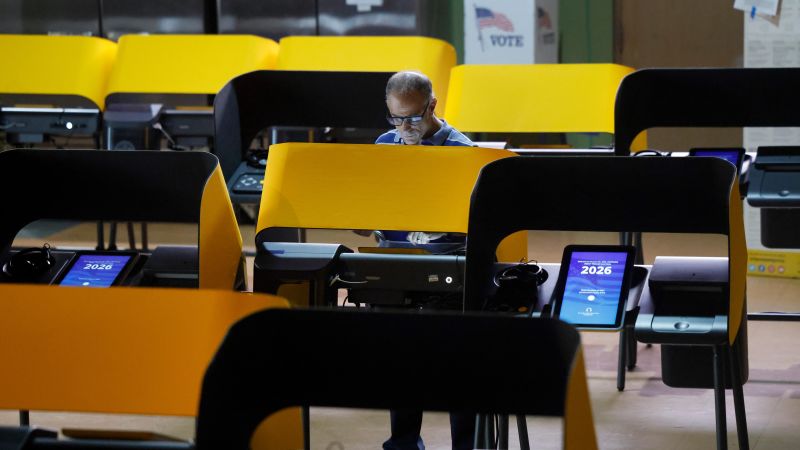
California blues: Races for governor, Los Angeles mayor feature weak Democratic frontrunners and insurgent Republicans
Democrats’ Challenge in the Golden State
California blues – California, often regarded as a stronghold for the Democratic Party, faces an unprecedented test of its leadership Tuesday. Primary elections for governor and Los Angeles mayor are drawing attention to a competitive field where Democratic candidates struggle to stand out. Despite the state’s deep blue reputation, voter discontent has led to a surge in conservative challenges, questioning the effectiveness of the current administration. President Donald Trump, though less popular than ever, has yet to dominate the political narrative as Democrats grapple with their own internal struggles.
The Insurgent Threat in Los Angeles
Los Angeles Mayor Karen Bass’s bid for reelection has encountered a formidable opponent in Spencer Pratt, a former reality television star. Pratt, who launched his campaign after a devastating fire consumed his home last year, criticizes the Democratic establishment for its perceived failures. While the mayor’s race is nominally nonpartisan, Pratt’s alignment with the Republican Party has drawn scrutiny from Democrats, who seek to link him to controversial figures like Alex Jones. The race is emblematic of broader frustrations over homelessness, drug use, and rising crime rates, which both parties have framed as key issues.
“The current administration is to blame, according to Pratt, who asserted that corrupt politicians have mismanaged the city’s resources, leading to increased homelessness and deaths on the streets.”
Pratt’s campaign emphasizes a common-sense approach, positioning him as a straightforward alternative to the entrenched Democratic leadership. His critique of Bass, who was abroad during the Palisades fire, highlights a narrative of neglect. While registered Democrats outnumber Republicans in the city by nearly four-to-one, the primary race has become a battleground for ideological shifts. The dynamics of this contest mirror those in the state governor’s race, where voters are demanding accountability from leaders who have long controlled both city and state governments.
Jungle Primaries and the Battle for Ballots
California’s primary system, known as a “jungle primary,” allows all candidates to appear on the same ballot regardless of party affiliation. This format ensures that the top two vote-getters, regardless of their political alignment, will face off in the general election. The mayoral race is particularly tight, with three candidates—Karen Bass, Nithya Raman, and Spencer Pratt—competing for the two spots on the November ballot. Recent polls suggest a closely contested race, as the Democratic establishment faces a significant threat from insurgent Republicans.
A UC Berkeley-LA Times survey conducted May 19-24 revealed Bass at 26%, Nithya Raman at 25%, and Pratt at 22%. Notably, 57% of likely voters viewed Bass unfavorably, matching the percentage that disapproved of Pratt. This data underscores the challenges faced by the Democratic Party in maintaining its dominance in a city that has historically leaned blue. The presence of conservative candidates has forced Democrats to defend their record on critical issues like affordable housing and public safety.
State Governor’s Race: A Fractured Field
The governor’s race presents an even more fragmented landscape. While the Democratic Party has long held power in Sacramento, its candidates are struggling to unify a divided base. Xavier Becerra and Steve Hilton are currently the top contenders, but the field remains open. A PPIC poll from May 14-18 showed Becerra with 23% support and Hilton with 20%, followed by Tom Steyer, Chad Bianco, and Katie Porter in double-digit ranges. However, a new Berkeley IGS poll released Friday shifted the momentum slightly, with Becerra at 25%, Hilton at 21%, and Steyer at 19%.
This evolving poll data raises questions about the viability of the Democratic candidate. Tom Steyer, a billionaire activist, has emerged as a potential threat to Hilton, who is backed by Trump. The Republican candidate’s campaign is capitalizing on voter fatigue with the current administration, even as it navigates a crowded field. The race’s unpredictability reflects a broader trend in California politics, where moderate and progressive factions within the Democratic Party are vying for influence.
Polling Dynamics and Strategic Implications
With both races in flux, strategists on both sides are closely analyzing the latest surveys. The governor’s race, in particular, has seen a shift in favor of Becerra, who is leveraging his experience as a former Attorney General. Meanwhile, Hilton benefits from a fractured Democratic coalition, which includes figures like Matt Mahan, the moderate San Jose Mayor backed by Silicon Valley donors. This division could create opportunities for Republican candidates to consolidate support.
Steyer’s rise in the polls signals a potential challenge to the status quo. His wealth and progressive platform have made him a key player, even as he faces competition from established names. The presence of multiple candidates with double-digit support complicates the race, leaving room for surprises. In the mayoral contest, Raman’s left-leaning campaign contrasts with Pratt’s populist appeal, creating a split among Democratic voters. This fragmentation may benefit Republicans, who argue that the party has failed to address core issues like economic stability and public safety.
Broader Implications for November
The outcomes of these primaries could shape the trajectory of California politics in the coming months. For Democrats, the stakes are high: a loss in either race could signal a decline in their ability to hold power. The party’s struggles with internal cohesion are evident, as candidates like Becerra and Bass navigate a landscape where voter trust is waning. Meanwhile, Republicans are positioning themselves as the party of change, capitalizing on widespread dissatisfaction with Democratic governance.
Pratt’s campaign, in particular, has highlighted the challenges of maintaining a united front. His focus on accountability and fiscal responsibility resonates with voters who feel the Democratic establishment has overlooked their needs. While his claims may be seen as partisan by some, the broader narrative of corruption and mismanagement has gained traction. This sentiment is echoed in the governor’s race, where candidates are being held to account for their policies on homelessness and crime.
The state’s primary elections are not just about selecting leaders—they are also a referendum on the Democratic Party’s direction. With Trump’s endorsement of Hilton adding momentum to the Republican side, the governor’s race has taken on an added layer of complexity. Voters are weighing the benefits of experience against the desire for reform, creating a volatile environment. The same dilemma faces the mayoral race, where the electorate must decide between continuity and change.
As the polls close, the focus shifts to the general election. The results will determine whether California’s Democratic leadership can retain its grip or if the Republican surge will disrupt the status quo. For now, the races remain unpredictable, with both parties vying for the hearts and minds of voters in a state that is often seen as a political bellwether. The challenges ahead will test the resilience of the Democratic Party and the effectiveness of its candidates in a rapidly changing political landscape.
