
A timeline of US strikes on boats that have killed at least 198
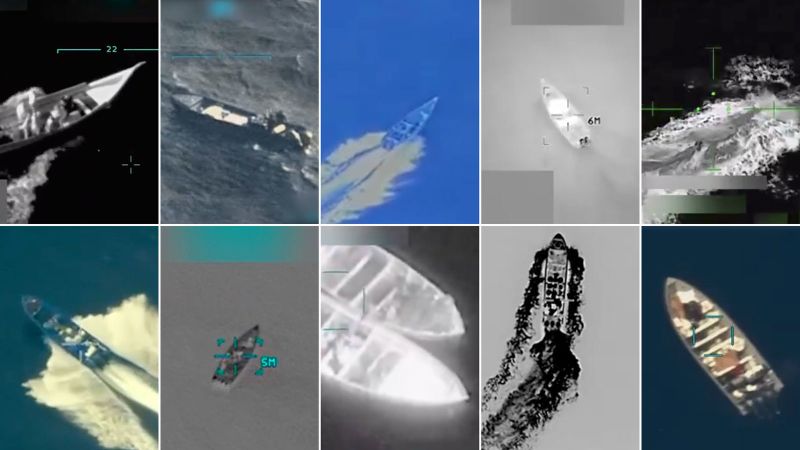
US Strikes on Drug Trafficking Boats: A Timeline of Operations
A timeline of US strikes on boats – Since the beginning of the campaign targeting maritime drug routes, the United States military has been responsible for the deaths of at least 198 individuals and the sinking of 62 vessels. These actions, which span multiple months, are part of a broader strategy to disrupt the flow of narcotics into the country, as outlined by government officials and corroborated by CNN’s analysis of search and rescue reports. While the toll of the strikes is clear, the outcomes for those who survived remain uncertain, with at least 18 people still accounted for after the incidents. Among these survivors, two were temporarily detained by the US Navy before being repatriated to their respective nations. Eleven others are presumed lost at sea following failed search efforts.
Recent Strikes and Survivor Searches
The latest engagement in this series of operations took place on May 29, when a suspected drug-trafficking boat was struck in international waters. The event marked the culmination of a pattern that had begun earlier in the year. On December 30, the US Coast Guard initiated a search for survivors after a vessel was damaged in the same region, though the exact number of those who escaped remains unspecified. The search was later suspended on January 2, with officials reporting that eight individuals were still being tracked. Similar operations occurred on October 27, January 23, and February 9, but none of the subsequent searches yielded results, leaving the men on board presumed missing.
Following the April 11 strike, the military informed the Coast Guard of one survivor, prompting the activation of the search and rescue system. This protocol was repeated after the May 8 attack, when the military notified the Coast Guard of an additional survivor. By May 26, the tally had risen to two individuals who survived the incident. These updates highlight the ongoing efforts to recover those who might have been stranded or injured during the attacks, even as the operational focus shifts between targeting vessels and locating survivors.
Administrative Justification and Legal Framework
On September 2, the Trump administration declared the United States in an “armed conflict” with drug cartels, framing the strike campaign as a necessary military operation. This classification allows for the designation of casualties as “unlawful combatants,” according to a classified report from the Justice Department. Under this legal rationale, the military asserts the right to conduct lethal strikes without requiring judicial approval, a departure from prior practices of interdiction that emphasized capturing suspects for prosecution.
“The ability to engage in lethal strikes without judicial review is based on a classified Justice Department finding,” stated officials. “This enables swift action against threats to national security.”
The decision to classify the campaign as an armed conflict has sparked debate among lawmakers and human rights organizations. Critics argue that the policy of labeling individuals as combatants lacks sufficient evidence, particularly given the absence of public documentation confirming the presence of narcotics on the targeted boats. Furthermore, there has been no clear evidence provided to link the vessels to specific drug cartels, raising questions about the targeted nature of the operations.
Despite these concerns, the administration maintains that the strikes are essential to combatting the opioid crisis and other drug-related challenges. The legal framework established under the “armed conflict” designation aims to streamline the process of authorizing attacks, bypassing the need for traditional judicial oversight. This approach has been a point of contention, with some members of Congress expressing skepticism about the validity of the claim and its implications for international law.
Operational Impact and Ongoing Efforts
According to military officials, the strikes have not resulted in any casualties among US service members. This assurance underscores the operational precision of the campaign, which relies on surveillance and rapid response to neutralize suspected drug trafficking networks. However, the emphasis on speed and lethality has led to accusations that the process of identifying and targeting vessels may be overly aggressive, with limited room for error.
The Coast Guard has played a pivotal role in these operations, conducting search and rescue missions to locate survivors and gather evidence. After the May 29 strike, the agency continued its efforts to recover those who had fled the wreckage. In contrast, the December 30 operation saw the search suspended earlier, with only eight survivors identified as of that point. The same pattern has repeated in other incidents, suggesting that the effectiveness of these missions is sometimes constrained by logistical challenges or the speed at which survivors are dispersed.
As the campaign progresses, the military has reported a consistent focus on intercepting vessels suspected of carrying illicit narcotics. While the exact number of boats destroyed and the quantity of drugs intercepted remain undisclosed, the administration has framed these actions as critical to reducing the flow of narcotics across borders. The lack of transparency regarding the cargo of the struck vessels has fueled criticism, with advocates for human rights calling for greater accountability and evidence to support the campaign’s objectives.
Conclusion and Updates
The campaign of strikes against maritime drug trafficking routes has evolved into a multifaceted operation, combining military force with search and rescue efforts. The initial focus on eliminating threats through destruction has given way to a more nuanced approach, emphasizing both deterrence and the retrieval of survivors. Yet, the absence of concrete evidence linking the boats to specific drug cartels or the presence of narcotics has raised concerns about the proportionality of the strikes and their broader legal implications.
As of the latest update, the US military continues to refine its strategy, balancing the need for immediate action with the requirements of international law. The ongoing collaboration between the Coast Guard and military units reflects the integrated nature of the operation, but the controversies surrounding its legal justification persist. With the story now expanded to include additional details and analysis, the public is better informed about the scope and impact of these strikes, even as questions remain about their long-term effectiveness and ethical considerations.
