
Israel seizes Crusader-era castle as Netanyahu orders forces deeper into Lebanon
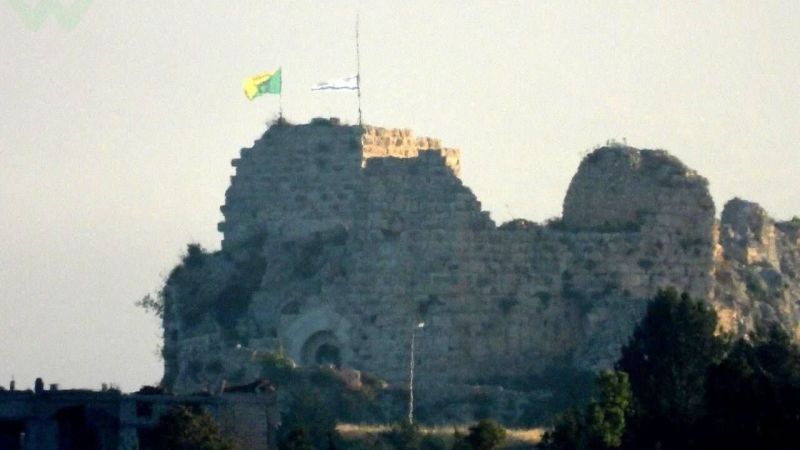
Israel Captures Crusader-Era Castle in Southern Lebanon as Conflict Intensifies
Israel seizes Crusader era castle as Netanyahu – Israel seizes Crusader era castle as part of a broader military campaign in southern Lebanon, with Prime Minister Benjamin Netanyahu directing forces to push further into the country. The strategic capture of Beaufort Castle, a 900-year-old fortress near Nabatiyeh, marks a critical step in Israel’s efforts to secure key terrain and weaken Hezbollah’s influence. The operation, which began several days ago, has led to increased combat activity along the border, as Israeli forces aim to consolidate their position in the region.
Strategic Importance of Beaufort Castle
Beaufort Castle, perched on a high cliff overlooking the Litani River, has historically served as a pivotal military site. Built by Crusaders, it has endured centuries of conflict, including occupation by Israeli troops during the 1982 invasion and the subsequent 18-year presence. The site’s recent seizure underscores its significance as a symbol of control and a logistical hub for Hezbollah operations. With UNESCO recently listing it among Lebanon’s protected cultural properties, the castle’s preservation and strategic value remain intertwined.
“The capture of Beaufort Castle is a decisive move in our campaign to expand the Forward Defense Line,” the Israeli Defense Forces (IDF) stated in a press release. “This site’s location enables us to dominate the surrounding areas and cut off Hezbollah’s supply lines.”
The IDF emphasized that the castle’s position on Beaufort Ridge allows for surveillance of the Wadi al-Saluki region, a critical corridor for the militant group’s movements. The operation has intensified over the past week, with both sides reporting heavy exchanges of fire and aerial strikes in the area.
Netanyahu’s Directive and Military Expansion
Netanyahu has ordered troops to deepen their advance into Lebanese territory, with the capture of the Crusader era castle serving as a key milestone. The prime minister described the move as a “significant stage in our strategy,” highlighting its role in enhancing Israel’s control over the region. As the conflict escalates, the IDF has targeted Hezbollah infrastructure in coastal areas and beyond, including weapons storage sites and command centers, to disrupt the group’s operations.
“Our forces are now firmly established in areas that had been under Hezbollah’s control,” Netanyahu said on Friday. “This marks a shift in our approach, focusing on long-term stability and strategic dominance.”
The operation has also prompted evacuation orders for villages north of the Litani River, displacing civilians as Israeli troops solidify their hold on the area. The intensified fighting raises concerns about the stability of the US-mediated ceasefire, which was signed in April but has been tested by the recent offensive.
Lebanese authorities have reported heavy bombardment in the region, with the National News Agency (NNA) noting that Israeli air raids have targeted Hezbollah positions near Beaufort Castle. In response, Hezbollah claimed to have destroyed an Israeli tank in the vicinity, though the IDF has not confirmed the loss. The Arnoun Municipality has also expressed frustration over the attacks, urging international support to protect the castle’s cultural heritage during the conflict.
Historical and Cultural Significance
Beaufort Castle, a UNESCO-recognized site, represents a rare example of medieval architecture in the Near East. Its strategic placement made it a target for multiple factions throughout history, including the Crusaders, French Mandate forces, and Israeli troops. The castle’s capture not only secures a military advantage but also highlights the intersection of historical preservation and modern warfare in the region.
Analysts suggest that the operation reflects Israel’s intent to weaken Hezbollah’s forward defenses, which have been a persistent threat to Israeli security. By securing the Crusader era castle, the IDF has further reduced Hezbollah’s ability to launch attacks from the south. The move also signals a potential extension of the conflict beyond the immediate border, with implications for Lebanon’s political and military landscape.
