
More than 45 dead in Myanmar town after massive blast in building storing explosives
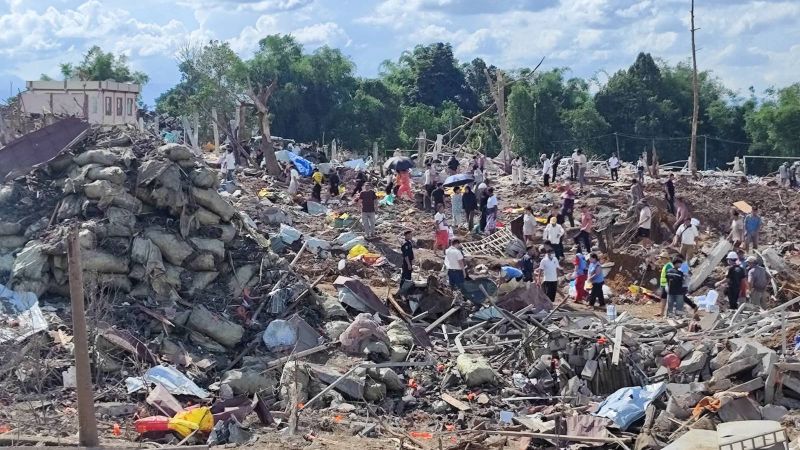
Myanmar Blast Kills Over 45
More than 45 dead in Myanmar – A devastating explosion in northeastern Myanmar left over 45 people dead, with more than 70 injured, according to early casualty reports. The incident occurred on Sunday in the Namhkam township, specifically in the village of Kaungtup, which lies about 3 kilometers from the Chinese border. This area is currently under the control of the Ta’ang National Liberation Army (TNLA), an ethnic armed group that has been engaged in intermittent clashes with Myanmar’s central government. Initial findings indicate that the blast originated from a building housing explosives used for mining operations, though the exact cause remains under investigation.
Rescue Operations and Rising Death Toll
Emergency teams at the scene reported that the number of fatalities has increased as recovery efforts continue. By Sunday evening, 46 bodies, including six minors, had been removed from the rubble, with more expected as the search progresses. Over 74 injured individuals were being transported to the township’s hospital, where medical staff are working to stabilize the most critical cases. The debris field and lingering smoke from the blast highlight the severe destruction, with more than 100 nearby homes damaged. A second source confirmed that the death count could reach 50, underscoring the scale of the tragedy.
“The explosion was immense, and we’re still uncovering the full extent of the casualties,” said a rescue worker speaking anonymously. “We’ve recovered 46 bodies so far, and the situation is evolving rapidly. Many of the injured are in serious condition, and we’re doing everything possible to get them to the hospital.”
Local news agencies, such as the Shan State-based Shwe Phee Myay, documented the aftermath, with visuals showing collapsed structures and scattered debris. The incident’s proximity to the Chinese border has drawn attention to the region’s strategic significance, as conflict zones increasingly encroach on international frontiers. Despite the chaos, authorities are coordinating with neighboring regions to manage the emergency response.
Explosive Storage and Potential Causes
Investigators are examining whether improper handling of stored explosives contributed to the disaster. The TNLA, which operates in the area, confirmed that gelignite—a high-yield explosive commonly used in mining—was kept by its economic department for operational use. The group stated that the blast occurred at a designated mining site, but questions remain about whether safety measures were followed. Gelignite’s volatility, especially when exposed to heat or pressure, may have played a role in the explosion’s intensity.
The TNLA is part of the Three Brotherhood Alliance (TBA), a coalition of ethnic armed groups that has been waging a campaign against Myanmar’s military since late 2023. The alliance’s control over Namhkam township has shifted the balance of power in the region, making it a critical front in the ongoing conflict. While the TBA signed a ceasefire agreement with the military in October 2024, tensions persist, and the explosion serves as a stark reminder of the risks in areas where both sides operate.
Regional Impact and Broader Conflict
The explosion in Kaungtup has intensified concerns about the safety of explosive storage in conflict zones. With over 45 lives lost, the incident highlights the dangers faced by residents in areas where ethnic groups and the military share control. The TNLA’s statement on its Telegram channel emphasized that the blast was a result of operational activities, but the lack of immediate clarity has raised questions about accountability. The tragedy also underscores the fragility of peace in Myanmar, where sporadic violence continues to disrupt daily life.
Myanmar’s political turmoil, which began with the military coup on February 1, 2021, has created an environment where such incidents are not uncommon. The country is divided into multiple zones of conflict, with ethnic armed groups like the TNLA fighting for autonomy. The explosion adds to the growing list of casualties in this volatile setting, as communities remain at risk from both government forces and rebel activity. Local authorities have pledged to provide emergency relief to the affected residents, but the scale of the disaster is expected to strain resources in the coming days.
