
Where is the Tropical Rainforest Located? Overview
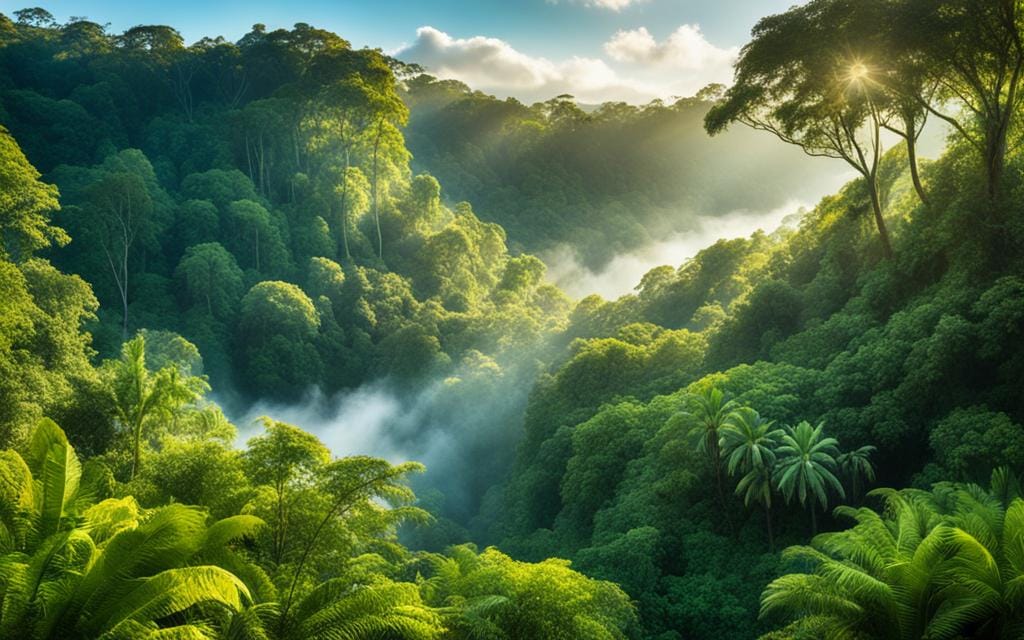
Tropical rainforests are lush, green areas near the equator. They are between 23.5 degrees north and south of the equator. These areas are full of life and help control the Earth’s climate. We will look at where these forests are, their special features, and the dangers they face.
Tropical rainforests are in many places around the world. The biggest ones are in South America, Central Africa, and Southeast Asia. These places are full of different plants and animals.
In this article, we will learn about the special features of tropical rainforests. We will see where they are and the big problems they have, like deforestation and climate change. Knowing about these forests helps us protect them for the future.
Defining the Tropical Rainforest
Tropical rainforests are amazing ecosystems known for their warm, humid climate and lots of rain. They have evergreen trees that create a thick canopy. These forests are famous for their incredible variety of plants and animals, found only here on Earth.
What Constitutes a Tropical Rainforest?
An area must meet certain criteria to be called a tropical rainforest. It must be in the tropics, between the Tropic of Cancer and the Tropic of Capricorn. This means it has a warm climate, with temperatures usually between 20°C and 35°C (68°F and 95°F) all year.
It also needs a lot of rain, which is a key feature of these forests. Tropical rainforests get at least 1,500 mm (59 inches) of rain each year. Some areas get over 10,000 mm (394 inches), which helps the dense, layered vegetation grow.
The Unique Biodiversity of Tropical Rainforests
The warm weather, lots of rain, and complex ecosystems make tropical rainforests perfect for a wide variety of life. These forests are home to about 50-90% of the world’s plants and animals, many of which are unique to these places. You’ll find everything from huge trees and bright flowers to jaguars and colorful birds.
Tropical rainforests are crucial for our planet. They help control the climate, store a lot of carbon, and produce oxygen we need to breathe. But, they face threats from deforestation, urban growth, and climate change.
Major Tropical Rainforest Regions
Tropical rainforests are found in several key regions around the world. Each has its own unique features and ecosystem. These regions are home to some of the most diverse and important ecosystems on Earth.
The largest and most well-known tropical rainforest is the Amazon Basin in South America. It spans across several countries, including Brazil, Peru, and Colombia. The Amazon is often called the “lungs of the planet” because it plays a vital role in regulating the global climate and atmosphere.
Another major tropical rainforest region is the Congo Basin in Central Africa. It covers parts of countries like the Democratic Republic of the Congo, Republic of the Congo, and Gabon. This region is known for its high biodiversity and is home to unique species, including the lowland gorilla.
The Southeast Asian rainforests stretch across countries such as Indonesia, Malaysia, and the Philippines. These forests are crucial for their high levels of endemism and the variety of plant and animal species they support. Many of these species can’t be found anywhere else on Earth.
| Region | Countries | Ecosystem Highlights |
|---|---|---|
| Amazon Basin | Brazil, Peru, Colombia | Largest tropical rainforest, vital role in regulating global climate |
| Congo Basin | Democratic Republic of the Congo, Republic of the Congo, Gabon | High biodiversity, home to lowland gorillas |
| Southeast Asian Rainforests | Indonesia, Malaysia, Philippines | High levels of endemism, diverse plant and animal species |
Amazon Rainforest: The Lungs of the Planet
The Amazon rainforest stretches across nine countries in South America. It’s the largest and most diverse tropical rainforest in the world. This huge area is vital for our planet’s climate, earning it the nickname “lungs of the planet.”
Location and Geographical Extent
Most of the Amazon rainforest is in Brazil. But it also covers parts of Colombia, Peru, Venezuela, Ecuador, Guyana, Suriname, French Guiana, and Bolivia. This vast land is a home to many unique plants and animals, some found only here.
Importance and Threats to the Amazon Rainforest
The Amazon is crucial for many species and helps fight climate change by absorbing carbon dioxide. Yet, it faces threats like deforestation, logging, mining, and farming. Saving the Amazon is a global effort, as losing it could harm our planet greatly.
We must work together to protect the Amazon. This means supporting conservation, practicing sustainable living, and spreading awareness about its dangers. By acting now, we can help the Amazon continue to support life on Earth.
The Congo Basin Rainforest
The Congo Basin rainforest is a true gem in Central Africa. It spans across several countries and amazes us with its incredible biodiversity. This vast area is the second-largest tropical rainforest in the world, covering 1.5 million square miles.
This ecosystem stretches across the Democratic Republic of the Congo, the Republic of the Congo, and Gabon. It’s a place where you can find everything from silverback gorillas to elusive okapis. This region is full of life that can’t be found anywhere else.
| Fact | Detail |
|---|---|
| Size | Approximately 1.5 million square miles |
| Location | Central Africa, spanning the Democratic Republic of the Congo, the Republic of the Congo, and Gabon |
| Biodiversity | Home to a wide range of plant and animal species, many of which are found nowhere else on Earth |
The Congo Basin rainforest is not just a wonder of nature; it’s also key to our climate. It’s one of the biggest carbon sinks, absorbing and storing a lot of carbon dioxide. This helps fight climate change.
But, the Congo Basin rainforest faces big threats like deforestation, mining, and taking resources without thinking about the future. We must protect this amazing place for the next generations. Supporting sustainable practices and conservation can help keep the Congo Basin rainforest thriving.
Southeast Asian Rainforests
The tropical rainforests of Southeast Asia are nature’s wonders. They stretch across Malaysia, Indonesia, and the Philippines. These forests are known for their incredible variety of plants and animals. The region’s diverse ecosystems, like mangrove forests, peatlands, and mountain forests, make it rich in nature.
The Diverse Ecosystems of Southeast Asia
Step into the world of Southeast Asian rainforests, where nature shows off its beauty. You’ll find everything from lush mangrove forests to mysterious peatlands. These places show how diverse our planet is.
Deep in the rainforests, you’ll see towering mountains covered in ancient trees. These trees are home to many different plants and animals. It’s a place full of life and beauty.
| Countries with Tropical Rainforests in Southeast Asia | Notable Biodiversity |
|---|---|
|
|
Explore the wonders of Southeast Asia’s tropical rainforests. Here, nature’s beauty comes alive in a world full of life. From the beautiful mangrove forests to the enigmatic peatlands and high mountains, these forests celebrate the Earth’s amazing variety.
Where is the Tropical Rainforest Located?
Tropical rainforests are near the equator, in the tropics. They are found on continents like South America, Africa, and Asia. The Amazon Basin, Congo Basin, and Southeast Asia have the most tropical rainforests. But, you can also find them in Central America, the Caribbean, and Australia.
These forests grow where it’s hot, rainy, and humid all year. The equator is perfect for them because of the climate. This makes these forests full of life and vital for our planet.
Let’s explore where you can find these forests:
- South America: The Amazon Basin spans across Brazil, Peru, Colombia, and more. It’s the biggest tropical rainforest in the world.
- Africa: The Congo Basin in central Africa is the second-biggest, covering countries like the Democratic Republic of the Congo and Republic of the Congo.
- Asia: Southeast Asia, including Indonesia, Malaysia, and the Philippines, has many tropical rainforests with unique plants and animals.
- Central America and the Caribbean: Countries like Costa Rica, Panama, and Puerto Rico have smaller but still important rainforests.
- Australia: The Daintree Rainforest in northeastern Australia is one of the oldest and most diverse ecosystems on Earth.
Tropical rainforests show how diverse and strong these ecosystems are. They help control the Earth’s climate and support many plants and animals.
Threats to Tropical Rainforests
Tropical rainforests worldwide face many challenges, but deforestation is the biggest threat. Logging, expanding farms, and city growth have led to a lot of these forests being cut down. This has severe effects on the balance that keeps them healthy.
Deforestation and Its Consequences
Deforestation of tropical rainforests is a big problem with big effects. It destroys the homes of many plants and animals. It also harms the global climate by reducing the rainforest’s ability to absorb carbon dioxide.
Climate Change and Its Impact
Climate change adds to the problems faced by tropical rainforests. Rising temperatures and extreme weather events hurt these ecosystems. As the climate changes, tropical rainforests and their inhabitants are at risk.
We need a strong effort from governments, conservation groups, and people to save tropical rainforests. By stopping deforestation, fighting climate change, and promoting green practices, we can protect these important places for the future.
Conservation Efforts and Sustainable Practices
The threats to tropical rainforests are growing, but the world is fighting back with conservation efforts and sustainable practices. These actions aim to protect these crucial ecosystems. They include saving rainforest habitats, promoting eco-friendly forestry, and supporting sustainable agriculture. We’re working hard to keep tropical rainforests and their many species safe for the future.
Protecting tropical rainforests starts with creating protected areas. These places are safe havens for endangered plants and animals. They let these species live without human harm. Also, we’re planting trees in many places to bring back lost land and grow the rainforests.
Using sustainable forestry and farming is key to saving tropical rainforests. Eco-friendly methods like selective logging and organic farming help lessen our impact on the environment. Working with local communities to protect rainforests also helps. It keeps them involved in managing the land and keeps their traditional knowledge alive.
| Sustainable Practice | Description | Benefits |
|---|---|---|
| Protected Areas | Designated regions managed for conservation, safeguarding habitats and wildlife | Preserves biodiversity, prevents deforestation, supports ecosystem resilience |
| Reforestation | Planting trees to restore degraded land and expand rainforest coverage | Increases carbon sequestration, enhances habitat for wildlife, improves soil health |
| Sustainable Forestry | Eco-friendly logging practices, such as selective harvesting and agroforestry | Reduces environmental impact, maintains forest integrity, supports local livelihoods |
| Community Engagement | Involving local communities in the stewardship and management of rainforests | Promotes sustainable land use, preserves traditional ecological knowledge, fosters ownership and responsibility |
By using these conservation efforts and sustainable practices, we can help protect tropical rainforests. We aim to keep these vital ecosystems thriving for the future.
The Importance of Tropical Rainforests
Tropical rainforests are more than just beautiful places. They are key to keeping our climate stable. These forests take in and store a lot of carbon dioxide, which helps reduce greenhouse gas emissions. This makes them crucial for a healthy climate.
But their value goes beyond climate issues. These forests are full of different plants and animals, keeping our biodiversity rich. They also help manage the water cycle, making sure we have enough fresh water.
Their Role in Regulating the Earth’s Climate
Tropical rainforests are like the lungs of the Earth, making a lot of oxygen. They take in a lot of carbon dioxide and store it in their plants and trees. This helps balance the Earth’s carbon levels, fighting climate change.
| Ecosystem Service | Importance |
|---|---|
| Carbon Sequestration | Tropical rainforests absorb and store large amounts of carbon dioxide, mitigating the effects of greenhouse gas emissions. |
| Oxygen Production | These forests generate a significant portion of the world’s oxygen supply, making them crucial for maintaining a healthy atmosphere. |
| Water Cycle Regulation | Tropical rainforests play a vital role in regulating the global water cycle, ensuring the availability of fresh water for communities worldwide. |
| Biodiversity Conservation | Tropical rainforests are home to an incredible diversity of plant and animal life, preserving the planet’s biological richness. |
We need to understand how tropical rainforests help our climate and support life. This knowledge helps us see why we must protect these forests for the future.
Exploring Tropical Rainforests: Ecotourism Destinations
Start an amazing journey through the beauty of tropical rainforest ecotourism. These places are full of life and let us get close to nature while helping protect it. You can visit the Amazon Basin in South America or the forests of Southeast Asia. Here, you can go on guided hikes, see wildlife, and learn from local communities.
By choosing sustainable tourism, we keep these precious places safe for the future. Imagine walking through the dense canopy, seeing rare animals, or learning from indigenous people. These experiences in tropical rainforests will change you forever.
Best Places to Visit Tropical Rainforests
- Amazon Rainforest in South America
- Borneo in Southeast Asia
- Daintree Rainforest in Australia
- Arenal Volcano National Park in Costa Rica
- Iguazu Falls in Argentina and Brazil
| Destination | Key Highlights | Sustainable Practices |
|---|---|---|
| Amazon Rainforest | Diverse wildlife, indigenous cultures, river cruises | Eco-lodges, guided tours, community-based tourism |
| Borneo | Orangutan sanctuaries, cave systems, jungle trekking | Responsible wildlife viewing, forest conservation programs |
| Daintree Rainforest | Oldest rainforest, ancient species, scenic hiking trails | Eco-certified accommodations, low-impact activities |
Going on a tropical rainforest ecotourism trip lets us enjoy these amazing places and help protect them. Let’s explore the top spots for sustainable tourism in tropical rainforests. Discover the happiness of connecting with nature in a deep way.
Conclusion
Tropical rainforests are found in many parts of the world, each with its own special features and a lot of different life. These important ecosystems help control the Earth’s climate, support local communities, and keep our planet’s biodiversity safe.
But, these forests are facing big threats like deforestation and climate change. Knowing where these forests are and why they’re important helps us work together to protect them. We need to keep these forests safe for everyone’s good.
We must keep spreading the word, supporting green practices, and working with local people to save tropical rainforests. By valuing and protecting these amazing places, we can keep our planet healthy for the future.
FAQ
Where are tropical rainforests located?
Tropical rainforests are mainly near the equator. They are within 23.5 degrees north and south of it. The main areas include the Amazon Basin in South America, the Congo Basin in Central Africa, and Southeast Asian rainforests.
What defines a tropical rainforest?
These forests have a warm, humid climate and lots of rain all year. They are full of evergreen trees that create a thick canopy. Tropical rainforests are known for their huge variety of plants and animals.
How important are the Amazon rainforest and other tropical rainforests?
The Amazon and other tropical rainforests are key to our planet’s climate. They help absorb a lot of carbon dioxide from the air. These forests also make a lot of oxygen and support many species and communities.
What are the main threats to tropical rainforests?
Deforestation is the biggest threat to these forests. Logging, farming, and building cities have destroyed a lot of them. Climate change also harms these forests by changing the weather and making extreme weather events more common.
What conservation efforts and sustainable practices are in place to protect tropical rainforests?
To save tropical rainforests, many conservation efforts and sustainable practices are being used. These include protecting and restoring habitats, promoting sustainable forestry and farming, and working with local communities. By doing this, we can help tropical rainforests and the species they support survive.
