
Remember when David Beckham’s sarong seized a nation?
Remember when David Beckham’s sarong seized a nation?
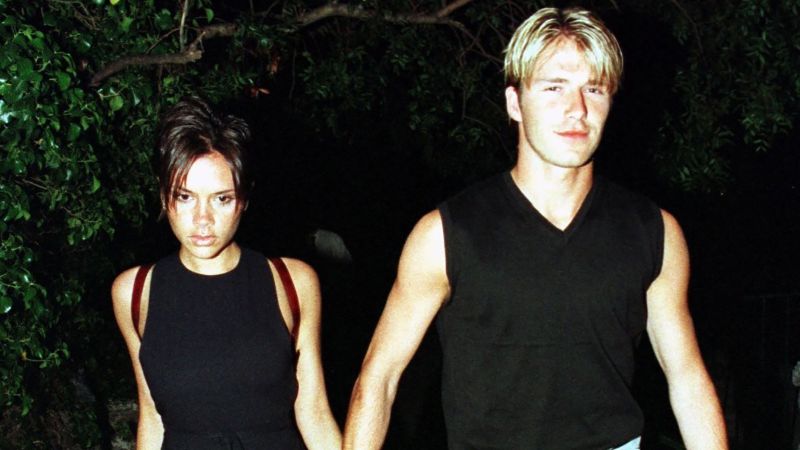
Remember when David Beckham s sarong – More than two decades ago, a single photograph captured the essence of a cultural moment that would echo through British society for years. It showed David Beckham, the iconic soccer star, and his then-fiancée, Victoria Adams, strolling through the streets of France during the 1998 World Cup. The image was unassuming at first glance: two figures in relaxed, sun-kissed casual wear, their bodies relaxed, their laughter audible. Yet, the image carried a subversive spark. Beckham, known for his sharp suits and polished image, was wearing a patterned sarong around his waist—a bold departure from the traditional attire expected of a male athlete. The Sun newspaper, in a moment of sartorial rebellion, captioned the image with a catchy phrase: “Beckham has got his Posh frock on.”
The Sarong That Spun a Sensation
At the time, Victoria Adams was still widely recognized by her nickname, “Posh Spice,” from the Spice Girls. The photo, taken a year after Princess Diana’s tragic death, was a striking contrast to the royal iconography that had defined the previous decade. Beckham’s sarong, a Jean Paul Gaultier-designed wrap, wasn’t just a fashion statement; it was a symbolic act. It challenged the rigid gender norms of football culture, where players were expected to embody traditional masculinity. The image sparked a frenzy in the tabloids, with headlines blurring the lines between admiration and scrutiny.
“Beckham has got his Posh frock on,” declared The Sun newspaper, alongside a full-page photo of the England player and Victoria “Posh Spice” Adams, as she was known at the time, in France for the World Cup.
The sarong became an unexpected cultural phenomenon, dubbed “sarong-gate” by the media. It wasn’t just about Beckham’s choice of clothing; it was about how he blurred the boundaries between the public persona of a sports icon and the emerging metrosexual archetype. This moment was pivotal in the late 1990s, when British society was undergoing a transformation in how it perceived gender roles and masculinity. The image resonated with a generation that was beginning to question the outdated ideals of male identity.
A Reflection of a Changing Nation
For many, the sarong represented a new era in British fashion and culture. It overlapped with the rise of the metrosexual movement, which redefined what it meant to be a stylish, confident man. Beckham’s casual yet trendy outfit was a testament to this shift. However, the reaction from the public was mixed. While some celebrated the boldness, others found it controversial, particularly in the context of football’s traditionally macho image. This divide highlighted the tension between the old and new cultural narratives.
“I just don’t like men in skirts. I’m used to them wearing trousers,” said an eight-year-old Alex Tong in The York Press.
Lauren Cochrane, a senior fashion writer at the Guardian, noted that the sarong’s impact was significant. “Anything that messes with those gender roles within a football context is huge. It’s seismic. But it also shows how false those things are—they’re constructs, essentially.” The incident became a microcosm of a broader cultural conversation. Football, deeply embedded in the British national psyche, was being reexamined through the lens of evolving societal values.
The Beckham Brand and Media Savvy
Beckham’s embrace of the sarong wasn’t just a fluke. It was a calculated move that would become a cornerstone of his brand. Over time, the photo has been revisited as a symbol of his fearless approach to fashion and self-expression. “He’s very knowing,” said Stephen Doig, men’s style editor at the Telegraph, who has interviewed Beckham multiple times. “Beckham always had a bit of a laugh about it when they discussed the sarong.”
As the 2026 World Cup approached, the sarong-gate incident was remembered not just as a moment of controversy but as a snapshot of a nation in transition. The media frenzy that followed the 1998 photo underscored how deeply the public connected with Beckham’s personal life. It was a time when football players were not only seen as athletes but as cultural figures, their choices scrutinized with the same intensity as a royal couple’s.
“You haven’t seen nothing yet,” he said with an awkward chuckle when reporters asked him about it at the time, in a resurfaced clip for his recent Netflix documentary.
Even his father, Ted Beckham, found humor in the situation. “I like that,” he recalled telling his son in the show. “You look smart in that.” The blend of Beckham’s casual charm and his flair for the dramatic was a winning combination. It allowed him to navigate the tabloid landscape with a mix of vulnerability and confidence, setting the stage for a career that would span decades.
The Legacy of a Bold Choice
Looking back, the sarong-gate incident was a turning point. It showcased how Beckham’s personal style could influence the broader cultural conversation. The incident also demonstrated his ability to leverage media attention, turning a potential embarrassment into a marketing opportunity. This approach would later be central to his success in building a global brand that spans sports, fashion, and business.
As the 2026 World Cup looms, the memory of Beckham’s sarong continues to resonate. It remains a testament to the power of style in shaping public perception and the evolving nature of masculinity in the 21st century. The incident, once a source of debate, is now celebrated as an iconic moment that helped redefine the image of a footballer in the eyes of the world.
