
Famed Magritte painting damaged by child with pine cone
Famed Magritte Painting Damaged by Child with Pine Cone
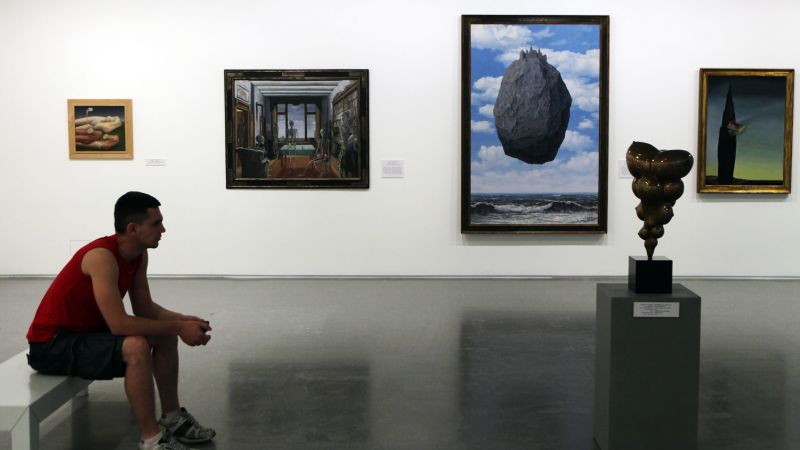
Famed Magritte painting damaged by child – René Magritte, the renowned Belgian surrealist, has once again found his work in the spotlight—this time due to an unexpected incident involving a young visitor at the Israel Museum in Jerusalem. A 5-year-old boy, using a pine cone as a makeshift tool, caused what the museum labeled as “minor damage” to the iconic 1959 painting “Castle of the Pyrenees.” The artwork, now under restoration, is a cherished centerpiece of the museum’s collection and a popular attraction among visitors.
A Moment of Curiosity Leads to Unintended Consequences
The damage occurred during a recent visit to the modern art galleries, where the child and his grandmother explored the exhibit. According to a museum spokesperson, the boy “inadvertently” struck the painting, creating a small but noticeable mark. The statement, shared with CNN, emphasized that the incident was unintentional, adding that such occurrences are not uncommon in global museums. “This unfortunate incident occasionally happens worldwide,” the representative noted, highlighting the delicate balance between visitor engagement and artwork preservation.
“Our expert conservation team is already studying and repairing the work, and we look forward to returning this beloved collection highlight to the galleries as soon as possible,” the spokesperson said. They also mentioned that the museum continuously evaluates how to protect artworks while maintaining an immersive visitor experience.
A Legacy Rooted in Surreal Vision
“Castle of the Pyrenees,” a striking depiction of a castle perched on a massive rock amidst turbulent seas, has long been a favorite among art enthusiasts. The piece was commissioned by Harry Torczyner, a close friend and patron of Magritte, who sought to cover an unappealing view from a large office window in Brussels. Torczyner gifted the painting to the Israel Museum in 1985 to commemorate its 20th anniversary, cementing its place in the institution’s legacy.
Magritte’s works are not only celebrated for their artistic value but also for their ability to spark imagination. His 1954 painting “L’empire des lumières” recently set a record at Christie’s in New York, selling for $121 million. This achievement underscores the high demand for his creations, even as they remain vulnerable to the whims of curious children.
Previous Incidents Highlight the Challenges of Preservation
The Israel Museum is not the first to experience such mishaps. Last year, a similar incident unfolded at the Museum Boijmans Van Beuningen in Rotterdam, where a Mark Rothko painting titled “Grey, Orange on Maroon, No. 8” was scratched by a visitor. The damaged piece has since been fully restored and is now part of a major Rothko exhibition in Florence, Italy. These cases illustrate the ongoing struggle between public access and the fragility of art.
While the pine cone incident may seem minor, it resonates with the broader theme of human interaction with art. The museum spokesperson acknowledged that such events, though rare, can occur even in the most well-maintained collections. “We strive to create an environment where visitors can engage with art freely, but we must also safeguard it from accidental harm,” they added.
“As one of our most-visited paintings, the incident was a reminder of how beloved this piece is among the public,” the statement said. It also noted that the museum’s approach to display often prioritizes accessibility over absolute protection, allowing visitors to experience works up close.
Revisiting the Artwork’s Origins
Delving into the history of “Castle of the Pyrenees” reveals its unique significance. The painting’s surreal imagery, featuring a castle suspended over stormy waters, has captivated audiences for decades. In 2022, the artwork was the focus of an exhibition that explored its provenance and the story behind its creation. The event drew significant attention, and its audio recordings remain available on the museum’s website for future exploration.
Magritte’s surrealism often blurs the line between reality and fantasy, and this piece is no exception. The artist’s use of unexpected juxtapositions—such as the floating castle—invites viewers to question the nature of the world around them. The incident with the pine cone, while seemingly trivial, serves as a poignant reminder of how such artistic visions can be impacted by everyday actions.
Museums Navigate the Delicate Balance
Art institutions worldwide face the challenge of accommodating visitors while protecting priceless works. The Israel Museum’s statement highlighted its efforts to achieve this balance, acknowledging the importance of allowing children and families to interact with art. “We aim to provide an experience that is both educational and engaging,” the spokesperson explained, while also emphasizing the need for barriers where necessary.
Despite the damage, the museum remains optimistic about the restoration process. Conservators are working meticulously to repair the painting, ensuring that its original brilliance is preserved. The incident has also sparked discussions about the role of interactive exhibits in modern museums. While such displays foster connection, they also require careful planning to prevent accidental harm.
Similar incidents have occurred in other renowned collections. For instance, a child’s playful pose for a photo led to damage at the Uffizi Gallery in Florence, where a painting was scratched during a visit. These stories, though individual, reflect a shared challenge in the art world: how to make masterpieces accessible without compromising their integrity.
The Magritte painting’s damage serves as a microcosm of this dilemma. While the boy’s actions were unintentional, they highlight the enduring appeal of his work and the impact of human presence on art. As the Israel Museum works to restore the piece, it also continues its mission of connecting the public with the wonders of surrealist art, even as it learns from these small but meaningful moments.
Art and childhood often intersect in unexpected ways, and the incident with the pine cone is a testament to that. It reminds us that even the most iconic works can be touched by the innocence of a young visitor, adding a layer of charm to their story. The museum’s response to the damage underscores its commitment to both preservation and engagement, ensuring that the legacy of Magritte and other artists endures for generations to come.
