Who was Niño Guerrero? The elusive gang leader behind Tren de Aragua

Who Was Niño Guerrero? The Elusive Gang Leader Behind Tren de Aragua
Who was Niño Guerrero The elusive – On a chilly Friday evening, US President Donald Trump stunned followers on his Truth Social platform by revealing the death of Héctor Rusthenford Guerrero Flores, a key figure in the criminal group Tren de Aragua. Known by his nickname “Niño Guerrero,” the gang leader was described as a critical player in the organization, which the United States had labeled a Foreign Terrorist Organization during Trump’s second term. The president emphasized that the operation was “swift and lethal,” claiming that under his administration, the US would “find these vicious murderers and drug lords anytime, anyplace, and send them to the depths of hell where they belong.”
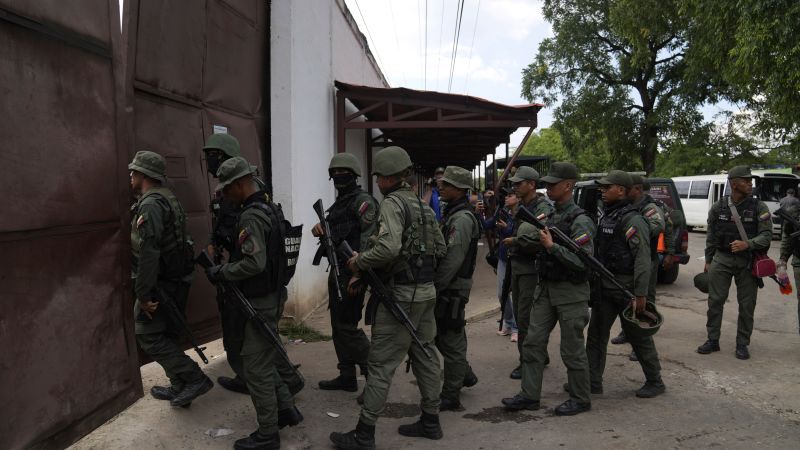
Accompanying the announcement was a 10-second video, which depicted a building with a galvanized metal roof being destroyed from above. The footage, according to Trump, captured the moment of Guerrero Flores’ demise. Meanwhile, Venezuela’s acting President Delcy Rodríguez confirmed the joint operation took place in the southeast of Bolívar state, stating that the US and Venezuela shared intelligence and technical expertise to carry it out.
“The United States and Venezuela joined forces to eliminate a dangerous threat to regional security,” said Delcy Rodríguez in a statement.
Until this revelation, Guerrero Flores’ location had been a mystery. For years, he had evaded capture, his criminal past stretching back decades. Authorities claimed he helped establish Tren de Aragua, a gang notorious for its violent activities and drug trafficking. Despite the US offering a $5 million reward for information leading to his arrest or conviction, his movements remained unknown until the attack.
Guerrero Flores’ biography on the State Department website is sparse, featuring only a grainy black-and-white photograph and listing his height and weight as “unknown.” However, the document does include his full name and birthdate—though this differs slightly from records in Venezuelan courts. Both sources agree he was born in Maracay, the capital of Aragua state, in 1983. The discrepancy highlights the lack of detailed public information about the fugitive, who had become a symbol of the gang’s elusive power.
His criminal journey began in 2005, when he was arrested for the murder of a government official, as per a 2018 ruling by the Venezuelan Supreme Court. In September 2012, he escaped from Tocorón Prison, a facility known for its high security and brutal conditions. He was recaptured in 2013, but his time in custody didn’t halt the gang’s expansion. According to InSight Crime, Tren de Aragua gradually consolidated its influence within the prison, forming alliances with other criminal networks. By the time he was released, the group had grown significantly, extending its control to the San Vicente neighborhood in Maracay, his hometown.
The gang’s rise under Guerrero Flores’ leadership was marked by its aggressive territorial expansion. By 2016, a trial court in Aragua state sentenced him to 17 years and two months for twelve offenses, including intentional homicide, weapons concealment, and drug trafficking. Yet, the gang’s dominance within Tocorón Prison made the sentence symbolic. The facility, described as a hub for organized crime, had pools and restaurants built by the group, allowing it to operate as if in a separate world. It wasn’t until the Venezuelan government reclaimed full control of the prison in October 2023 that Guerrero vanished, becoming a fugitive once more.
Guerrero’s absence from the prison marked a turning point. While the US had been tracking him, his influence extended beyond Venezuela. In December 2025, the Southern District of New York’s US Attorney’s Office charged him with orchestrating acts of terrorism within the country. This came after the gang had already established a presence in several Latin American nations. Transparencia Venezuela, the local branch of Transparency International, reported operations in Brazil and Costa Rica, while Mexican authorities cited arrests of Tren de Aragua members. A 2023 CNN investigation uncovered evidence of the group’s activities in the United States as well.
Tren de Aragua’s reach, however, was not limited to the continent. Reports suggest the gang’s networks may have even crossed the Atlantic, hinting at a broader, transnational threat. Despite his death, the organization’s structure and influence remain intact, with its leaders continuing to operate in the shadows. Guerrero’s legacy, though shrouded in secrecy, underscores the challenges of combating criminal groups in Venezuela’s complex political landscape.
The Shadowy Rise of Tren de Aragua
Emerging from the chaos of Venezuela’s economic crisis, Tren de Aragua became a dominant force in the country’s criminal underworld. The gang’s name, translating to “Train of Aragua,” reflects its methodical approach to expansion. By the time Guerrero Flores was at its helm, the group had evolved into a sophisticated organization, blending drug trafficking, extortion, and violent crime into a cohesive network. Its presence in Maracay, a city in Aragua state, was particularly strong, with the San Vicente neighborhood under its control.
The group’s growth was fueled by internal cohesion and strategic alliances. While in prison, Guerrero Flores and his associates cultivated relationships with other gangs, enabling Tren de Aragua to extend its reach across regions. The prison itself became a breeding ground for criminal activity, with the gang creating a self-sustaining ecosystem. This allowed it to operate with impunity, even as officials attempted to contain its influence.
Guerrero’s leadership was instrumental in transforming Tren de Aragua from a regional threat into a transnational entity. His ability to navigate both prison systems and criminal hierarchies made him a master strategist. The US, recognizing his role, had designated the gang as a Foreign Terrorist Organization, a label that carried significant weight in international law. Yet, the lack of detailed information about Guerrero himself—his personal life, motivations, and alliances—added to the enigma surrounding his identity.
Implications of the Operation
The joint US-Venezuela operation to eliminate Guerrero Flores was a bold move, signaling a coordinated effort against one of the country’s most dangerous groups. For Venezuelans, it represented a rare moment of cooperation between the two nations, albeit in the context of a shared struggle against organized crime. However, the operation also raised questions about the US’s role in Venezuela’s internal affairs and the extent of its involvement in regional security.
For the US, the capture of a high-profile leader like Niño Guerrero was a strategic victory. It demonstrated the administration’s commitment to targeting criminal networks that posed a threat to national interests. The $5 million reward for his capture had been a tool to incentivize informants and law enforcement, but his death left unanswered whether the operation was the result of US-Venezuela collaboration or a unilateral US effort.
Guerrero Flores’ death may have weakened Tren de Aragua, but the gang’s structure and leadership remain resilient. With his absence, the question arises: who will step into his role? The answer could shape the group’s future activities, both within Venezuela and beyond. His international reach, as reported by InSight Crime and other organizations, suggests that the fight against Tren de Aragua is far from over.
As the world watches the aftermath of this operation, the story of Niño Guerrero serves as a reminder of the challenges faced by law enforcement in combating transnational crime. His life and career, marked by secrecy and brutality, highlight the complexities of the criminal networks that thrive in Venezuela’s turbulent environment. For now, the details of his death and the circumstances surrounding it remain a focal point in the ongoing battle against organized crime in the region.