Apple’s big Siri update is here. Now the real challenge begins

Apple’s Big Siri AI Overhaul Sparks Investor Scrutiny
Apple s big Siri update is here – After years of anticipation, Siri is set to receive a significant AI enhancement that Wall Street has been eagerly awaiting. The tech giant unveiled its latest iteration, Siri AI, on Monday, signaling a major shift in its digital assistant’s capabilities. This update, which will roll out in beta later this year, marks Apple’s effort to position Siri as a competitive player in the rapidly evolving AI landscape. However, the real test for Apple lies in whether it can transform this new version into a compelling reason for consumers to upgrade their devices and pay for advanced features.
Revolutionizing Siri’s Functionality
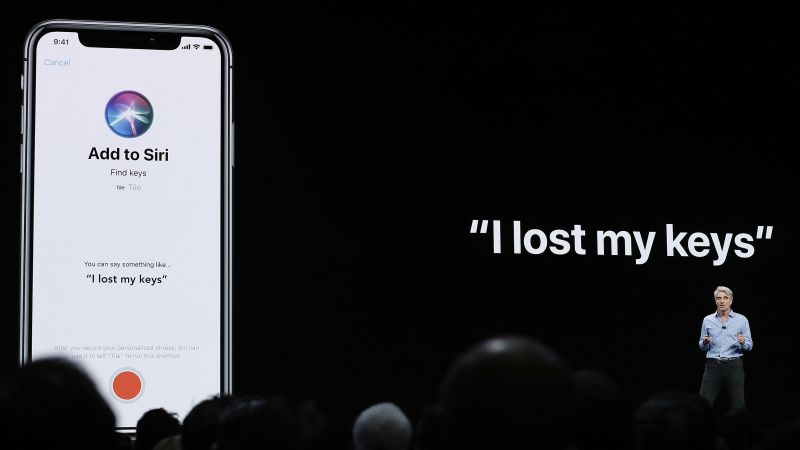
The updated Siri is designed to do more than just respond to voice commands. It now aims to operate apps, analyze an iPhone’s screen to answer questions, and integrate personal context into its responses. For instance, users could ask, “Where’s Jeff’s new place?” and have the assistant pull a friend’s updated address from a recent message. This level of contextual understanding is expected to make Siri more than a passive tool, positioning it as a proactive companion for daily tasks. Apple envisions this as a foundational step toward embedding AI deeply into its ecosystem, leveraging the iPhone’s software and services to drive innovation.
One of the standout features of the new assistant is its ability to customize voice responses to sound more expressive. This could make interactions with Siri feel more natural and tailored to individual users. Additionally, the assistant will enhance voice dictation accuracy, addressing a long-standing critique of Siri’s performance in this area. These improvements are intended to bridge the gap between Siri and more advanced AI systems like OpenAI’s ChatGPT and Google’s Gemini, which have gained significant traction in recent years.
Apple’s Struggle to Keep Pace with AI Leaders
Apple has faced growing pressure to accelerate its AI initiatives, especially as competitors like OpenAI and Anthropic push boundaries with their models. Both companies are nearing public listings, raising questions about their financial sustainability. While Apple has managed to stay afloat through iPhone sales, analysts argue that its AI ambitions need to translate into tangible benefits for users and investors. “Updates felt more evolutionary vs revolutionary,” wrote Barclays analysts in a research note following the event, “and we continue to view Apple as a laggard in AI with no killer apps and a questionable monetization strategy.”
Despite the new features, skeptics remain wary. They question whether Apple can convince users to pay for AI-driven services, especially when the iPhone’s hardware is already a key selling point. The company’s reliance on hardware sales to fund its operations means that any AI-related revenue must be substantial enough to justify the investment. Analysts from Morgan Stanley noted that the path to monetizing Siri AI is clearer now, but they emphasized it would be a long-term effort. “Apple’s AI advancements will be a marathon, not a sprint,” the firm stated, highlighting the need for consistent innovation and user engagement.
Hardware and Subscription Barriers
While the new Siri features are available on devices as recent as the iPhone 15 Pro, released in 2023, a majority of iPhones in use today lack the computing power or memory to support them. Morgan Stanley estimates that over 1.3 billion iPhones currently on the market do not meet the hardware requirements for the most advanced Siri functions, such as real-time screen analysis and expressive voice customization. This means that even if users are interested in the new capabilities, they may need to upgrade to a newer model, potentially the iPhone 17 Pro or 17 Pro Max, to fully experience them.
Moreover, some AI features require an iCloud+ subscription. For example, enhanced image generation limits and smart home camera footage descriptions are only accessible through this premium service. This approach could help Apple generate recurring revenue, but it also raises concerns about user adoption. If consumers are hesitant to pay for these features, Apple may struggle to achieve its goal of making AI an integral part of its ecosystem. “I don’t think AI is driving upgrade cycles in the way manufacturers hoped,” said Paul Schell of ABI Research, underscoring the challenge of aligning hardware upgrades with AI functionality.
Apple’s AI Strategy and Market Position
Apple’s plan for Siri AI is part of a broader strategy to shift its AI tools from simple assistants to essential components of the iPhone experience. The company aims to make AI a core element of its software, much like how Google and Samsung have integrated Gemini into Android. However, Apple’s focus on consumer-centric use cases, such as personal reminders and location-based queries, sets it apart from AI systems targeting business applications. “Siri is meant for everyday tasks, not productivity,” explained Carolina Milanesi of Creative Strategies. “That’s not what Apple cares about, but it’s where the product makes the most sense.”
Analysts are also examining whether the new Siri can boost iCloud+ subscriptions or drive iPhone sales. With the iPhone 17 line expected to launch this fall, the company will need to demonstrate how AI can justify higher prices. While Apple has posted record revenue in recent quarters, driven largely by iPhone demand, the question remains whether AI will be a key factor in sustaining this growth. “We’re seeing signs that Apple is positioning AI as a growth engine,” said Morgan Stanley in a post-event analysis. “But the real proof will come in the coming months.”
Future Prospects and Investor Expectations
Apple’s introduction of Siri AI represents a critical juncture in its AI journey. The company has long been known for its ability to transform emerging technologies into mass-market hits, and this update is no exception. However, the success of Siri AI will depend on its ability to address the skepticism surrounding Apple’s AI capabilities. “Apple has been shielded from some of the doubts about its AI strategy because of the iPhone’s consistent sales,” noted a Bloomberg Intelligence analyst previously shared with CNN. “But that shield is starting to wear thin.”
For investors, the challenge is not just about the technology but about its commercial viability. If Apple can’t show that its AI features are worth the cost, the company may face criticism for underutilizing its platform. The beta launch later this year will be a crucial test, as it allows Apple to gather user feedback and refine the experience before a full rollout. Meanwhile, competitors continue to innovate, and Apple’s ability to keep up will determine its position in the AI race. As the tech giant moves forward, the world will be watching to see if it can finally turn its AI ambitions into a sustainable business model.
“Updates felt more evolutionary vs revolutionary, and we continue to view (Apple) as a laggard in AI with no killer apps and a questionable monetization strategy,” Barclays analysts wrote in a research note following Apple’s event.
“I don’t think (AI is) driving upgrade cycles in the way that manufacturers were hoping that it would,” Paul Schell, a senior analyst covering AI for research firm ABI Research, told CNN.
“I’m looking for something, I’m replying to a text message, I’m trying to find the address of the restaurant that my friend mentioned last week — those kind of things,” Carolina Milanesi, president and principal research analyst at Creative Strategies, said in reference to Siri AI’s main functions.
As the AI landscape continues to evolve, Apple’s position will be defined by its ability to integrate these advancements seamlessly into the user experience. While the company has made strides, the road ahead is fraught with challenges. Whether Siri AI becomes a cornerstone of Apple’s future or remains a footnote in the AI revolution will depend on how effectively it meets user needs and drives value across the iPhone ecosystem.