Dana White called a UFC fighter’s Michelle Obama insult ‘nonsense.’ The White House isn’t commenting on it

Dana White Calls UFC Fighter’s Michelle Obama Insult ‘Nonsense’
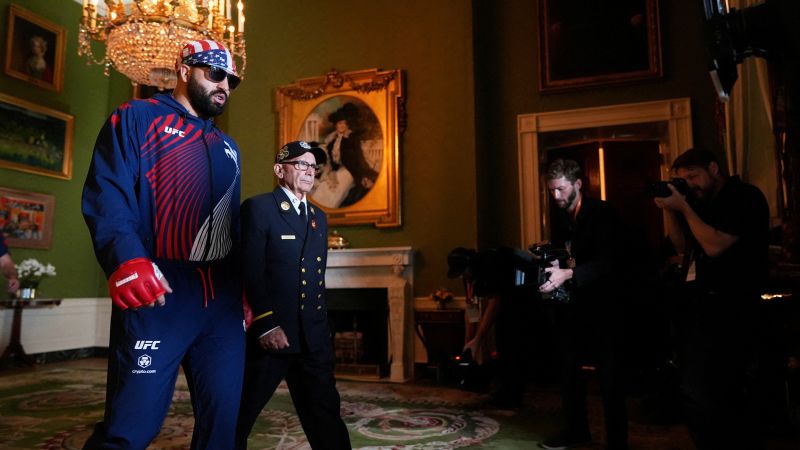
Dana White called a UFC fighter – UFC CEO Dana White labeled a fighter’s jab at Michelle Obama as “nonsense,” just days after UFC fighter Josh Hokit made a controversial remark at a White House-hosted event. The incident, which occurred during the UFC Freedom 250 celebration, sparked immediate backlash. White, known for his strong opinions on sports and public discourse, took to social media to address the remark, emphasizing his belief in respectful commentary about public figures. Despite his sharp criticism, the White House remained silent, refusing to comment on Hokit’s statement or its implications for the former first lady’s public image.
A Controversial Moment at the UFC Event
During the America’s 250th anniversary commemorations, Josh Hokit delivered a statement that left many stunned. In his post-fight speech, he declared, “Michelle Obama is a man. Am I right, America?” The remark, which directly challenged the former first lady’s identity, drew a split reaction from the audience. Supporters of the administration applauded the boldness, while others condemned it as an attack on a prominent figure. The UFC, however, defended its athletes, with White’s public denouncement serving as the most visible response to the controversy.
“Dana White called a UFC fighter’s comment on Michelle Obama ‘nonsense,’ but I still think it’s an important conversation,” remarked a commentator on social media.
The White House’s Silent Response
While the White House did not issue an official statement, its communications team continued to promote the event’s patriotic message. Officials highlighted the success of the UFC’s presence at the ceremony, focusing on the sport’s entertainment value rather than the remark’s content. This approach has drawn criticism from some media outlets, which argue that the administration should have taken a firmer stance on the insult. The lack of clarity in their response has also raised questions about consistency in their treatment of public figures, especially when it comes to comments targeting First Ladies.
The UFC’s handling of the situation has been a focal point for critics. Although White publicly denounced the remark, the organization has not imposed any disciplinary measures on Hokit. This decision has sparked debates about whether the fighter’s comment was deserving of further action. Some argue that the remark was not only disrespectful but also politically motivated, while others defend it as a form of free speech. The White House’s silence has only intensified these discussions, leaving the incident to be judged through a broader lens of public opinion.
Michelle Obama’s History of Public Scrutiny
Miscellaneous remarks about Michelle Obama are not new. For years, she has been a frequent target of political and cultural critiques, often linked to her husband’s presidency. President Trump, for instance, once shared a racist video depicting Barack and Michelle Obama as apes, which was later deleted after public backlash. This incident underscored the intense scrutiny faced by the former first lady, with critics pointing to her style, demeanor, and influence as subjects of debate. The latest remark from a UFC fighter has reignited these discussions, highlighting how public figures continue to be scrutinized in both political and cultural contexts.
“Dana White called a UFC fighter’s comment on Michelle Obama ‘nonsense,’ but the former first lady has always been a lightning rod for criticism,” noted a political analyst.
Freedom of Speech vs. Public Respect
Dana White’s defense of free speech contrasts with his condemnation of the specific remark. While he acknowledged the right to express opinions, he insisted the comment was “nasty and false.” This duality has been central to the debate surrounding the incident. The UFC, as a platform for athletes, balances the need for personal expression with the expectation of respect for high-profile figures. White’s response, however, has been seen by some as a strategic move to distance the organization from the controversy while maintaining its public image. The White House’s lack of engagement has further fueled this tension, with critics arguing that the administration should have taken a stronger position.
As the discussion continues, the incident serves as a reminder of how public figures like Michelle Obama remain central to political discourse. Whether viewed as a bold statement or a disrespectful jab, the remark has sparked conversations about the boundaries of free speech in the context of national events. Dana White called a UFC fighter’s comment on Michelle Obama, and the debate over its significance shows no signs of slowing down. The White House’s decision to stay quiet may reflect a broader strategy, but it also leaves room for further scrutiny of their approach to public criticism.