US emergency oil stockpile tumbles to lowest since the Reagan administration

US Emergency Oil Stockpile Hits Historic Low Amid Geopolitical Tensions
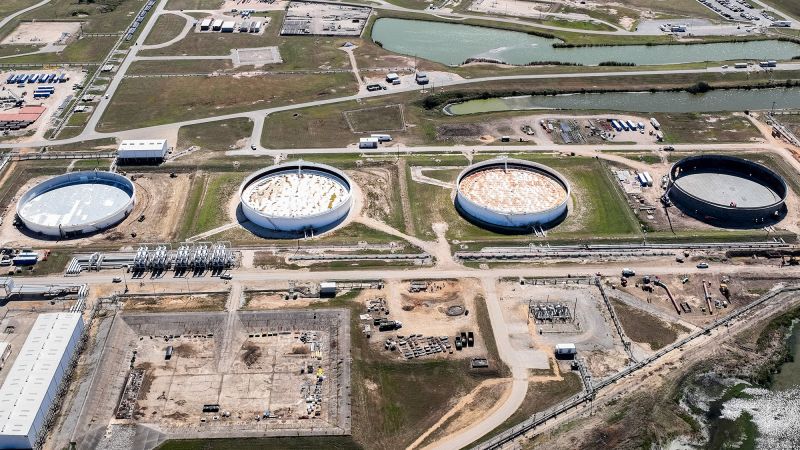
US emergency oil stockpile tumbles to lowest – The United States Strategic Petroleum Reserve (SPR) has reached its lowest level since the 1983 Reagan era, marking a critical moment in the nation’s energy strategy. Federal data released on Monday revealed that the reserve was further depleted by an additional 8.9 million barrels during the past week. This brings the total stockpile to 340.3 million barrels of crude, a significant drop from the prior benchmark set in July 2023 under President Joe Biden during the Ukraine conflict. The SPR, a cornerstone of U.S. energy security, is now operating at less than half of its capacity, raising concerns among experts about its readiness for future crises.
The SPR’s Role in Energy Security
The SPR, established in the 1970s to safeguard against oil supply disruptions, has long served as a strategic buffer for the nation. When the reserve first began accumulating oil under the Reagan administration, it held a mere 117 million barrels, a far cry from its current capacity of 700 million barrels. The recent drawdowns, however, highlight a shift in its use. Trump officials have increasingly tapped into the reserve to stabilize energy markets amid escalating global tensions, particularly the war with Iran. This approach has not only reduced the SPR’s stock but also underscored its role as a political tool during times of crisis.
The administration’s decision to release oil was driven by the need to counter rising prices and alleviate pressure on consumers and businesses. By taking 8.9 million barrels from the SPR in a single week, officials aim to mitigate the economic fallout of supply chain shocks. Yet, this aggressive strategy has pushed the reserve to levels not seen since the early 1980s. The prior low under Biden, set during the Ukraine invasion, was already alarming, but the current pace of depletion has intensified worries about the reserve’s long-term viability.
Comparative Context and Historical Precedents
While the SPR’s current level is the lowest since 1983, the context of this depletion differs significantly from the past. In 1983, the Reagan administration was in the process of building the reserve, reflecting a time of oil price volatility and geopolitical uncertainty. Today, the SPR’s decline is linked to a series of consecutive conflicts, including the Iran war and the ongoing Ukraine crisis, which have collectively drained 75 million barrels—representing an 18% reduction—since late February. This cumulative effect has left the reserve at a precarious level, with some analysts warning that it may soon fall below the operational threshold.
Mike Sommers, CEO of the American Petroleum Reserve, emphasized the urgency of the situation in a recent interview with CNN’s Phil Mattingly on The Lead. “We’re raising alarm bells right now,” Sommers stated. “We’re getting to levels where we are starting to be concerned.” He noted that the SPR must maintain at least 20% of its capacity to function effectively during emergencies. With current levels hovering near 50%, experts fear the reserve may struggle to respond to unexpected shocks, such as a major hurricane disrupting Gulf Coast production.
Political Motivations and Strategic Implications
The Trump administration’s reliance on the SPR has been both a practical and political maneuver. When Trump launched his third presidential campaign in 2022, he criticized Biden for overusing the reserve in the lead-up to the midterm elections, arguing that it had weakened the country’s energy security. Now, the same officials are accelerating the pace of releases, this time ahead of the 2024 midterms. The goal, as stated by Trump’s team, is to demonstrate economic leadership and prevent inflationary pressures on energy costs.
Andy Lipow, president of Lipow Oil Associates, offered a broader perspective on the SPR’s role in global markets. “The Strategic Petroleum Reserve releases, combined with other governments’ actions and China’s reduction of exports, have prevented the Armageddon scenario of $150 oil from happening to date,” Lipow explained in a statement. This collaboration between the U.S. and international partners has helped stabilize prices, but the SPR’s diminishing stockpile means the country may need to act more decisively in the future. The administration has pledged to release 172 million barrels from the reserve, a commitment that could further strain its capacity.
Long-Term Concerns and Replacement Challenges
Analysts warn that the SPR’s current state may have long-term consequences for energy policy. The 75 million barrels extracted since the Iran war began have created a gap in the reserve’s ability to respond to future emergencies. While the administration has guaranteed a replacement plan, the timing of these efforts is problematic. The replacement process will take time, and with hurricane season approaching, there is a risk that the SPR’s buffer will be insufficient to counteract disruptions in production.
For instance, if a major hurricane were to strike the Gulf of Mexico, shutting down oil facilities for several weeks, the reserve would serve as a crucial lifeline. However, with its stock already at a historic low, the SPR may not have enough capacity to prevent price spikes in such a scenario. This concern is compounded by the fact that the reserve is not just a response to immediate crises but also a strategic asset for long-term energy planning. The depletion of the SPR underscores the need for a balanced approach between emergency use and sustainability.
Additionally, the SPR’s role in global energy markets has evolved over time. While it was primarily a U.S. initiative in the 1980s, its influence now extends to international cooperation. The recent releases, for example, have been part of a broader effort to coordinate with allies and adversaries alike to manage supply dynamics. This interconnected strategy has helped prevent extreme price volatility, but it also highlights the SPR’s dependence on external factors such as China’s export decisions.
Expert Insights and Future Outlook
As the SPR continues to shrink, questions remain about its future management. Lipow suggested that the Trump administration’s planned releases may reach a plateau once the 172 million barrels are distributed. “If we were to get a major hurricane in the Gulf of Mexico that shuts production down for several weeks, that buffer would no longer be there,” Lipow warned. His comments reflect a growing consensus among energy experts that the SPR’s current state requires careful monitoring and proactive replenishment.
The depletion of the reserve also has implications for the U.S. economy. High energy prices can ripple through industries, affecting transportation, manufacturing, and consumer spending. By releasing oil to stabilize prices, the Trump administration is attempting to cushion the economy against these shocks. However, the long-term effects of this strategy are uncertain. If the SPR is not replenished in time, the U.S. may face a more vulnerable position in global oil markets, particularly during periods of high demand or supply constraints.
Meanwhile, the SPR’s decline has sparked debates about the balance between short-term relief and long-term preparedness. While the reserve has been instrumental in addressing immediate crises, its current level raises questions about whether the U.S. is investing enough in energy infrastructure and alternative sources. The consecutive wars and economic pressures have created a scenario where the SPR is being used more frequently than in the past, prompting calls for a more diversified energy strategy.
As the country moves forward, the SPR’s status will remain a focal point for policymakers and industry leaders. Its ability to withstand future challenges will depend on a combination of timely replenishment, geopolitical stability, and domestic energy production. The recent drop to its lowest level since the Reagan administration serves as a reminder of the delicate interplay between energy security, economic policy, and global events. For now, the SPR’s role as a crisis buffer continues, but its sustainability may soon come under scrutiny.
Experts like Sommers and Lipow are urging the administration to prioritize rebuilding the reserve while maintaining its current emergency response efforts. The SPR’s reduced capacity not only affects the U.S. but also has global ramifications, as the country’s actions influence market dynamics. With the war in Iran still ongoing and the potential for new conflicts looming, the SPR’s role in safeguarding energy security will remain vital—yet increasingly constrained by its shrinking stockpile.