Britain has unveiled one of world’s toughest social media bans for kids. Here’s what to know

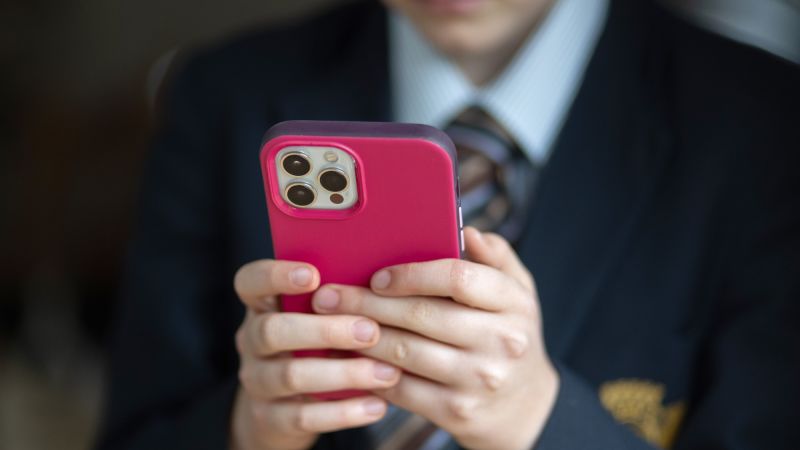
UK Introduces One of the World’s Strictest Social Media Bans for Minors
Britain has unveiled one of world – On Monday, British Prime Minister Keir Starmer revealed groundbreaking measures aimed at curbing children’s access to social media platforms. The proposed legislation, described as the most stringent in global history, seeks to shield under-16s from online dangers. Starmer emphasized that the UK is setting a new standard in digital safety, positioning itself as a leader in protecting young users from the perils of the internet.
Scope of the New Regulations
The UK government outlined that the ban would target “user-to-user platforms designed for social interaction and content sharing,” which include algorithms that amplify posts. This means platforms like Snapchat, TikTok, YouTube, Instagram, Facebook, and X will be restricted for children under 16. However, messaging services such as WhatsApp and Signal will remain accessible, as noted by the government in its statement.
“These changes will empower parents by giving them clearer control over what is safe and suitable for their children,” stated Starmer. “We aim to address the risks children face online, not just the platforms they use.”
The plan involves introducing the bill to Parliament before Christmas, with full protections expected to take effect in Spring 2027. This timeline allows for legislative debate and public feedback, ensuring the policy is robust before implementation.
International Precedents and Comparisons
The UK joins a growing list of nations addressing social media’s impact on children. In February, Spain implemented a similar ban, requiring platforms to use strict age verification systems. Malaysia began enforcing its own restrictions earlier this month, while France, Denmark, and Norway have also announced plans to limit children’s online exposure. Australia was the first to act, introducing a ban for under-16s in December 2026, which blocked access to 10 major platforms.
Despite these efforts, the effectiveness of such bans remains under scrutiny. Australia’s eSafety commissioner recently highlighted that even after the December 10 launch, many children retained social media accounts. A survey of 898 parents and guardians of children aged 8 to 15, conducted from January 19 to February 2, found that around 70% of children with pre-ban accounts still had access to them.
“Fewer under-16s have accounts than before, but the numbers show that children continue to bypass safeguards,” the eSafety commissioner noted in a March report. “This underscores the need for stronger enforcement mechanisms.”
UK’s Ambitious Approach
Starmer’s government claims its measures will surpass Australia’s by targeting harmful features directly. The plan includes “world-leading blocks” on functions like livestreaming and communication with strangers, which will apply not only to social media but also to gaming websites and other digital services. This comprehensive strategy aims to address how children encounter risks, rather than just where they occur.
According to the UK government, the policy is designed to create a more nuanced framework than a simple ban. It seeks to align with the evolving ways children interact online, emphasizing prevention over punishment. Technology Secretary Liz Kendall added that the UK will draw lessons from Australia’s experience, making it “far harder for children to circumvent safeguards.”
Enforcement will be handled by Ofcom, the UK’s communications regulator, which will oversee compliance with the new rules. The government also stressed that the ban is part of a broader effort to hold tech companies accountable for the safety of their platforms. “Our children’s brains are not for sale,” Starmer declared, highlighting the urgency of the issue.
Parental Support and Criticisms
Surveys indicate strong public backing for the initiative. The UK government reported that nine in 10 parents support the ban, with children’s charities applauding the move as a critical step in child protection. However, some experts caution against overreliance on the ban alone.
“A social media ban is not a silver bullet,” warned Lynn Perry, CEO of Barnardo’s. “It is as important as ever for companies to take responsibility for their platforms and for regulators to enforce accountability rigorously.”
Perry argued that while the ban provides a clear framework, it does not eliminate the need for ongoing oversight. “Children should not be expected to protect themselves from the digital Wild West,” she added, stressing that tech giants must be held to higher standards.
Challenges in Enforcement
Despite the ban’s intent, challenges persist. Australia’s experience shows that children often find workarounds, with the eSafety commissioner noting that several platforms—including Snapchat, TikTok, Facebook, Instagram, and YouTube—are under investigation for non-compliance. While no fines have been issued yet, the scrutiny highlights the difficulty of enforcing age restrictions across a fragmented digital landscape.
Chris Sherwood, CEO of the National Society for the Prevention of Cruelty to Children (NSPCC), hailed the UK’s move as a “watershed moment for child protection.” However, he urged the government to maintain pressure on Big Tech to ensure strict adherence to the rules. “We want to see the government go further and make sure there is real accountability across all platforms,” Sherwood said.
Global Implications and Future Outlook
The UK’s legislation is part of a broader international trend toward regulating social media for minors. Countries like Spain and Malaysia have already taken steps, while others are considering similar actions. This growing consensus reflects concerns about the long-term effects of social media on young users, including mental health, exposure to misinformation, and online harassment.
Experts suggest that the success of the UK’s approach will depend on how effectively it balances restrictions with accessibility. For instance, while the ban limits access to certain features, it does not entirely block the internet, allowing children to explore other digital resources. This hybrid model may be more sustainable than a complete cut-off.
As the UK prepares to implement its ban, the focus will shift to monitoring its impact and refining the measures. The government’s emphasis on “world-leading blocks” signals a proactive stance, but the real test lies in how these rules translate into safer online experiences for children. With other nations watching closely, the UK’s policy could serve as a blueprint for global digital safety initiatives.
Overall, the UK’s social media ban represents a significant shift in how digital platforms are regulated for young users. By combining legislative action with collaboration between regulators and tech companies, the government aims to create a safer online environment. Yet, the challenge remains in ensuring that these measures are not just symbolic but have tangible results in reducing harm to children. As the world watches, the UK’s approach may redefine the future of digital child protection.