What we know about the Justice Department investigation into Jennifer Siebel Newsom

Justice Department Investigates Jennifer Siebel Newsom, Spouse of Democratic Governor Gavin Newsom
What we know about the Justice – The U.S. Department of Justice’s scrutiny of Jennifer Siebel Newsom, the wife of California’s Democratic Governor Gavin Newsom, has entered the public eye after the governor accused the Trump administration of initiating a politically driven probe targeting his inner circle. Newsom, a vocal critic of former President Donald Trump and a potential candidate for the 2028 presidential race, framed the investigation as an attempt to undermine his political aspirations. CNN confirmed on Monday that the governor’s spouse is now the focus of a federal inquiry, though the probe’s origins remain under debate.
Scope of the Investigation
According to a source close to the case, the investigation into Siebel Newsom began last year and was triggered by whistleblower reports. The probe, led by the U.S. attorney’s office in Sacramento, has centered on tax-related activities, with other individuals tied to Newsom also under review. This includes potential interviews with witnesses and the issuance of grand jury subpoenas, as disclosed by the source. While the Department of Justice in Washington, D.C., has not been directly involved in launching the probe, its role in shaping the direction of the case will be scrutinized, especially as the Trump-appointed acting attorney general, Todd Blanche, moves closer to Senate confirmation.
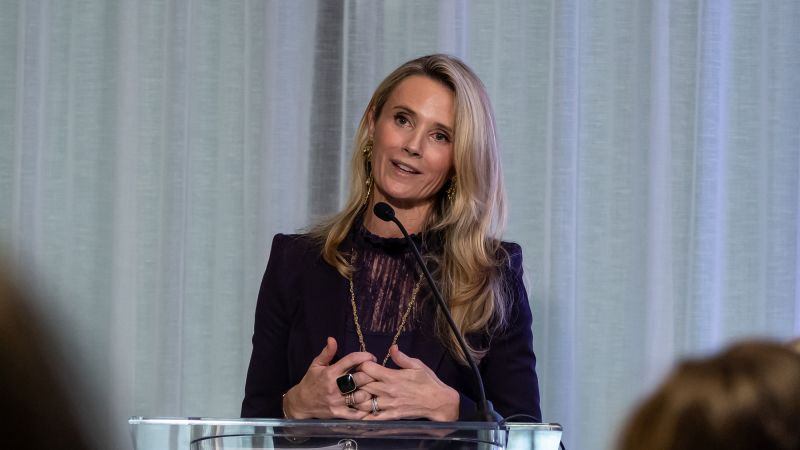
Siebel Newsom, who established a nonprofit organization dedicated to advancing gender equity in media, has been questioned about her financial dealings. Her office has stated that associates of the couple have been interviewed, and that records related to their family finances may have been subpoenaed. However, they have not yet confirmed the issuance of documentary subpoenas, though the nature of the inquiries suggests that significant financial documentation has been obtained.
Political Context and Criticisms
Newsom and his allies have emphasized the political nature of the investigation, highlighting Trump’s administration’s pattern of prosecuting opponents. Siebel Newsom’s statement on Monday, which included a
“There are clearly no boundaries to what Donald Trump will do to get his way or to challenge those who get in his way,”
underscores their belief that the probe is motivated by a desire to weaken Newsom’s influence. The governor has also criticized the Trump DOJ for its willingness to pursue cases against political adversaries, a strategy that has defined its approach since taking office.
The investigation into Siebel Newsom is separate from other probes targeting individuals close to Newsom, including Dana Williamson, a former top aide. In November, Williamson was indicted for her role in a conspiracy to illegally divert funds from a dormant campaign account of former federal Health and Human Services Secretary Xavier Becerra. Before her indictment, she had already spoken with the Sacramento-based U.S. Attorney’s Office about a different matter: an inquiry into Newsom’s administration’s management of the company Activision. However, the source noted that Williamson was not asked about Siebel Newsom’s businesses during those discussions.
Williamson recently pleaded guilty to charges involving bank fraud, wire fraud, and false statements to a federal agent. Her guilty plea has drawn attention to the broader context of the DOJ’s efforts to target political figures, with critics arguing that the case against her was used to build a narrative against Newsom. Despite this, Newsom’s office maintains that the investigation into his wife is independent and based on legitimate concerns.
Separate Cases and Political Implications
The probe into Siebel Newsom is being handled by a team of investigators in both Sacramento and Washington, D.C., according to two individuals with knowledge of the operation. This dual jurisdiction highlights the complexity of the case and the potential for cross-state coordination. Meanwhile, Xavier Becerra, a prominent political figure and former federal official, has entered the race to succeed Newsom as governor. Becerra’s campaign faces a run-off election against Steve Hilton, a Republican backed by Trump.
Becerra’s opponents attempted to leverage the Williamson case to gain traction, but the Democratic candidate has insisted he was not implicated in the charges. Newsom, in a video released Monday, accused Trump of orchestrating the probe to disrupt his potential presidential run. “Trump is coming after me because I’m considering running for president, because he hates that I’ve consistently called him out,” he stated in the video. This rhetoric has fueled speculation that the investigation is part of a broader strategy to challenge Democratic leadership in California.
As the DOJ continues its work, the case against Siebel Newsom will be closely watched for its implications. The Trump administration’s track record of using legal actions to target political rivals has raised questions about the fairness of the process. While the source familiar with the probe denied that the D.C. leadership initiated the investigation, the conduct of the department in this case will be subject to public and political scrutiny. Todd Blanche, the acting attorney general, may face questions about his role in the probe as his Senate confirmation process begins soon.
Newsom’s critics argue that the investigation reflects a coordinated effort to undermine his administration, while supporters see it as a necessary examination of potential misconduct. The case has also reignited discussions about the balance between political accountability and personal attacks in federal investigations. As the Justice Department’s probe unfolds, it will be essential to determine whether the actions under review constitute legitimate violations of tax laws or a calculated move to challenge Newsom’s political ambitions.
The focus on Siebel Newsom has drawn attention to the intersection of personal and political life, with her non-profit work in gender equity adding another layer to the narrative. Her involvement in the case may be viewed as a test of the DOJ’s commitment to impartiality, particularly in light of its history of prioritizing cases against Republicans. Meanwhile, the broader implications of the probe extend beyond California, as it could set a precedent for future investigations into high-profile political figures.
In the weeks ahead, the case will serve as a focal point for debates about the role of the Justice Department in political matters. Whether it is perceived as a fair legal inquiry or a partisan attack, the investigation into Siebel Newsom is likely to shape public opinion and political strategy in the lead-up to the 2028 election. The outcome of the probe will also have consequences for the relationship between the DOJ and the Democratic Party, particularly if it is seen as a tool for political retaliation.