‘We want to get this thing over with’: How Trump officials overcame skepticism of Iran to reach an agreement

‘We want to get this thing over with’: How Trump officials overcame skepticism of Iran to reach an agreement
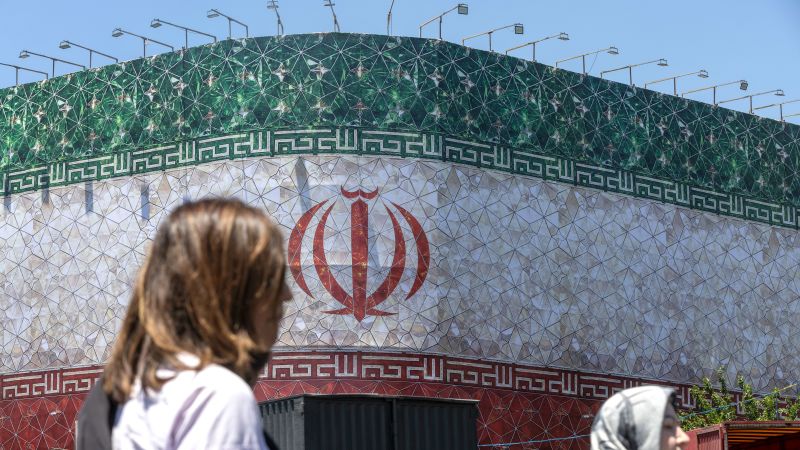
We want to get this thing – Less than three weeks into the negotiation process, President Donald Trump’s national security team had moved beyond initial uncertainty, consolidating on a strategy to finalize a deal with Iran. Despite lingering doubts about Tehran’s commitment, the administration’s top officials had agreed on a framework that would end the prolonged conflict, according to those directly involved in the discussions. The breakthrough came after a series of intense meetings, with key decision-makers weighing the risks and rewards of a comprehensive agreement. At the heart of the consensus was a shared belief that the deal, while imperfect, was the most viable path forward for U.S. interests.
The Push for a Swift Resolution
While some members of the Trump team remained cautious, others argued that delays would only embolden Iran’s position. “The goal was to finalize this agreement as quickly as possible,” one administration official stated. This urgency reflected the president’s clear directive: to conclude the war with Iran before it escalated further. The decision to pursue a deal was not made lightly, but it was framed as a necessary step to secure American strategic advantages and reduce long-term threats.
The plan focused on two critical elements: reopening the Strait of Hormuz and establishing a broad framework for dismantling Iran’s nuclear program. These terms were designed to address immediate concerns about energy supply and long-term nuclear proliferation. “We had to find a way to make this work without overextending ourselves,” said an official who participated in the planning. The team’s discussions, which spanned multiple days, centered on balancing concessions with safeguards to ensure Iran’s compliance.
Behind the Scenes of the Negotiations
Among the most vocal critics of the agreement was CIA Director John Ratcliffe, who expressed concerns about Iran’s reliability. “There are serious questions about whether Tehran will follow through on its promises,” Ratcliffe told internal staff during a pivotal meeting. His skepticism was rooted in intelligence reports suggesting Iran’s past tendency to break agreements, even when under pressure. Yet, Ratcliffe emphasized that his role was to provide data, not dictate policy. “He doesn’t take a stance on the deal itself,” said a source. “His job is to highlight the risks, not to decide the outcome.”
Other high-ranking officials, including Secretary of State Marco Rubio and Vice President JD Vance, also voiced reservations. Their concerns were echoed by Trump’s envoys Steve Witkoff and Jared Kushner, who played central roles in shaping the deal. “Everyone had their own worries, but the overriding priority was to move forward,” said an official who observed the debates. The discussions often revolved around the possibility of Iran’s deception, with some questioning whether the country would honor its commitments once the ink dried.
Despite these doubts, the administration found common ground in the belief that a deal was preferable to continued conflict. “The consensus of the team was we want to get this thing over with,” said an official involved in the talks. This sentiment was driven by the president’s insistence on rapid results, which many viewed as a strategic necessity. “Trump’s approach was to prioritize speed, even if it meant accepting some ambiguity,” noted a senior advisor. The agreement was seen as a temporary fix, but one that would prevent further hostilities and stabilize the region.
The Intelligence Backdrop and Strategic Calculus
Ratcliffe’s intelligence assessments played a crucial role in shaping the team’s perspective. “We’ve seen patterns where Iran talks a good game but doesn’t deliver,” he explained in a classified brief. His reports highlighted discrepancies between Iran’s public statements and its covert actions, fueling skepticism about the country’s intentions. However, the intelligence community’s findings were not the only factor in the decision-making process. “The director’s insights were important, but the final call rested with the negotiators,” said another official. “Ratcliffe’s job was to inform, not to command.”
While the CIA’s data was a key component, it was the negotiation team’s ability to translate that information into actionable terms that made the deal possible. “The president wanted a deal that would serve American interests, and the team worked tirelessly to make that happen,” said a White House aide. This included drafting a memorandum of understanding (MOU) that outlined the core conditions of the agreement. The MOU was designed to ensure Iran could not acquire a nuclear weapon, retain highly enriched uranium, or control global energy supplies—a combination of immediate and long-term safeguards.
Some officials acknowledged that Iran’s private assurances were a critical factor in the administration’s decision. “They were telling us all the right things in backchannel talks,” said a U.S. official. “Whether those were genuine or tactical, it didn’t matter. The team believed they had enough leverage to push the deal through.” This leverage, the official added, was based on Iran’s need to avoid further isolation and its desire to secure economic relief. “They knew we could cut them off if they didn’t comply,” the official explained. “That made them more willing to negotiate.”
The Pentagon’s Support and White House Finality
Defense Secretary Pete Hegseth, a staunch supporter of the agreement, aligned with the president’s vision. “Of course, Secretary Hegseth supports the Peace Deal with Iran and all of President Trump’s objectives,” said Pentagon spokesman Sean Parnell. Hegseth’s backing underscored the military’s role in the broader strategy, ensuring that the deal’s security provisions were robust enough to deter Iranian aggression.
The White House, meanwhile, emphasized its commitment to the deal. “Trump listens to all opinions, but he remains the final decisionmaker,” said a White House official. The MOU was presented as a win-win scenario, with clear terms that addressed both U.S. redlines and Iran’s demands. “This deal ensures the short- and long-term safety of the United States,” the official stated. “It’s not just about ending the war—it’s about preventing future conflicts.”
Despite the consensus, some officials still questioned the deal’s durability. “We all had our concerns, but we agreed that the benefits outweighed the risks,” said one participant. The 60-day reassessment period was introduced to allow for further technical discussions and to monitor Iran’s compliance. “We wanted to give them a chance to prove they meant business,” the official added. “If they failed, we’d be ready to adjust our strategy.”
As the final agreement neared, the administration’s unity became evident. “The entire team was on board, even if they didn’t all agree on every detail,” said a senior advisor. “We were all focused on the same outcome: a deal that would end the war and secure America’s position.” The journey from skepticism to consensus was a testament to the president’s influence, with his clear vision guiding the process despite internal disagreements. “Trump wanted this deal, and that’s what made it happen,” said the official. “Everyone else just had to follow.”
With the deal moving closer to approval, the administration prepared to present it to Congress. The strategy, they argued, was not only about ending the conflict but also about reasserting U.S. leadership in the region. “We’re not just making a deal for the sake of it,” said a White House representative. “This is about protecting American interests and ensuring Iran doesn’t threaten our security again.” The final steps would determine whether this consensus would hold, but for now, the team remained united in their goal: to conclude the Iran war and move forward with a new chapter in the ongoing geopolitical struggle.