‘I am responsible.’ Takeaways from Gilgo Beach serial killer Rex Heuermann’s sentencing hearing

‘I am responsible.’ Takeaways from Gilgo Beach Serial Killer Rex Heuermann’s Sentencing Hearing
I am responsible Takeaways from Gilgo – On Wednesday, Rex Heuermann, the man dubbed the Gilgo Beach serial killer, received a life sentence without parole. This marked the culmination of a decades-long investigation into the brutal slayings of eight young women, spanning from 1993 to 2010. Arrested in 2023 and pleading guilty to seven of the murders earlier this year, Heuermann also admitted to the eighth, confirming his role in the atrocities that left families shattered and communities haunted.
The Weight of Justice
Heuermann’s sentencing came after a long and arduous journey for the victims’ families. Many had waited years to confront the killer in person, their voices trembling with emotion as they recounted the trauma of losing loved ones. For Liliana Waterman, the daughter of Megan Waterman, the moment was both a reckoning and a bittersweet relief. “For so many years, this case has been a weight I carried every single day,” she said during the proceedings. “Today’s proceedings do not erase what happened, and nothing ever will. But today brings accountability.”
“For so many years, this case has been a weight I carried every single day. Today’s proceedings do not erase what happened, and nothing ever will. But today brings accountability.”
Heuermann, who had been identified as the killer in 2010 after the remains of four women were found on Ocean Parkway, was arrested in 2023. The initial discovery of the “Gilgo Four” sparked a broader search, leading investigators to uncover at least 10 sets of remains. The case had been a mystery for nearly three decades, with victims reduced to mere details in police reports and news headlines. Now, their families were determined to humanize them in court.
A Decades-Long Tragedy
The Gilgo Beach killings, which occurred between 1993 and 2010, targeted young female sex workers on Long Island. Each murder left a trail of fear and unanswered questions, but Heuermann’s arrest in 2023 finally brought closure to some. The victims, once faceless, were now remembered through the heartfelt words of their relatives. Valerie Mack, described by her sister Danielle as someone who “lit up the world around her,” had been a beacon of warmth and resilience. Jessica Taylor, who would have turned 43 on Wednesday, was “pure sunshine” and “spunky, smart, beautiful,” according to her cousins.
“I’m so grateful for this day of justice and I know she is too.”
Maureen Brainard-Barnes, another of the Gilgo Four, was “loving, selfless, and unforgettable,” her sister Melissa “Missy” Cann said. “She had a nurturing spirit that touched everyone she met.” The killer’s actions had left an indelible mark, not just on the victims but on their families as well. “He took my sense of safety, he took my peace of mind,” Cann added. “In many ways, I became one of his victims, too.”
Amber Costello, whose sister Kimberly Overstreet read a statement, was labeled a “sinner” by her own family, but the words carried a deeper sorrow. “Her sacrifices were not in vain,” Overstreet wrote. “She lived for others, and her life was stolen from her.” Melissa Cann’s emotional account highlighted the personal toll of the crime, emphasizing how the killer’s actions had rippled far beyond the physical act of murder.
The Killer’s Response
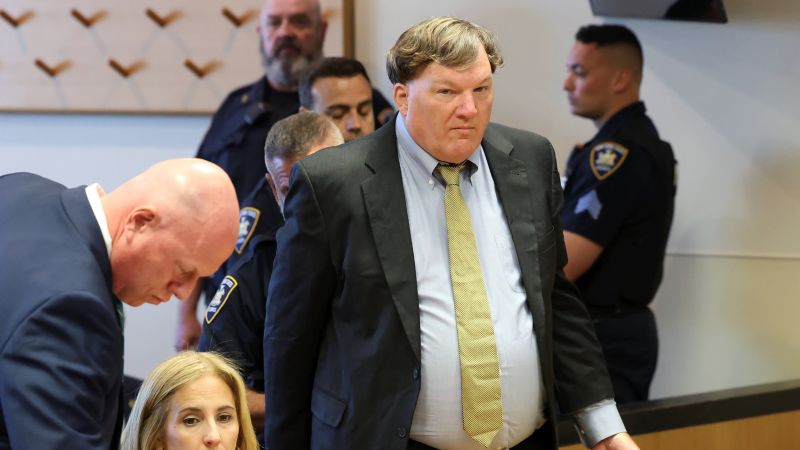
During the hearing, Heuermann’s demeanor remained composed, though his lack of engagement with the proceedings was striking. He sat stone-faced, his hands folded on the table, and declined to make eye contact with the victims’ families. When asked by Judge Timothy Mazzei whether he was truly remorseful, Heuermann offered little more than a nod. “There are no words I can say,” he said in a quiet, nearly inaudible voice. “I am responsible for all that was said in this room today. The words I would say have no meaning,” he added.
“I am responsible for all that was said in this room today. The words I would say have no meaning,” he said.
The judge’s sharp questioning underscored the gravity of the moment. “You’ve been described as a very big man, but you’re a disgusting and despicable small man, if you’re a man at all,” Mazzei said, his voice rising. “And you’re a coward!” The accusation resonated with the families, who had long waited for a public acknowledgment of the killer’s guilt.
Heuermann’s brief statement left the courtroom in contemplative silence. While his words were sparse, they carried the weight of his responsibility. The judge, however, was not satisfied with his response. The maximum sentence of life without parole was handed down, with three terms of life imprisonment and four additional terms of 25 to life, all to run consecutively. This ensured that Heuermann would spend the rest of his days behind bars, far from the lives he had destroyed.
Justice and Memory
The sentencing hearing was not just about punishment but also about remembrance. The victims, once reduced to grainy photographs and brief descriptions, were transformed into vivid stories through the voices of their loved ones. Violet Swager, a family member, paid tribute to Jessica Taylor with a personal note: “Happy birthday, Jess.” Her words echoed the hope that justice would restore some sense of dignity to the lives lost.
Maureen Brainard-Barnes, whose sister Melissa “Missy” Cann described her as “loving, selfless, and unforgettable,” had become a symbol of the struggle for survival. The killer’s crimes had not only taken her life but also disrupted the lives of those who had known her. “She was a fighter for love, for family, for a better life,” her sister Amanda Funderburg said, emphasizing the legacy of her courage.
As the proceedings concluded, the families emerged with a mix of relief and lingering grief. While the legal sentence was a form of justice, the emotional scars remained. For Megan Waterman’s aunt Elizabeth Meserve, the hearing was a chance to honor her niece’s dreams. “Megan dreamed of building a wonderful life for herself and her daughter,” Meserve said. “Today, we can say she was not forgotten.”
The case against Heuermann, spanning nearly 17 years, had finally reached its end. The judge’s final words echoed the sentiment of the families: a definitive end to the killer’s reign of terror and a step toward healing. Yet, the memory of the eight women he murdered would endure, a testament to the lives cut short and the families left to carry their stories forward.