New discovery may have been Stonehenge prototype

New discovery may have been Stonehenge prototype
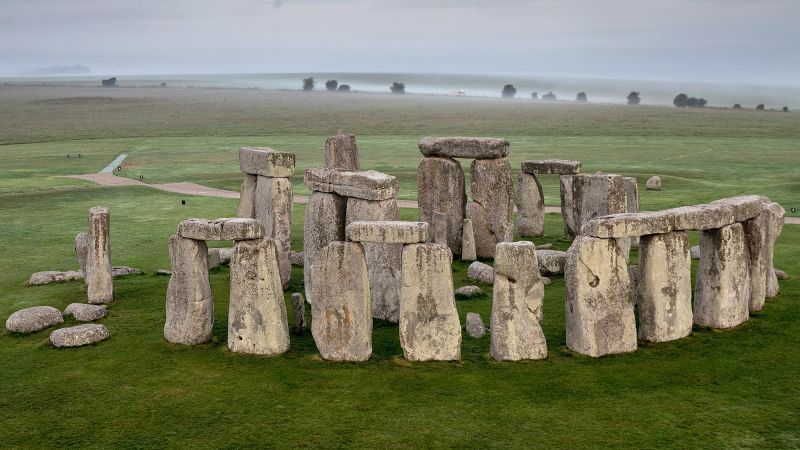
New discovery may have been Stonehenge – In the heart of southwest England, archaeologists have uncovered a 5,000-year-old structure that could mark a pivotal step in the evolution of Stonehenge, according to a recent announcement by Wessex Archaeology, a British firm specializing in ancient site analysis. The find, located in Bulford, Wiltshire, just 5 kilometers (3.1 miles) from the iconic monument, consists of two wooden poles strategically placed 120 meters (394 feet) apart. These poles, researchers suggest, were designed to align with the sun’s path during the solstices, mirroring the same astronomical orientation as the famous stone circle at Stonehenge. This revelation, shared in a statement on Thursday, challenges previous assumptions about the timeline and purpose of such early monuments.
Ancient Alignment and Celestial Significance
The discovery raises intriguing questions about the role of celestial observation in prehistoric societies. Phil Harding, the lead archaeologist on the project, emphasized that the poles’ positioning likely served a ritualistic or ceremonial function, reflecting a deep connection between early communities and the natural world. Radiocarbon dating of the wooden poles confirmed they were erected around 5,000 years ago, coinciding with the earliest phases of Stonehenge’s construction. While the stone structures of Stonehenge were not completed until 500 years later, this find suggests that the concept of aligning monuments with solstices originated much earlier than previously thought.
“The sun was incredibly important to these prehistoric communities, and they could plot and record its midsummer rising to a high degree of accuracy,” said Harding in the statement. “This discovery is probably one of the greatest finds of my career and what makes it so important is just how early it is.”
Harding’s team, utilizing advanced dating techniques, found evidence that the poles were embedded in pits, which may have been part of a larger ceremonial layout. The alignment of these poles with the solstices indicates a sophisticated understanding of astronomy, comparable to the later achievements of Stonehenge. Fabio Silva, a skyscape archaeologist involved in the study, further elaborated on the implications of the find. By reconstructing the ancient sky, landscape, and horizon, Silva demonstrated how the poles would have captured the sun’s movement during key seasonal events, offering a window into the spiritual and scientific practices of Neolithic people.
“This discovery helps us understand Stonehenge not as a singular creation, but as part of a much longer conversation between people, the land, and the sky,” said Silva in the statement.
While the structure itself is modest in scale, its significance lies in its age and function. The site, part of a broader network of Neolithic settlements, highlights the eastern region of the Stonehenge landscape as a hub of activity. Susan Greaney, a lecturer in archaeology at the University of Exeter, noted that the findings provide a new perspective on the development of these ancient monuments. “The possible alignment is part of a significant middle Neolithic settlement at Bulford,” she told CNN. “It shows just how important the eastern part of the Stonehenge landscape was, with people both living and building monuments on the far side of the River Avon.”
Artifacts and Symbolic Meaning
Alongside the wooden poles, researchers uncovered a variety of artifacts, including pottery fragments, animal bones, charcoal remnants, and worked flints. These items suggest that the site was not only a place for astronomical observation but also a gathering point for communal activities. One particularly notable find was an “extremely rare disc-shaped knife,” which may have been deliberately placed there as a symbolic representation of the sun disc. This artifact adds a layer of cultural significance to the site, hinting at the symbolic language used by Neolithic communities to connect with celestial phenomena.
The presence of such artifacts indicates that the people who inhabited Bulford during the Neolithic period had a rich material culture. Their tools and pottery provide insight into daily life, while the deliberate placement of the knife underscores a symbolic or ritualistic purpose. The alignment of the structure with solstices, combined with these artifacts, paints a picture of a society that was deeply attuned to both the environment and the cosmos. This dual focus on practical and spiritual elements may have been a defining characteristic of early monuments in the area.
Broader Implications for Prehistoric Society
The Bulford discovery is reshaping our understanding of how ancient people conceptualized and interacted with the natural world. By placing these wooden poles in specific locations, they created a framework for tracking solar cycles, which could have been used to mark time, guide agricultural practices, or host seasonal celebrations. This early example of astronomical alignment suggests that the design principles seen in Stonehenge were not an isolated innovation but part of a broader tradition across the region.
Historians and archaeologists have long speculated about the motivations behind Stonehenge’s construction. While some theories point to its role as a burial ground or a site for spiritual ceremonies, others highlight its function as a calendar system. The Bulford structure, with its clear solstice orientation, supports the idea that such alignments were a fundamental aspect of Neolithic life. This could mean that the construction of Stonehenge was built upon a foundation of earlier, simpler monuments that served similar purposes.
Further analysis of the site is expected to shed more light on its exact use and the people who created it. Researchers are now exploring whether other similar structures might exist in the surrounding area, potentially forming a network of solstice markers. Such a network would imply that the idea of aligning monuments with celestial events was widespread and that these early builders had a shared understanding of the stars’ movements. This discovery not only pushes back the timeline of such practices but also emphasizes the ingenuity of prehistoric societies in their ability to observe and replicate natural patterns.
As the study progresses, it is hoped that the Bulford site will provide additional clues about the evolution of Neolithic monuments. The combination of archaeological evidence, scientific dating, and symbolic artifacts offers a multifaceted view of a society that was both practical and spiritual. This find is a testament to the enduring fascination with Stonehenge and its role as a symbol of human curiosity and connection to the universe. For now, the wooden poles and their alignment with the solstices stand as a reminder of the complex lives of our ancestors and the legacy they left behind in the form of ancient stone circles.