Police shooting of a 1-year-old Mississippi boy ignites tension between police and Black residents

Police Shooting of a 1-Year-Old Mississippi Boy Sparks Outcry Over Racial Tensions
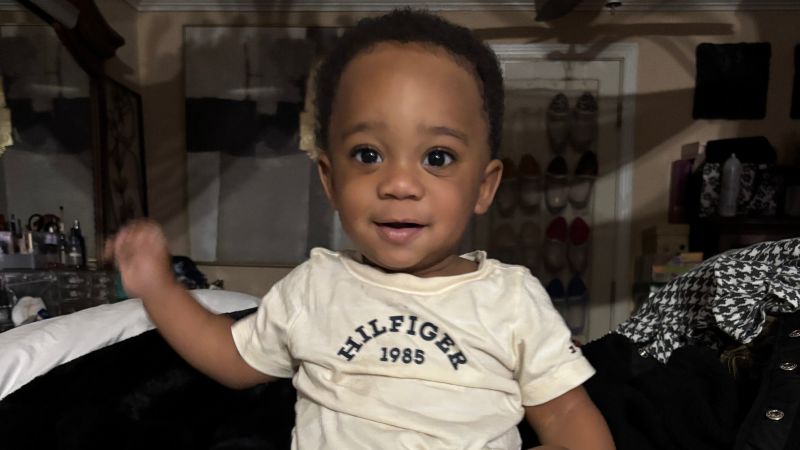
Police shooting of a 1 year – In the small town of Senatobia, Mississippi, a recent police shooting of a 1-year-old Black boy has intensified the long-standing divide between law enforcement and African American residents. The incident, which occurred during a shoplifting response, has drawn widespread attention and renewed calls for reform. Kohen Wiley, the infant at the center of the tragedy, is now remembered as a symbol of the broader issue of racial bias in policing. His death has sparked protests, vigils, and a fierce debate over whether the circumstances justified the use of deadly force.
The tragedy unfolded on a Sunday when Senatobia officers arrived at a Walmart to investigate a reported theft. According to the Mississippi Bureau of Investigation, the officers spotted two women and a child exiting the store, then approached the vehicle they were entering. The driver, who was identified as Kohen’s mother’s friend, began to accelerate away from the scene. A brief confrontation followed, and an officer fired their weapon, resulting in Kohen’s fatal injury. The details of the encounter remain contentious, with the mother of the child, Vellesiya Wiley, asserting that the car was not moving toward the officers at the time of the shooting.
Wiley’s account, shared in a video released by civil rights attorney Ben Crump, challenges the official narrative. “She was driving towards the left,” she stated, emphasizing that the officer’s actions may have been based on misjudgment. “We were all on the right side of the car, and she wasn’t coming at them.” This claim disputes the shoplifting allegation, as Wiley believes her friend had already paid for the diapers in question. The video has become a focal point for community members, who argue that the incident highlights a pattern of overreach and lack of proportionality in police use of force.
Kohen’s death has drawn sharp criticism from civil rights leaders, with Bernice King, the daughter of the late Martin Luther King, Jr., calling it a “moral collapse.” In a statement posted to Instagram, she wrote, “We are treating items on a shelf as more valuable than a child. That is not just bad policing; it is a moral collapse.” Her words resonate with many who see the shooting as part of a larger crisis in which Black lives are disproportionately affected by police actions. The infant’s loss over what some consider a minor offense—allegedly stolen diapers—has become a rallying cry for advocates demanding accountability.
“Until the sacredness of human life is the starting point of every police encounter, we must demand changes in training and work unrelentingly to reform policies around police accountability,” King added, underscoring the urgency of addressing systemic issues.
Senatobia’s history of tense interactions with police adds context to the incident. Last year, an officer threatened Breshari Faulkner with a Taser, dragged her from her car, and arrested her during a dispute over a handicapped parking space. The same Walmart where Kohen was shot witnessed this confrontation. Two years prior, another officer was dismissed after being linked to the arrest of a 10-year-old Black boy for urinating in a different parking lot. The boy’s family later settled a federal lawsuit against the city. These cases, along with Kohen’s death, have created a sense of inevitability among residents.
Experts like Ian Adams, a policing professor at the University of South Carolina, have weighed in on the incident. Adams argued that the officer’s decision to fire at the moving vehicle was questionable, even in the heat of the moment. “Modern policing knows that shooting into a moving vehicle is a very bad idea and one to be avoided at almost all costs,” he said. “Vehicles have other occupants, which is obviously a concern here in the current case.” His analysis aligns with growing concerns that the use of force in this scenario was excessive and could have been avoided with better training or judgment.
The case has also drawn comparisons to a similar incident in Columbus, Ohio, where a pregnant woman, Ta’Kiya Young, was fatally shot by police in 2023. Young, who was the mother of two young sons, was pursued after her car accelerated toward officers. The police claimed she was attempting to flee, and the officer who fired at her was later acquitted of criminal charges. Her death, like Kohen’s, was attributed to a response to a minor offense, reigniting discussions about the fairness of police actions in cases involving Black individuals.
Together, these incidents underscore a recurring theme in law enforcement interactions: the disproportionate impact on Black communities. From George Floyd’s murder in 2020, which followed a call about a counterfeit $20 bill, to the recent cases in Mississippi and Ohio, the pattern of fatal encounters over seemingly trivial offenses has become a defining issue for racial justice advocates. “In the name of ‘law and order,’ a child was killed and family was shattered over items that could be restocked, written off, and replaced,” King wrote, emphasizing the stark contrast between the value placed on lives and objects.
Marquell Bridges, founder of the Building Bridges Coalition, has been a key figure in supporting the Wiley family. He described the infant’s death as the “breaking point” for the community after years of incidents that eroded trust in police. Bridges highlighted the tension between law enforcement and residents, noting that the shooting has reignited memories of past injustices. “This is not an isolated event,” he said. “It’s part of a larger narrative that shows how Black lives are often undervalued during police encounters.”
The incident has sparked a wave of protests in Senatobia, with activists demanding transparency and changes in policing practices. Community leaders argue that the tragedy underscores the need for better de-escalation techniques, improved training, and stricter oversight. “The system has failed us,” said one local organizer, speaking at a recent demonstration. “Every time a Black person is harmed, it’s a reminder that the justice we seek is still out of reach.”
As the investigation into Kohen Wiley’s death continues, questions about the chain of events leading to the shooting remain unresolved. The Mississippi Bureau of Investigation’s report, while providing a timeline, has not quelled the debate. The officer’s actions, the mother’s claims, and the conflicting narratives have left the community divided. Yet, for many, the case is a catalyst for change—a moment to reflect on how far the fight for equity in policing still needs to go.
With each new incident, the movement for police reform gains momentum. The Wiley family’s story, combined with the legacy of past tragedies, serves as a powerful reminder of the stakes involved. As Bernice King noted, the incident is not just about one child’s life lost but about the broader implications for justice and equality. The path to healing and reform may be long, but Kohen’s death has brought the community to a critical juncture where action is no longer optional.