From New York to Seattle to DC, more cities are picking democratic socialist leaders

From New York to Seattle to DC, more cities are picking democratic socialist leaders
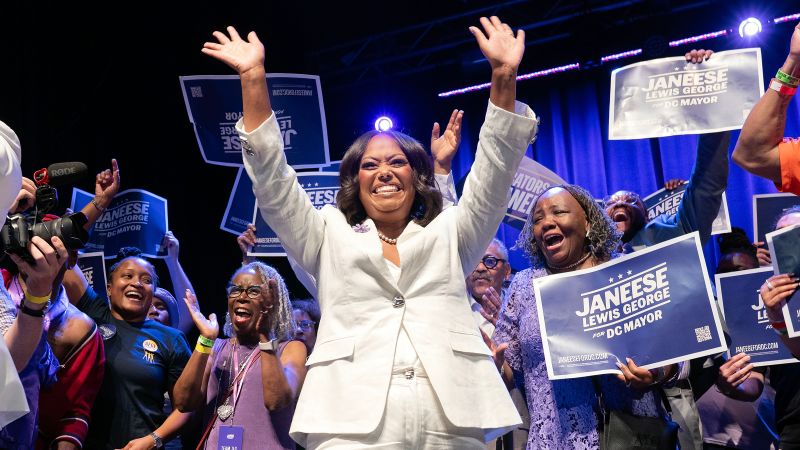
From New York to Seattle to DC – As the political landscape continues to shift, democratic socialist candidates are gaining traction in key urban centers across the United States. Janeese Lewis George’s recent win in Washington, D.C.’s Democratic primary has sparked renewed interest in the movement, highlighting its growing influence in traditionally liberal areas. The election, which took place on June 20, 2026, saw Lewis George, a Black woman, secure support from a wide array of voters, defying early assumptions about her campaign’s demographic reach.
Building a Diverse Coalition in the Nation’s Capital
Despite initial skepticism about her ability to mobilize support from wealthier, White residents and DC transplants, Lewis George’s victory demonstrated the strength of a broader coalition. Her campaign emphasized issues like housing affordability and childcare costs, which resonated deeply with working-class families and community organizers. “We’ve created the most inclusive group of voters in this city’s history,” she stated, underscoring the participation of nurses, transit workers, and janitors in her grassroots efforts. This diverse base also included Democrats, independents, and members of the Democratic Socialists of America (DSA), signaling a broader appeal beyond traditional party lines.
“Over the past year, we assembled the most diverse coalition in this city’s history,” Lewis George said, describing a base that included organizers, environmentalists, nurses, transit and federal workers and janitors. “We are Democrats, independents,” she said. “And democratic socialists.”
Expanding the Movement Across the Country
Similar momentum has been observed in Seattle and New York City, where democratic socialist mayors have previously secured victories. In 2024, Zohran Mamdani of New York and Katie Wilson of Seattle each won their mayoral elections, showcasing the movement’s reach in key metropolitan areas. This trend is now extending to other cities, as seen in Los Angeles, where city councilmember Nithya Raman, a DSA member, advanced to the general election in a fiercely contested race. Incumbent Mayor Karen Bass had attempted to elevate a Republican rival, former reality show star Spencer Pratt, but Raman’s campaign emphasized bold policies on housing and public services.
Challenges and Strategic Focus
With the nation’s capital now embracing democratic socialist leadership, the movement is looking to solidify its position in the broader Democratic Party. Aparna Raj, a DSA candidate running for a council seat in Northwest Washington, highlighted the need for a forward-looking message. “Democrats must offer a vision that speaks to the future, not just a list of grievances,” she argued. “People need to see that elected officials prioritize their struggles, whether it’s healthcare, education, or fair wages.” Her comments reflect the DSA’s strategy to position itself as a transformative force within the party.
Party Divisions and Political Caution
However, moderate Democrats caution against overestimating the movement’s national impact. Matt Bennett, executive vice president of public affairs at Third Way, a center-left think tank, noted that DSA victories are largely confined to the most liberal regions. “While they’ve had success in very blue areas, this doesn’t reflect the party’s strength in Republican-leaning or swing districts,” Bennett said. He warned that Democrats risk misreading these results as a sign of a nationwide shift, potentially alienating voters in more centrist regions. “The danger lies in how much the party overinterprets these races,” he added, stressing the importance of balanced messaging.
A Tale of Two Cities: Progress and Setbacks
Contrasting the DSA’s successes, other heavily Democratic cities have taken different paths. In San Francisco, voters rejected both the moderate incumbent, London Breed, and the prominent progressive Aaron Peskin in 2024, choosing instead Daniel Lurie, a political outsider with a focus on efficiency and public safety. Lurie’s bipartisan appeal has positioned him as a unifying figure, but his victory also underscores the variability in voter priorities. Meanwhile, in Chicago, Mayor Brandon Johnson, though not a democratic socialist, has faced significant challenges. His administration, which took office in 2023, has struggled with budget disputes and conflicts over property taxes, leading to a loss of key support from labor unions and community groups.
Political Action and Future Goals
Political figures like Zohran Mamdani are leveraging these local successes to push for national change. This month, Mamdani, who previously won New York City’s mayoral race, is backing democratic socialist candidates in two US House primaries. The races, which feature Rep. Adriano Espaillat and Mayor Eric Adams’ endorsed candidate Darializa Avila Chevalier, represent a high-stakes test of the movement’s influence. Mamdani’s efforts to amplify DSA voices have been met with criticism from some Democrats, who argue that the group’s focus on radical policies could alienate moderate voters. “The Democratic Party is stuck in an outdated mindset,” Mamdani said during a rally, warning that failure to adapt would lead to losses in critical early primary states like South Carolina and New Hampshire.
“Frankly, it will lose in South Carolina and New Hampshire,” Mamdani said, referencing traditional early presidential primary states. “It will fall short of 270 electoral votes, because the party of the past will not be what leads us into the future.”
Policy Priorities and Voter Engagement
The DSA’s emphasis on affordability issues has become central to its appeal. Lewis George’s campaign, for instance, focused on reducing costs for essentials like housing and childcare, which are often cited as top concerns for working families. This approach aligns with broader trends in urban politics, where candidates increasingly frame their platforms around tangible economic benefits. “The real power of the DSA lies in its ability to translate grassroots activism into concrete policy,” said Ashik Siddique, co-chair of the DSA’s national political committee. “It’s about showing people that elected leaders care about their everyday challenges.”
Yet, the movement’s influence remains a topic of debate. While some see it as a catalyst for progressive change, others question its scalability. In cities like Chicago, where the DSA’s reach is less pronounced, budget battles and union tensions have created a more fragmented political environment. These challenges highlight the complexities of translating local victories into national policy impact. As the Democratic Party navigates this evolving landscape, the question remains: can democratic socialists bridge the gap between urban progressive bases and the broader electorate, or will their rise be confined to the most liberal districts?
Looking Ahead: A New Era for Urban Politics
The outcomes of recent elections suggest that the DSA is not just a fringe group but a significant player in shaping urban governance. With more mayors aligning with its principles, the movement is redefining what it means to be a progressive leader. However, the path forward requires careful navigation of party dynamics and voter expectations. As candidates like Lewis George and Raman continue to challenge traditional political norms, the DSA’s ability to maintain momentum will depend on its capacity to balance bold rhetoric with practical solutions. Whether this marks the beginning of a broader shift or a localized phenomenon remains to be seen, but one thing is clear: the political landscape is evolving, and democratic socialists are at the forefront of this transformation.