How to Identify Birds in Your Backyard: Easy Guide

Daftar Isi
- Essential Tools and Equipment for Backyard Bird Watching
- Creating an Ideal Bird-Watching Environment
- How to Identify Birds in Your Backyard
- Understanding Bird Songs and Calls
- Seasonal Bird Watching Guide
- Common North American Backyard Birds
- Tips for Photographing Backyard Birds
- Creating a Bird-Friendly Habitat
- Conclusion
Learn how to identify birds in your backyard with simple tips and tools. Discover bird species, enhance your birdwatching skills, and enjoy nature more.
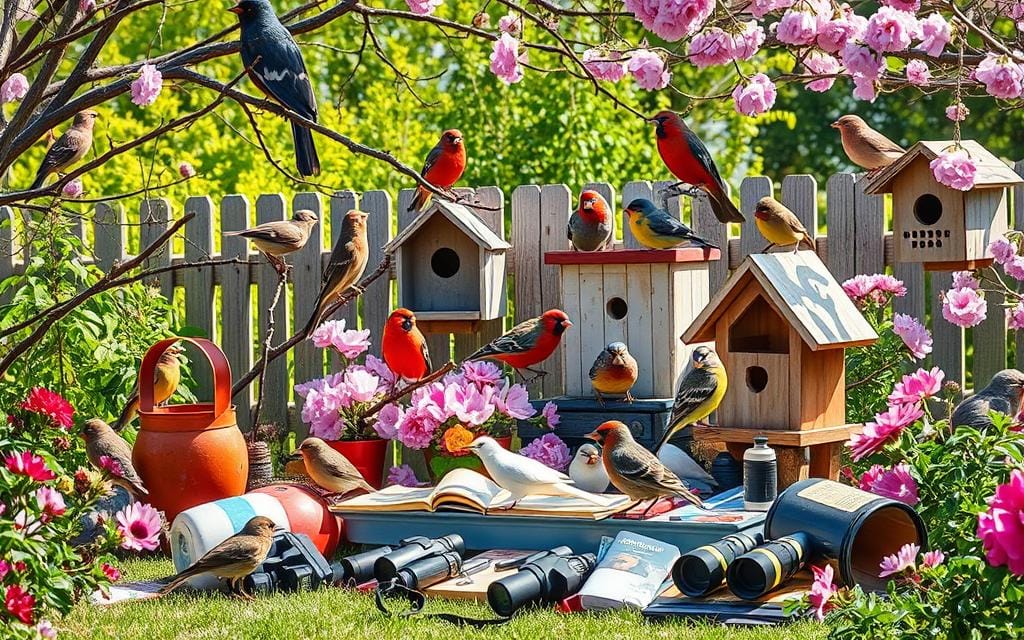
Ever wondered about the birds visiting your backyard? Learning about backyard bird identification can turn your outdoor area into an exciting adventure. We’ll show you how to discover and recognize the different bird species near your home.
Bird watching adds a new level of appreciation for nature’s birds. From a chickadee’s cheerful song to a hawk’s majestic flight, each bird has its own story. By identifying these birds, we not only enhance our lives but also help with important science projects.
In this guide, we’ll cover the key tools, skills, and knowledge for backyard bird identification. Whether you’re new to bird watching or want to improve your skills, our detailed approach will help you connect with birds in a new way.
Essential Tools and Equipment for Backyard Bird Watching
Bird watching is a fun hobby that needs the right tools. We’ll look at the key bird watching gear for starting in your backyard.
Choosing the Right Binoculars
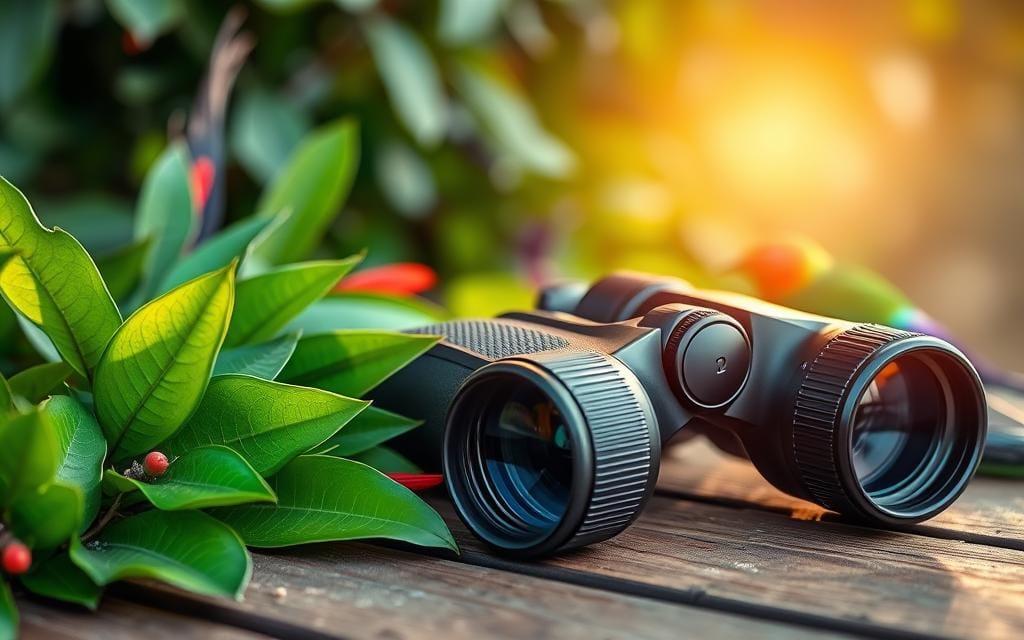
Binoculars are key for seeing and identifying birds. Choose ones with 8x or 10x magnification and a wide view. Waterproof ones are best for any weather.
Field Guides and Bird Identification Apps
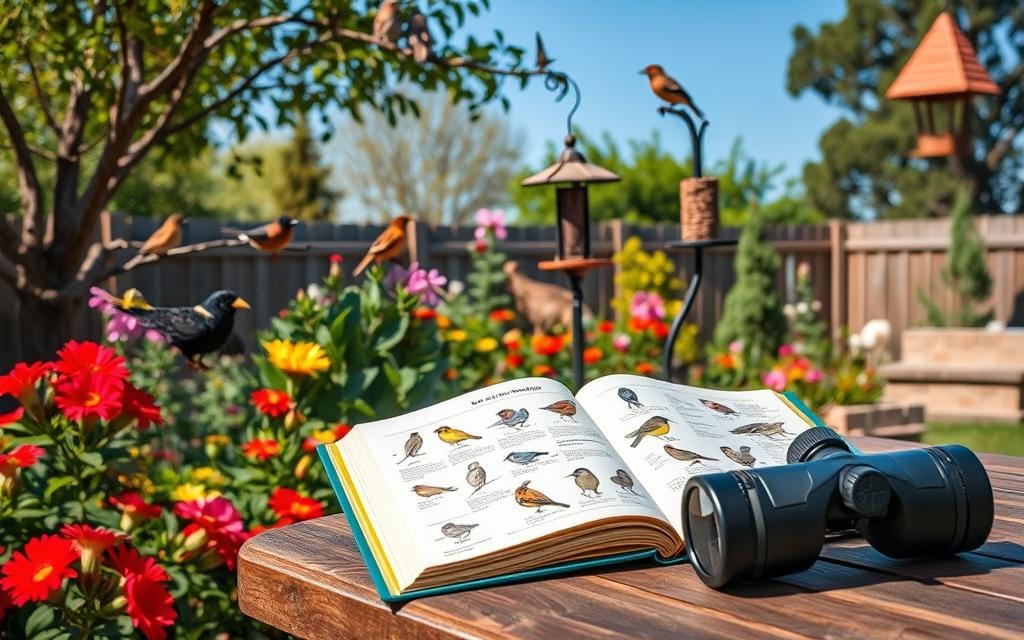
Field guides give lots of info on bird species. Bird apps are a handy, interactive choice. Apps like Merlin Bird ID and Audubon Bird Guide help you spot birds by look and song.
| Tool | Pros | Cons |
|---|---|---|
| Field Guides | Comprehensive, no battery required | Bulky, may be outdated |
| Bird ID Apps | Portable, interactive, frequent updates | Requires smartphone, battery dependent |
Setting Up a Bird Watching Journal
A bird watching journal tracks your bird sightings. Note the date, time, location, species, and behavior. This helps you get better at identifying birds and keeps a record of your backyard adventures.
With these tools, you’re ready to start your backyard bird watching journey. Remember, practice and patience are important to become good at watching birds.
Creating an Ideal Bird-Watching Environment
Turning your yard into a bird paradise is essential for attracting many bird species. By focusing on a few key elements, you can make a bird-friendly garden that looks great and works well.
Begin by adding native plants to your yard. These plants offer food and shelter for local birds. Pick plants that give seeds, berries, and nectar all year. This keeps your birds well-fed.
Water is crucial in any bird garden. Put in a birdbath or small fountain for birds to drink and bathe. Make sure the water is always clean to keep birds coming back.
Provide different places for birds to nest to attract more species. Birdhouses, nesting platforms, and dense shrubs are great for raising young. Place these at different heights to meet different bird needs.
| Element | Purpose | Examples |
|---|---|---|
| Native Plants | Food and Shelter | Sunflowers, Coneflowers, Oak Trees |
| Water Sources | Hydration and Bathing | Birdbaths, Fountains, Shallow Ponds |
| Nesting Sites | Breeding and Shelter | Birdhouses, Brush Piles, Dense Shrubs |
By adding these elements, you’ll make a welcoming bird habitat. It will support local wildlife and improve your bird-watching. Remember, it might take time for birds to find and enjoy your new garden.
How to Identify Birds in Your Backyard
Birdwatching in your backyard is fun. Learning to identify birds is key. We’ll show you how to spot them easily.
Size and Shape Recognition
First, notice the bird’s size and shape. Is it tiny like a sparrow or big like a crow? Its body shape can help guess what it is.
Color Patterns and Markings
Look at the bird’s colors and patterns. Bright spots and eye-rings are important. Remember, light can change how colors look, so check from different sides.
Bird Behavior and Movement
Watch how the bird moves. Does it hop or walk? Does it climb trees or fly between them? Its actions can tell you a lot.
Flight Patterns and Wing Shapes
Notice how the bird flies and its wing shape. Some fly straight, others zigzag. Wing shapes can also give clues.
| Feature | What to Look For | Example Species |
|---|---|---|
| Size | Compare to common birds | Robin-sized, Crow-sized |
| Shape | Body proportions | Long-legged Heron, Stocky Finch |
| Color | Distinctive markings | Red-headed Woodpecker, Blue Jay |
| Behavior | Unique actions | Nuthatch walking down trees |
| Flight | Wing shape and pattern | Swooping Swallow, Soaring Hawk |
Understanding Bird Songs and Calls
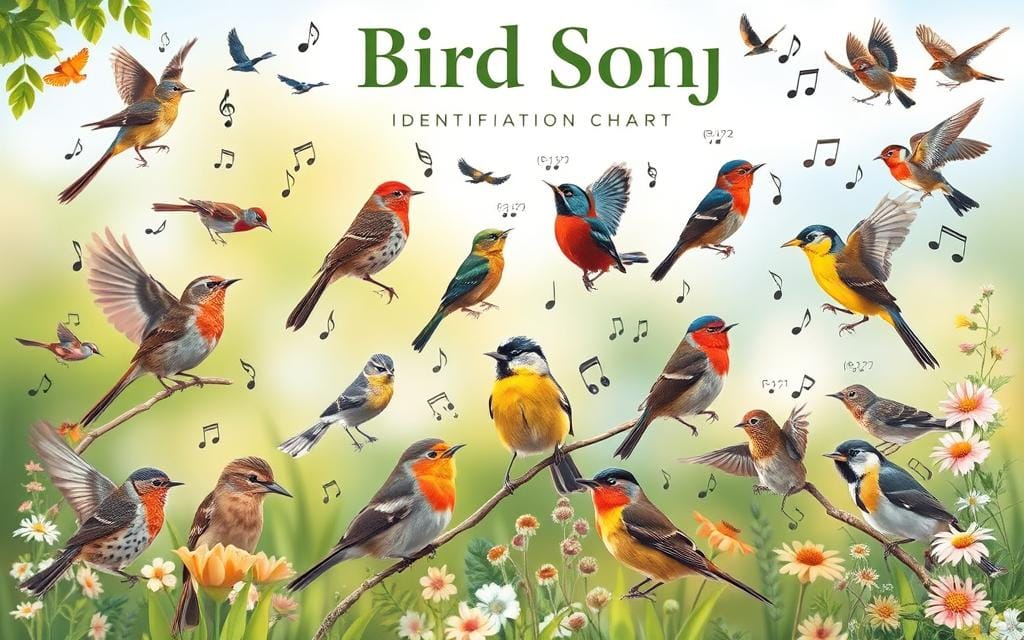
Bird song identification and bird call recognition are key for backyard birdwatchers. Learning to spot different species’ unique sounds can make bird watching more fun. Let’s dive into the world of bird sounds and learn how to identify them.
Common Bird Songs in North America
North America is home to many bird species, each with its own song. The American Robin’s “cheer-up, cheer-a-lee” and the White-throated Sparrow’s “oh-sweet-canada-canada-canada” are easy to recognize. Knowing these songs will help you get better at identifying birds by their sounds.
Using Sound Recording Apps
Technology has made it easier to recognize bird calls. Apps like Merlin Bird ID and BirdNet let you record and identify bird songs. These apps are great for learning and checking your identifications, perfect for beginners.
Seasonal Variations in Bird Calls
Bird calls change with the seasons. Spring is filled with mating calls, while fall has the sounds of migrating birds. Winter is quieter, with birds using shorter calls. Knowing these patterns helps you better identify birds and understand their behavior.
With practice and the right tools, you’ll soon recognize the variety of bird songs in your backyard. This skill will make bird watching even more enjoyable.
Seasonal Bird Watching Guide
Seasonal bird watching is a thrilling journey all year round. As seasons change, so do the birds in our yards. Let’s dive into the world of migratory birds and those always here.
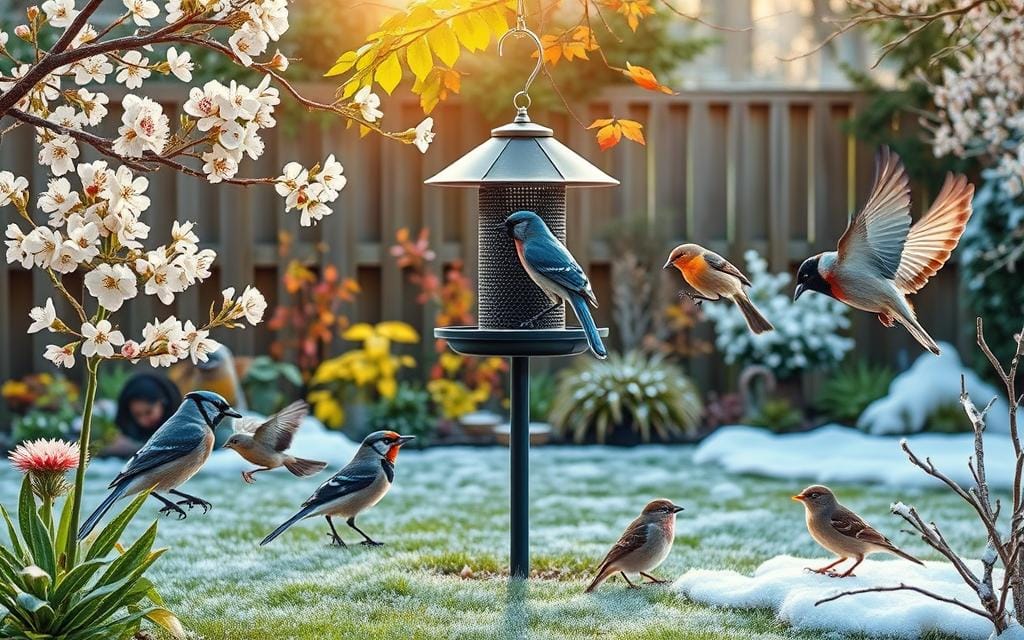
Spring is full of life as birds return from their winter homes. You’ll see colorful warblers and hear sweet thrush songs. Summer is when birds nest and raise their young, offering a chance to see parenting up close.
Fall is when many birds head south. You’ll see waterfowl and raptors in the sky. Winter is quieter but brings unique visitors like snowy owls and winter finches.
| Season | Notable Birds | Watching Tips |
|---|---|---|
| Spring | Warblers, Thrushes | Listen for songs, look for bright colors |
| Summer | Swallows, Hummingbirds | Observe nesting behaviors, provide nectar feeders |
| Fall | Hawks, Geese | Watch for large flocks, visit wetlands |
| Winter | Woodpeckers, Chickadees | Set up bird feeders, look for mixed-species flocks |
Understanding seasonal bird patterns can make bird watching better. Keep a log of your bird sightings. This helps you get better at identifying birds and supports science projects.
Common North American Backyard Birds
North America is home to many bird species that love backyards. These birds stay all year or visit for a while. Let’s look at some common birds you might see outside.
Year-round Resident Species
Some birds live in our backyards all year. The Northern Cardinal, American Robin, and Blue Jay are examples. They enjoy the changing seasons and entertain us all year.
| Bird Species | Distinguishing Features | Preferred Food |
|---|---|---|
| Northern Cardinal | Bright red plumage, distinctive crest | Sunflower seeds, fruit |
| American Robin | Red breast, gray back | Earthworms, berries |
| Blue Jay | Blue and white feathers, bold crest | Nuts, acorns, insects |
Migratory Visitors
When the seasons change, new birds come to visit. Hummingbirds and warblers are some of these visitors. They make bird-watching exciting.
Rare and Unusual Sightings
Sometimes, rare birds like the Painted Bunting or Evening Grosbeak visit. Keep an eye out for these special guests.
Learning about North American birds makes bird-watching more fun. Every bird you see is a new adventure, whether it’s a regular friend or a rare visitor.
Tips for Photographing Backyard Birds
Capturing stunning backyard bird photos is an exciting challenge. We’ve gathered some essential bird photography tips to help you snap beautiful images of your feathered friends.
First, choose the right gear. A DSLR or mirrorless camera with a telephoto lens works best for bird photography. Set your camera to a fast shutter speed, around 1/1000 second, to freeze bird movement. Use a wide aperture (low f-number) to blur the background and make your subject stand out.
Patience is key when photographing birds. Set up near a feeder or birdbath and wait quietly. Birds will eventually become comfortable with your presence. Use natural light whenever possible, as it creates softer, more flattering images.
Composition can make or break your backyard bird photos. Try to capture birds at eye level for a more intimate feel. Include some environmental context to tell a story about the bird’s habitat. Aim to photograph birds in various activities, such as feeding, bathing, or singing.
| Camera Setting | Recommended Value | Purpose |
|---|---|---|
| Shutter Speed | 1/1000 second or faster | Freeze bird movement |
| Aperture | f/5.6 – f/8 | Blur background, keep bird in focus |
| ISO | 400 – 1600 | Maintain image quality in varied light |
| Focus Mode | Continuous AF | Track moving birds |
Remember, practice makes perfect. The more time you spend photographing backyard birds, the better your images will become. Don’t be afraid to experiment with different angles, lighting conditions, and camera settings to create unique and captivating bird photos.
Creating a Bird-Friendly Habitat
A bird-friendly backyard is a haven for our feathered friends. We can transform our yards into welcoming spaces that attract birds year-round. Let’s explore how to create the perfect habitat.
Native Plant Selection
Native plants are key to attracting birds to your yard. They provide food, shelter, and nesting sites. Choose a mix of trees, shrubs, and flowers that are native to your region. Berries, seeds, and nectar-rich blooms will draw various bird species.
Food and Water Sources
Offer a variety of food options to cater to different bird preferences. Set up feeders with seeds, suet, and fruits. Don’t forget a clean water source! A birdbath or small fountain will attract birds and keep them coming back.
| Food Type | Bird Species Attracted |
|---|---|
| Sunflower Seeds | Cardinals, Chickadees, Finches |
| Suet | Woodpeckers, Nuthatches, Wrens |
| Nectar | Hummingbirds, Orioles |
Nesting Areas and Shelter
Provide safe spaces for birds to rest and raise their young. Install birdhouses, nesting boxes, and create brush piles. Dense shrubs and trees offer natural shelter from predators and harsh weather.
By combining these elements, we create a bird-friendly backyard that supports local wildlife. It’s rewarding to watch birds thrive in the habitat we’ve crafted for them.
Conclusion
We’ve looked into the exciting world of backyard bird watching. It’s full of benefits. You can learn to spot birds by their size, shape, and colors. You’ll also get to know their songs and behaviors.
Creating a bird-friendly space in your yard is easy. Use native plants, offer food, and provide shelter. This will attract many different birds. Remember, the more you watch, the better you’ll get at identifying them.
Watching birds in your backyard connects you to nature. It’s a hobby that brings happiness and peace. So, go outside, look up, and find the amazing birds in your yard!
Want to connect with nature? Visit earthguardiansonline.com for expert tips on how to identify birds in your backyard and make birdwatching a fun adventure!