
Fast-moving wildfires scorch thousands of acres across the West, and there’s more danger ahead
Fast-moving wildfires scorch thousands of acres across the West, and there’s more danger ahead
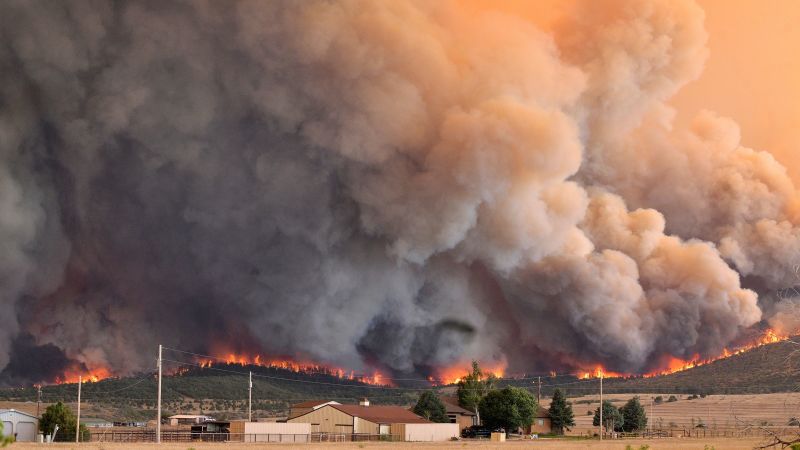
Fast moving wildfires scorch thousands of acres – Across the Western United States, a surge in wildfires has created urgent challenges for communities and firefighting crews. The region is grappling with extreme weather conditions that have fueled rapid fire spread, forcing evacuations and endangering lives. As of Monday night, the flames have already consumed vast stretches of land, and the threat of escalating flames shows no signs of abating.
Regional Fire Crisis Intensifies
In southern Colorado, the Aspen Acres Fire erupted on Monday morning, quickly expanding to over 23,000 acres within hours. By Tuesday, the blaze had grown to more than 28,000 acres, prompting emergency evacuations in two counties. Officials have placed entire towns under mandatory evacuation orders as the fire continues to threaten homes and natural reserves. Similarly, in Utah, the Cottonwood Fire has surged to nearly 100,000 acres, an area larger than Salt Lake City. With just 4% containment, the blaze is considered the most destructive and expensive in state history, according to InciWeb data.
Firefighters in the region are facing an unprecedented strain as they battle multiple blazes simultaneously. The three recent fatalities—Emily Barker, 38, of Clinton Township, Michigan; Nick Hutcherson, 27, of Glendale, Arizona; and Sydney Watson, 27, of Warrior, Alabama—highlight the perilous nature of the job. These losses mark a somber turning point for the growing wildland fire service, which is working under increasingly difficult circumstances.
Weather Conditions Fuel the Spread
Low humidity, parched vegetation, and relentless winds have created a volatile environment for wildfires. These factors have enabled new fires to emerge rapidly, with the central West experiencing the most severe activity. The National Weather Service in Salt Lake City issued its first-ever “particularly dangerous situation” red flag warning last week, signaling a heightened risk for the region. The warning covers central and southern Utah, where conditions have reached critical levels.
As the week progresses, fire weather conditions are expected to worsen. Strong wind gusts of 30 to 45 mph and single-digit relative humidity will persist across western and central Colorado, eastern Utah, and parts of northern Arizona and northwest New Mexico. While Wednesday may offer a slight reprieve from the strongest winds, Thursday and Friday will see a return to intense conditions, pushing fire danger to a critical threshold. Even as the weekend approaches, the region remains in a state of extreme dryness, ensuring that the crisis is far from over.
Government Responses and Restrictions
Colorado Governor Jared Polis has taken decisive action to mitigate the spread of wildfires. On Saturday, he declared a disaster emergency in Mesa County following the deadly Snyder Fire, which reached over 30,000 acres by Monday night. Polis has also authorized the deployment of the National Guard to support firefighting efforts. Additionally, fireworks have been banned in many Colorado counties ahead of the Fourth of July holiday, as officials urge residents to exercise caution. “We owe it to the firefighters on the front lines to prevent new fires from starting,” Polis emphasized during a Monday press conference.
Utah Governor Spencer Cox announced statewide fireworks restrictions last week to curb the risk of new wildfires. The decision comes as the state deals with its own growing fire threats, including the Wild Goose Fire near Holden, which has burned over 10,000 acres and is currently 6% contained. The Manti-La Sal National Forest issued an emergency closure on Sunday, and part of Canyonlands National Park was also shut down due to the Babylon Fire, which is nearing 40,000 acres.
Historical Context and Ongoing Assessments
The current fire crisis has drawn comparisons to past disasters, such as the 2018 Dollar Ridge Fire, which destroyed 74 homes and remains the most devastating in Utah’s history. However, the Cottonwood Fire is now surpassing that in scale, with officials estimating 150 structures lost so far. Alyssa Mason, a spokesperson for the Great Basin Team 5, noted that assessments are ongoing, and crews anticipate discovering more damages as the fire continues to evolve.
Firefighting teams are racing against time to contain the flames, but the situation remains dire. With twelve fires burning across Utah, encompassing nearly 300,000 acres, the state’s resources are stretched thin. The combination of extreme heat, low moisture levels, and high wind speeds has made it nearly impossible to control the spread. “The climate is creating conditions that are unlike anything we’ve seen before,” said Karl Hunt, public affairs officer with the Utah Division of Forestry, Fire, and State Lands. “We’re dealing with a perfect storm of factors that make each day a new challenge.”
Looking Ahead: A Week of Intensity
As the forecast indicates, the next few days will bring no relief. Tuesday’s most dangerous fire weather conditions will linger over the areas where the worst fires are currently active. The National Weather Service has warned that these conditions will escalate further, with the Southwest facing critical fire danger levels. While a potential break from strong winds may occur by the weekend, the region’s prolonged drought means the threat of new blazes will persist.
Residents in affected areas are being advised to stay alert and prepare for the possibility of extended evacuations. The interconnected nature of the fires has also led to cross-state coordination efforts, with agencies in Utah and Colorado working closely to manage the crisis. Despite the challenges, firefighters continue to respond with dedication, but the recent losses underscore the need for better preparedness and prevention strategies. “The unsung heroes of this effort are the crews who risk their lives daily to protect communities,” Mason added, reflecting on the bravery of those on the front lines.
With the number of active fires in Colorado reaching 16 as of Monday night, the situation demands sustained attention. The combination of human activity and natural factors has created a recipe for disaster, and the region’s leaders are under pressure to implement more stringent measures. As the flames continue to consume thousands of acres, the focus remains on containing the spread and ensuring the safety of both people and property. Yet, the outlook remains uncertain, with experts warning that the fire season may extend well beyond its traditional peak.
Long-Term Implications and Preparedness
While the immediate focus is on extinguishing existing fires, officials are also preparing for the possibility of more outbreaks. The link between climate change and increased fire risk is becoming clearer, with prolonged dry spells and higher temperatures contributing to the severity of the situation. In addition to bans on fireworks, local authorities are encouraging residents to take extra precautions, such as clearing brush and avoiding open flames during dry conditions.
As the fires continue to burn, the toll on both the environment and communities grows. The damage to National Forest lands and the loss of structures are just the beginning of what could be a long recovery process. With the federal government and state agencies working together to address the crisis, the hope is that the combined efforts will slow the spread of flames. However, the timeline for full containment remains unclear, and the region braces for the possibility of further escalation in the coming days.
