
US job openings were much higher than expected in May, shrugging off uncertainty from Iran war
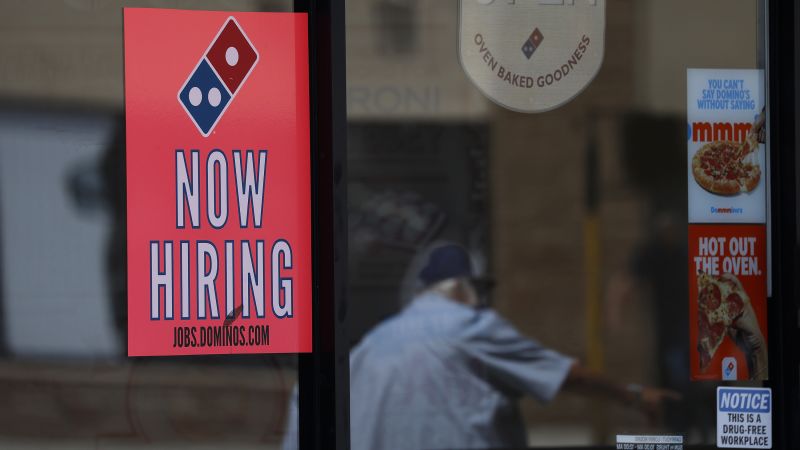
US Job Openings Rise in May Despite Iran War Uncertainty
US job openings were much higher – Recent data from the Bureau of Labor Statistics revealed a surprising surge in job openings across the United States in May, with the number of available positions reaching nearly 7.6 million. This figure is significantly higher than expected, bucking earlier predictions of a decline. The trend indicates a rebound in the labor market, with job openings increasing for the second month in a row and hitting a two-year high. US job openings were much higher than anticipated, signaling a shift in hiring momentum amid ongoing geopolitical tensions.
Challenging Economic Projections
Economists had forecasted a nearly 10% drop in job openings for May, expecting the number to fall to around 6.975 million. However, the data shows a different story, as US job openings were much higher than expected, with hiring activity remaining stable. This resilience suggests that the labor market is no longer in a state of stagnation. “The hiring recession is over, and we are starting to see more industries look for workers again, and that’s really good news,” said Heather Long, chief economist at Navy Federal Credit Union, in a Tuesday interview.
“The hiring recession is over, and we are starting to see more industries look for workers again, and that’s really good news.” — Heather Long, chief economist at Navy Federal Credit Union
Industry trends reflect a mixed response to the data. Sectors like leisure and hospitality, wholesale trade, construction, and manufacturing reported a sharp increase in job postings. In contrast, industries such as healthcare, finance, and technology saw a decline, highlighting persistent challenges in certain fields. “It’s a bit of a winners and losers story,” Long noted. “Some industries, particularly blue-collar sectors, are rebounding, while others—like tech and finance—remain sluggish.”
AI’s Influence on Hiring Trends
The tech and finance sectors, which have faced significant disruptions due to AI automation, appear to be adjusting their strategies. US job openings were much higher than expected, even as companies grapple with the dual impact of AI and labor market uncertainty. “There’s a correction to the correction,” Long explained. “Companies are realizing that AI can’t replace all roles, and the demand for human workers is stronger than previously thought.” This shift highlights a cautious yet growing confidence in hiring, especially in industries where technology has not fully offset the need for labor.
Over the past two years, the U.S. labor market has operated in a “low-hire, low-fire” phase. After pandemic-driven job creation, growth slowed as businesses balanced expansion with cuts. Factors like a shrinking workforce and uncertainty over policy changes contributed to this stagnation. Yet, the May report suggests a turning point, with US job openings were much higher than expected, indicating that hiring demand is picking up despite these challenges.
“It’s still cautious… there’s definitely a cautious expansion in hiring.” — Heather Long, chief economist at Navy Federal Credit Union
The report also noted a slowdown in new hires, with the number declining for three consecutive months. While this might seem contradictory, experts argue it reflects a structural shift. “Recent gains are driven more by a historic drop in separations than by active hiring,” explained Sneha Puri of Indeed. This dynamic underscores the complexity of the labor market, where US job openings were much higher than expected but hiring activity remains subdued due to supply constraints and lingering caution.
Workforce Supply and Market Stability
A key factor in this situation is the shrinking labor pool. Noah Yosif, chief economist at the American Staffing Association, highlighted that fewer workers are available due to a smaller working-age population. “The stall in job openings is being offset by a smaller labor supply,” Yosif wrote in a Tuesday analysis. This shortage may explain why US job openings were much higher than expected, even as hiring pace remains slower than anticipated.
“The stall in job openings is being offset by a smaller labor supply, due to a smaller working-age population.” — Noah Yosif, chief economist at the American Staffing Association
Meanwhile, the report showed that layoffs and voluntary resignations have not increased significantly. This suggests workers are still uncertain about market stability, with many choosing to stay in their current roles. A separate Conference Board survey revealed that 22.5% of respondents now believe jobs are “hard to get,” indicating that while US job openings were much higher than expected, the perception of opportunity hasn’t fully aligned with reality.
