
Pope Leo faces first major crisis of papacy from rebel Catholic group
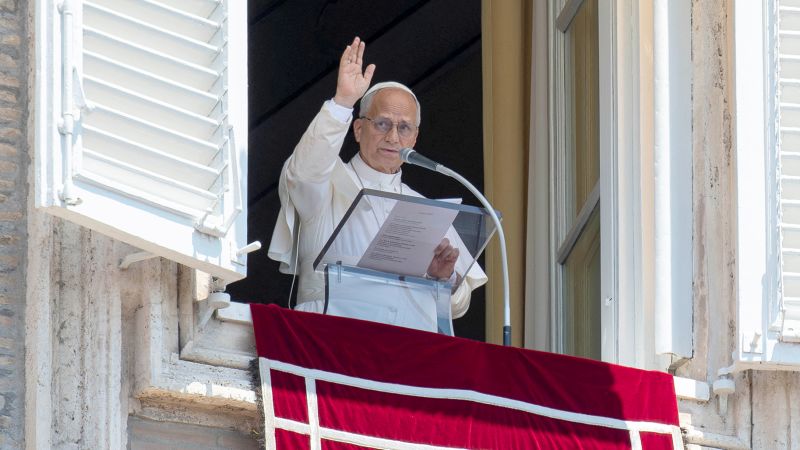
Pope Leo XIV Confronts Split from Traditionalist Catholics
Pope Leo faces first major crisis – Less than a year into his papacy, Pope Leo XIV has issued a fervent plea to a faction of traditionalist Catholics known as the Society of Saint Pius X (SSPX), urging them to abandon their plan to consecrate bishops without papal sanction. In a final effort to prevent what he calls a “sin of extreme gravity,” the pontiff has warned that proceeding with the ordinations would fracture the church’s unity and lead to the excommunication of the new bishops. The dispute marks the first significant challenge to Leo’s leadership since his election, highlighting tensions between the Vatican and groups that reject modern reforms.
SSPX’s Controversial Move
The Society of Saint Pius X, a splinter group with roots in post-Vatican II traditionalism, is set to consecrate four bishops on Wednesday at its seminary in Écône, Switzerland. This act, which Leo XIV has labeled “schismatic,” could formalize the group’s separation from the Roman Catholic Church. The SSPX has long opposed changes introduced during the 1960s, including the use of vernacular languages in Mass and revised liturgical practices. By defying the pope’s authority, the group risks deepening its rift with the mainstream church.
“I plead with you and ask you with all my heart: please turn back!” Pope Leo wrote in a letter sent days before the planned ordinations. “I pray for you, because to tear the seamless garment of Christ is a sin of extreme gravity. May the Lord enlighten your consciences and awaken your hearts.”
The pope’s message underscores his emphasis on maintaining the church’s hierarchical structure and doctrinal coherence. Bishops, he argues, must remain under the authority of the papacy to ensure unity, a principle that has been central to his papacy. If the SSPX proceeds, the four bishops will be considered outside the church’s communion, stripped of their sacramental privileges and officially excluded from the faith’s rituals.
A Historic Struggle for Authority
The SSPX’s conflict with the Vatican dates back to 1970, when Archbishop Marcel Lefebvre, a French prelate, founded the group to preserve traditional Catholic practices. Despite its origins, the society faced suppression in 1975 when the Bishop of Fribourg declared it a schismatic entity. However, Lefebvre’s followers continued their mission, eventually regaining some recognition through Pope John Paul II in the 1990s. The group’s defiance has since evolved into a broader ideological battle over the church’s direction.
Earlier in 1988, the SSPX ordained four bishops without papal approval, an act that led to their excommunication. That event remains a pivotal moment in the group’s history, symbolizing their willingness to challenge the Vatican’s authority. One of those bishops, Richard Williamson, later became a focal point of controversy when he claimed the Nazis did not use gas chambers during the Holocaust. His statements were later proven false, prompting his expulsion from the society and highlighting the consequences of their radical approach.
Reforms and Resistance
At the heart of the SSPX’s rebellion lies its rejection of Vatican II reforms, which reshaped Catholic worship and doctrine in the 1960s. The council’s teachings on religious freedom, ecumenism, and the use of non-Latin languages in Mass have been central to its transformation. For the Lefebvrists, these changes represent a departure from the church’s traditional identity, leading them to prioritize what they see as the “salvation of souls” over modern adaptations.
The group’s 28-page “profession of Catholic faith” released recently argues that the church is in a “state of emergency” due to the spread of liberal and “modernist” ideas. They claim these influences have diluted the faith’s core doctrines, necessitating a return to pre-reform practices. This narrative frames their actions as a necessary correction rather than a rebellion, a stance that has resonated with some traditionalists while drawing criticism from the Vatican.
Global Presence and Organizational Strength
Though the SSPX is a relatively small group compared to the Roman Catholic Church’s 1.4 billion members, it maintains a significant following in the United States. The society operates a seminary in Dillwyn, Virginia, and has a headquarters in Missouri, reflecting its influence across the country. One of the bishops set to be consecrated on Wednesday, Father Michael Goldade, leads this U.S. seminary, illustrating the group’s local engagement and organizational reach.
Leo XIV has made fostering unity a priority, but the SSPX’s impending ordinations pose a direct threat to that goal. Cardinal Blase Cupich, a staunch supporter of the pope, has emphasized the gravity of the situation, noting that the group’s actions could establish a parallel structure within the church. “The danger is the setting up of a separate ecclesial body,” Cupich stated in a recent interview. “They misuse the rites of the church when it comes to the ordination of bishops, and Leo is determined to address this.”
Pope’s Strategy and the Path Forward
Leo XIV has employed a multi-pronged approach to resolve the crisis, issuing invitations for dialogue while maintaining firm opposition to the ordinations. His strategy has included repeated interventions, reflecting both his commitment to unity and his willingness to take decisive action. However, the SSPX has shown resilience, with preparations for the ceremonies well underway. A dedicated website now outlines the four-day event, including the distribution of a 75 Swiss Franc souvenir box containing four bottles of wine—a gesture aimed at rallying supporters and emphasizing the group’s cultural identity.
In a June 16 interview, the pope reiterated his openness to discussion but made it clear that the Vatican would not compromise on the essentials of church authority. “If they make that choice, I am sorry, but we must move forward,” he said, signaling his resolve to uphold the papacy’s role as the ultimate arbiter of Catholic doctrine. This statement comes as the SSPX prepares to take its next step, testing the limits of the pope’s patience and the strength of his authority in the face of traditionalist resistance.
Legacy of Reconciliation and Division
Historically, popes have sought to bridge the gap with the SSPX. In 2009, Pope Benedict XVI lifted the excommunications of the four bishops consecrated in 1988, offering a path to reconciliation. Yet, the group’s persistence in challenging the Vatican’s teachings has kept the conflict alive. While some within the SSPX have aligned with the pope’s reforms, others continue to advocate for a return to pre-Vatican II practices, viewing the current church as a departure from its original mission.
The upcoming ordinations have sparked debate about the balance between tradition and progress within Catholicism. Supporters of the SSPX argue that their actions are a necessary defense of the faith against what they perceive as encroaching modernism. Meanwhile, the Vatican insists that such a move undermines the unity of the church, a unity that Leo XIV has repeatedly emphasized as a cornerstone of his papacy. The outcome of this dispute will not only shape the future of the SSPX but also test the pope’s ability to unite a divided flock. As the world watches, the stakes for both sides have never been higher.
