
Naomi Osaka overpowers top-ranked Aryna Sabalenka to reach Wimbledon quarterfinals
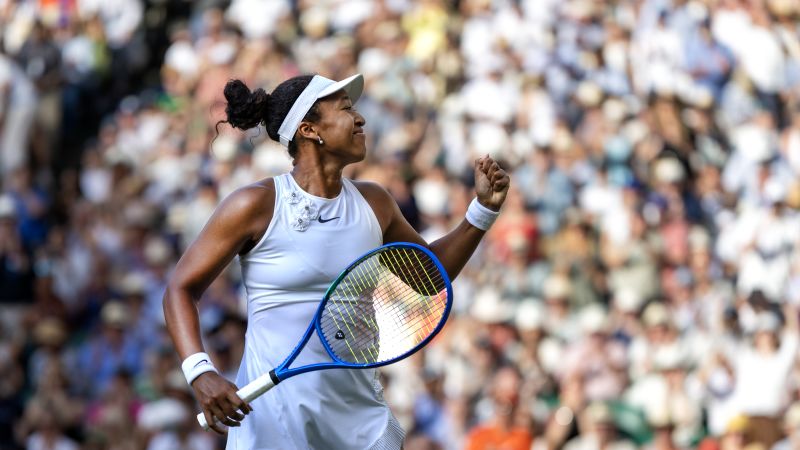
Naomi Osaka Defeats Top-Ranked Aryna Sabalenka to Advance to Wimbledon Quarterfinals
Naomi Osaka overpowers top ranked Aryna – On a scorching day at Wimbledon, Naomi Osaka secured a hard-fought victory over world No. 1 Aryna Sabalenka, defeating her 6-2, 7-6 (2) to reach the quarterfinals for the first time since her return to the tour. The match, played on Centre Court, saw Osaka outlast Sabalenka’s aggressive style with her own explosive power, marking a significant milestone in her career.
Unstoppable Force in a High-Stakes Encounter
The showdown between Osaka and Sabalenka was a clash of two of the most formidable servers in women’s tennis. Despite Sabalenka’s prior dominance in their meetings this year, including a win at the French Open last month, Osaka’s relentless flat groundstrokes and speed proved too much to handle. The heat of the day—reaching 28°C (82°F)—amplified the intensity, as Osaka’s serves and returns flew faster than ever, disrupting Sabalenka’s rhythm.
“It’s been a long time since I’ve had so much fun on the court,” Osaka said after the match, her voice tinged with relief and joy. “And to do it here, it really means a lot.”
The victory was a testament to Osaka’s resilience, as she overcame a challenging stretch of time away from the sport. Her absence from the tour in 2021 and 2023, due to mental health and maternity leave, had left her with a gap in her Grand Slam pedigree. This win not only restored her confidence but also highlighted her ability to adapt to different surfaces, particularly grass, where she had previously struggled.
Statistical Dominance and Tactical Precision
Osaka’s performance was underscored by her overwhelming stats. She converted 87% of her first serves, compared to Sabalenka’s 69%, and dominated key moments with a series of powerful winners. In the second set tiebreaker, Osaka’s ability to save break points and maintain composure under pressure was crucial. Her inside-out backhand winner on the first break point of the match gave her an early 2-1 lead in the opening set, setting the tone for the decisive second set.
Sabalenka, who had previously bested Osaka in all three matches this year, struggled to counter Osaka’s pace. During one pivotal moment in the second set, Osaka’s sheer power forced Sabalenka to the ground, a rare sight for the top-ranked player. This display of strength and precision ultimately tilted the momentum in Osaka’s favor, securing her progression to the next round.
Historical Context and Tournament Implications
The win carries special weight for Osaka, as it marks her first victory on Centre Court since her debut in 2018. This achievement also signifies her return to the top of the game, following her 2019 triumph over Ash Barty in Beijing. With Sabalenka’s recent struggles at the Grand Slam stage—most notably her meltdown against Diana Shnaider in the French Open quarterfinals—Osaka’s victory adds to the narrative of a player on a roll.
Sabalenka’s loss means the women’s title will once again be contested by a new champion. The tournament has seen a shift in momentum, with no woman since Serena Williams’ seventh Wimbledon title in 2016 claiming multiple titles. Osaka’s presence in the quarterfinals raises the stakes, as she now faces Karolina Muchova, the player who stunned last year’s champion Barbora Krejcikova in a dramatic three-set thriller. Muchova’s victory over Krejcikova ensures the women’s draw is wide open for upsets.
Osaka’s Return to Grass and the Path Forward
Osaka’s journey to the quarterfinals included a tough match earlier in the week. She retired from the Bad Homburg final due to a foot injury, but her comeback at Wimbledon has been nothing short of impressive. The white kimono she wore during her walk-ons on Centre Court, inspired by a Quentin Tarantino film character, added a touch of flair to her return. Her ability to thrive on grass—a surface she had previously dominated in her early career—has rekindled discussions about her potential in the sport’s traditional Grand Slam.
Meanwhile, Sabalenka’s loss was a setback for her quest to reclaim the top spot in the rankings. The match also showcased the strategic moves of her coaching team, who handed her four freshly strung rackets mid-match—likely to increase tension and improve control against Osaka’s relentless pace. This tactical adjustment failed to halt the French Open champion, however, as Osaka’s game plan proved too effective.
A Day to Remember on Centre Court
The match was a masterclass in physical and mental endurance. Osaka’s celebration after the win—fist pumps, a smile, and a spin with her racket—highlighted the emotional release of overcoming a formidable opponent. Her performance also served as a reminder of the tournament’s unpredictable nature, where even the most decorated players can falter.
As the tennis world watches the progression of the women’s draw, Osaka’s next challenge will test her ability to maintain this form. Meanwhile, on the men’s side, Novak Djokovic extended his legacy with a hard-fought 7-6 (6), 6-3, 3-6, 6-3 victory over 132nd-ranked qualifier Roman Safiullin. This win brings Djokovic to 106 career victories at Wimbledon, one ahead of Roger Federer and just 14 short of Martina Navratilova’s all-time record. Djokovic’s next match will determine the fate of the men’s quarterfinals, which feature the winner of a tightly contested clash between third-seeded Felix Auger-Aliassime and No. 22 Alejandro Davidovich Fokina.
Osaka’s triumph over Sabalenka not only redefined her season but also reignited hopes for a deep run in the tournament. The 28°C heat, while challenging, seemed to elevate her performance, blending her natural talent with the conditions of the iconic grass courts. With the women’s tournament shaping up as a battle of new contenders, Osaka’s victory signals a pivotal moment in her career and a promising chapter for Wimbledon 2026.
Looking ahead, the quarterfinals will be a proving ground for both Osaka and Muchova. Osaka’s ability to capitalize on her first-serve accuracy and aggressive baseline play will be key, while Muchova’s experience on clay and her tactical adaptability may pose a challenge. The stage is set for an exciting showdown, as the tournament continues to deliver surprises and showcase the evolving landscape of women’s tennis.
For Sabalenka, the defeat is a lesson in resilience. Her earlier emotional struggles, including a heartfelt admission of wanting to quit tennis after the French Open, have been tempered by her return to competitive form. This loss, however, could serve as a catalyst for a stronger performance in the future, as she looks to bounce back and reclaim her place among the elite.
As the sun set on Centre Court, the crowd’s energy reflected the significance of Osaka’s win. Her journey from a break in the tour to a moment of triumph encapsulates the challenges and rewards of professional sports. With the tournament entering its most critical phase, the world will be watching closely as Osaka aims to etch her name into Wimbledon history once more.
