
Taylor Swift’s wedding may change how couples think about their big day
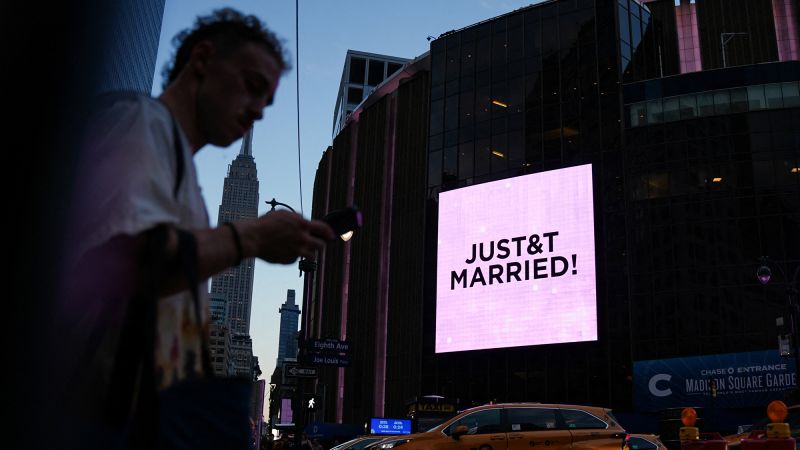
Taylor Swift and Travis Kelce’s Unconventional Wedding Sparks a Shift in Celebratory Trends
Taylor Swift s wedding may change – Madison Square Garden conjures images of high-energy concerts rather than wedding venues. Yet, when Taylor Swift and Travis Kelce chose the iconic arena for their nuptials, they defied expectations with a blend of unexpected elements. Arcade games, a raffle, and a casual atmosphere disrupted the traditional wedding ambiance, creating a unique experience that prioritized emotions over aesthetics. This event has become a symbol of a broader movement in wedding planning: crafting ceremonies that leave guests with lasting memories of how they felt, not just what they saw.
The Wedding Experience Movement
As the couple’s celebration gained global attention, it highlighted a growing trend in the wedding industry. Instead of focusing solely on opulent decor or scripted rituals, couples are now emphasizing moments that evoke joy, nostalgia, or wonder. Akeshi Akinseye, founder of Kesh Events, a luxury wedding planning firm, noted that this shift reflects a desire to strip away formality and infuse events with a sense of playfulness. “Weddings are evolving from rigid ceremonies to immersive experiences,” she explained. “The goal is to make guests feel connected, not just observe.”
“The arcade games and raffle weren’t just gimmicks—they were designed to foster interaction and create anticipation. Guests weren’t just spectators; they were participants in the story.”
The couple’s decision to host their wedding in a space typically associated with sports events underscores a new philosophy: transforming the setting into a narrative-driven environment. Akinseye, who also planned the wedding for NBA player Tobias Harris, pointed out that the venue’s location—where Swift had previously performed concerts and where Kelce had attended games—became a deliberate choice. “It’s about reimagining the space and asking, ‘What could this place become?’” she said. This approach allows couples to merge personal significance with creative expression, making the event feel more authentic and memorable.
Designing Emotion Over Aesthetics
Julie Comfort, an experience designer working with wedding planners, described her role as curating emotional design. She explained that the essence of a wedding lies in how it makes people feel, not the scale or extravagance of the decor. “It’s not about grandeur alone—it’s about creating a sensory journey,” Comfort said. A recent wedding she designed, for instance, incorporated a karaoke element that allowed the couple’s loved ones to join in for their first dance. As the music faded and more voices chimed in, the atmosphere shifted from celebration to shared memory.
“Couples are realizing they don’t need to go over the top to make an impression. Thoughtfulness and intentionality often outshine sheer spectacle.”
Comfort emphasized that experience design techniques are rooted in the arts and theater, where anticipation and surprise are key. These methods, she said, help couples craft events that feel dynamic and engaging. “Even a modest celebration can be extraordinary if it’s designed to evoke a specific emotion,” she added. This philosophy contrasts with the typical focus on visual displays, such as elaborate floral arrangements or fireworks, which often take precedence over the emotional resonance of the day.
The Swift-Kelce wedding also challenged the notion that large venues must feel impersonal. A guest’s deleted tweet described the event as a “magical transformation” of part of the arena into an intimate garden. “They cordoned off a section of Madison Square Garden, removing any traces of sports events and replacing them with a lush, country-style retreat,” the guest wrote. Despite hosting around 1,000 people, the atmosphere was described as warm and personal, a testament to the couple’s ability to blend scale with intimacy.
Breaking the Mold of Traditional Venues
As online fatigue intensifies, couples are increasingly looking for ways to avoid the pitfalls of social media-driven ceremonies. Comfort noted that fewer people are hiring content creators solely to capture moments for digital platforms, and more are seeking planners who focus on fostering genuine connections. “The shift is about presence, not performance,” she said. This trend aligns with the Swift-Kelce event, which prioritized shared experiences over staged visuals.
Akinseye’s perspective on the wedding’s success lies in its ability to create a sense of anticipation. “There’s power in making guests wonder what’s next,” she said. The couple’s use of the arena—transformed into a venue for love and celebration—demonstrates how even the most recognizable spaces can be redefined. This approach not only challenged conventions but also invited others to rethink the role of location in their own weddings.
“Couples are realizing that a wedding’s impact doesn’t depend on its size or grandeur. It’s about the feelings it leaves behind.”
While the wedding was a spectacle, it also emphasized simplicity and authenticity. The inclusion of casual elements like raffles and arcade games suggested a relaxed vibe, contrasting with the rigid structures of traditional ceremonies. “It’s about creating a space that feels like a story rather than a checklist,” Akinseye explained. This perspective resonates with a generation that values personalization and creativity over predictability.
Lessons for the Future of Weddings
For couples inspired by the Swift-Kelce event, Akinseye’s advice is clear: avoid imitation and focus on the core of your celebration. “Use their wedding as a springboard, not a blueprint,” she said. “Ask what made certain moments stand out and how you can translate that feeling into your own story.” This philosophy encourages planners to think beyond conventional options and consider venues that align with the couple’s unique narrative.
Comfort echoed this sentiment, stressing the importance of intentionality. “The best weddings are those that feel meaningful, not forced,” she said. The growing popularity of experience-forward planning suggests that couples are willing to experiment with formats, locations, and activities that reflect their personalities. Whether through interactive games, shared music, or a sense of place, the goal is to create a day that guests will remember not just for its visuals, but for its emotional impact.
As the wedding industry continues to evolve, the Swift-Kelce celebration serves as a case study in reimagining tradition. It demonstrates that even the most iconic venues can become intimate spaces when designed with purpose. By blending the unexpected with the heartfelt, couples are crafting events that prioritize connection over consumption, ensuring that the day feels as personal as it is unforgettable.
The success of this wedding also raises questions about the role of non-disclosure agreements (NDAs) in shaping the event’s exclusivity. While the exact details remain speculative, the guest’s deleted tweet hinted at a high level of secrecy, reinforcing the idea that the couple wanted their celebration to be a private, unfiltered experience. This exclusivity may have contributed to the venue’s transformation, making it feel as though the arena was entirely devoted to the couple’s love story.
In a world where social media often dictates expectations, the Swift-Kelce wedding offers a refreshing alternative. It proves that a wedding’s magic lies not in its scale, but in its ability to create moments that resonate deeply. As more couples embrace this approach, the future of weddings may become less about tradition and more about innovation, ensuring that every big day is a unique experience tailored to the couple’s story.
