
Rahm Emanuel to deliver ‘painful’ truths on Israel in Tel Aviv speech
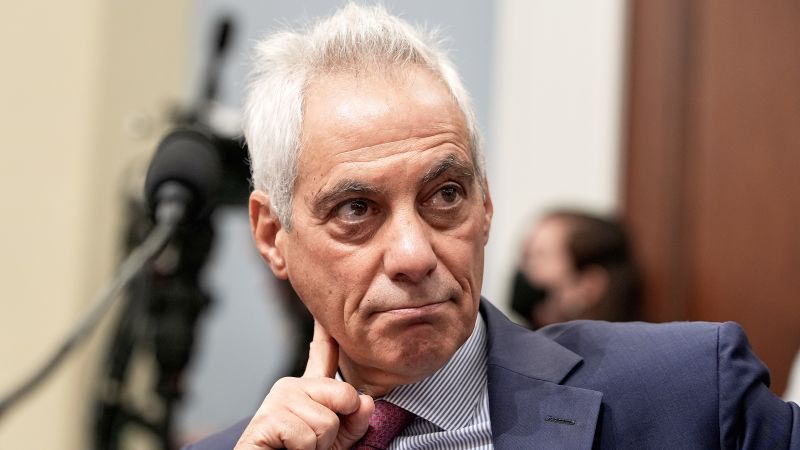
Rahm Emanuel to Deliver ‘Painful’ Truths on Israel in Tel Aviv Speech
Context for a Presidential Campaign
Rahm Emanuel to deliver painful truths – Rahm Emanuel, the former Chicago mayor and U.S. ambassador to Japan, is set to address a critical audience during his upcoming visit to Tel Aviv University. The speech, which will serve as the centerpiece of his multi-day trip to Israel, is designed to challenge the long-standing U.S. policy of unconditional support for the country. Emanuel’s remarks will emphasize the need for a recalibration in American-Israeli relations, particularly as the Israeli government faces mounting pressure from both domestic and international critics. This event is not merely a diplomatic engagement but a strategic move to lay the groundwork for his potential 2028 presidential bid.
Emanuel’s Personal Connection to Israel
Throughout his career, Emanuel has maintained a complex relationship with Israel, shaped by both personal history and political evolution. His journey includes visits to the grave of an uncle who fought for Israeli independence, a gesture that underscores his familial ties to the nation. Yet, this bond has been tested over the years, notably when Prime Minister Benjamin Netanyahu accused him of being a “self-hating Jew” during a heated debate in 2016 while Emanuel served as Obama’s chief of staff. This personal anecdote will anchor his arguments, blending nostalgia with contemporary critique.
Declining Support and Rising Antisemitism
Amid a shifting political landscape, Emanuel will highlight the decline in American support for Israel, especially within the Democratic Party. The October 7, 2023, Hamas-led attacks and the subsequent Israeli military operations in Gaza have sparked widespread controversy, with many Americans questioning the cost of unconditional backing. He will argue that this erosion of support is not just a matter of policy but a reflection of growing antisemitism, which he claims has become a defining issue in Democratic primaries. Jewish progressive groups have raised concerns about this trend, fearing it could lead to a broader ideological tilt.
A Call for Reforms in Israeli Leadership
In his address, Emanuel will directly confront Israeli leaders, particularly Prime Minister Netanyahu, urging them to distance themselves from the current trajectory. “Your government is complicit in the horrors now being inflicted on innocent families in the West Bank,” he will assert, adding that this complicity threatens Israel’s international credibility at a crucial moment. The speech will also target the “from the river to the sea” chant, a slogan often associated with Palestinian statehood, while simultaneously criticizing the push for a more expansionist Israel. His message will resonate with both domestic and foreign audiences, aiming to bridge the gap between American allies and their Israeli counterparts.
Policy Proposals for a New Approach
Emanuel has been refining his arguments for weeks, consulting with figures like former President Bill Clinton, who shared his frustration over the failure to achieve a lasting peace agreement. The former president’s focus on a two-state solution in his later years will be referenced, but Emanuel will argue that this approach has become obsolete. Instead, he proposes a “23-state solution,” a term he will use to describe a coalition involving the 21 Arab nations that have historically exploited Palestinian rights as a political tool. This framework, he claims, requires Arab leaders to take responsibility for fostering accountability among Palestinians, creating a governance model that can coexist with Israel’s Jewish heritage.
Historical Reflection and Forward-Thinking Vision
While Emanuel acknowledges Israel’s historical sacrifices, he will argue that the nation must move beyond its past to secure a sustainable future. “Three times since the early 1990s, you have offered the Palestinians sovereignty in exchange for your security,” he will say, referencing key negotiation failures. “Three times your offer was not only rejected but met with attacks that have cost lives and strained relations.” He will then contrast this with the U.S. adage, “Fool me once, shame on you. Fool me twice, shame on me,” to underscore the need for a new approach that avoids being trapped by previous grievances.
Rebuilding Trust and Shared Vision
Emanuel’s speech will also emphasize Israel’s inherent strengths—its ingenuity, economic resilience, and technological innovation—as a foundation for future collaboration. “Israel’s true power lies in its ability to innovate and adapt,” he will say, advocating for a renewed focus on progress rather than perpetual conflict. This vision will be paired with a plea for Israelis to recommit to peace, even as they navigate domestic political challenges. By framing the issue as a collective effort, Emanuel aims to unify both American and Israeli audiences under a common goal of stability and mutual respect.
Implications for U.S. Politics and Global Relations
The speech is expected to have broader implications, particularly in shaping the Democratic Party’s stance on Israel. As support for the country dwindles among voters, Emanuel will position himself as a leader who can balance loyalty with critique. He will argue that the current policy of unconditional support risks alienating a key demographic, thereby jeopardizing the party’s coalition. Additionally, the speech may influence international perceptions of the U.S. role in the Middle East, presenting a more nuanced perspective that could reshape America’s diplomatic priorities.
Quote Highlight: Emphasizing Truth and Accountability
“Even when the truth is hard to swallow, a true friend must speak it. That’s why I’m here today to challenge the status quo and demand that Israel reevaluate its path forward.”
Emanuel’s assertion that truth is essential for friendship will resonate with his audience, reinforcing his argument that the U.S. must no longer enable Israeli policies that fuel resentment. He will also direct a message to Arab nations, urging them to shift from symbolic gestures to concrete actions. “The 21 Arab countries that have used Palestinian rights as a slogan for decades now need to roll up their sleeves and build a governing authority capable of accepting Israel’s historical claim,” he will say. This call for accountability highlights his belief that Arab leaders are the primary obstacles to peace, a stance that could alienate some allies but resonate with those seeking pragmatic solutions.
A Strategic Move in a Polarized Climate
Emanuel’s trip to Israel is strategically timed to address the growing polarization within the Democratic Party. By framing the issue as a necessity for domestic unity, he aims to position himself as a unifying figure. His speech will not only critique current policies but also outline a path for reconciliation, emphasizing the need for Arab and Israeli leaders to collaborate. The speech’s emphasis on shared responsibility reflects a broader strategy to redefine the U.S. role in the region, moving away from unilateral support toward a more balanced, multilateral approach.
Conclusion: A New Chapter for Israel and America
Emanuel’s Tel Aviv speech marks a pivotal moment in the evolving relationship between the United States and Israel. By blending personal history with political analysis, he seeks to inspire a new era of cooperation. His arguments, though challenging, aim to galvanize both domestic and international support for a more equitable solution. As the speech unfolds, it will be watched closely for its impact on the 2028 presidential race and its potential to reshape the global narrative around the Israel-Palestine conflict. Whether it succeeds in uniting the divided, the message is clear: truth, even when painful, is a cornerstone of enduring friendship.
